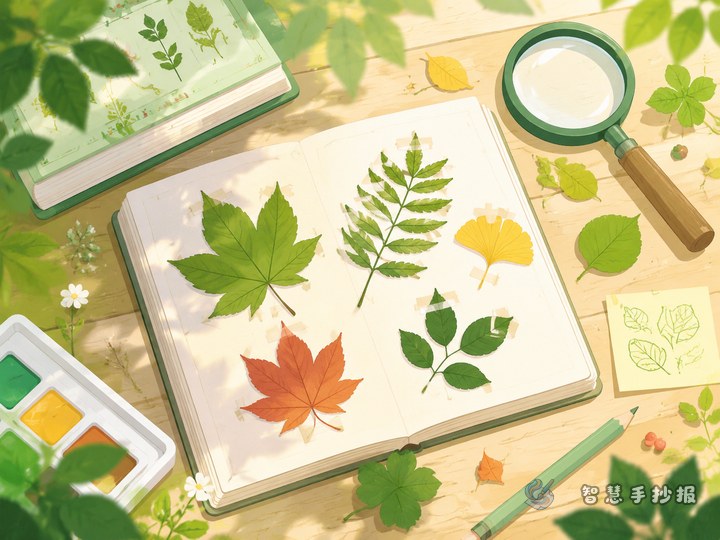
Open with a Leaf Mystery
Begin the poster with a simple question: Is the green structure you collected one complete leaf, or only one leaflet from a compound leaf? A simple leaf has one blade, even if its edge is deeply divided. A compound leaf has several leaflets attached to a shared rachis. Counting blade-like parts is not enough; the position of the axillary bud is the strongest clue.
Key test: A true leaf usually has an axillary bud near the point where its petiole meets the stem. An individual leaflet normally has no axillary bud at its base. Keep the petiole, rachis, and a short section of the twig when collecting specimens so these clues remain visible.
Turn Each Specimen into an Evidence Card
Give every pressed specimen a small evidence card. This makes the poster an investigation rather than a list of definitions.
- Point of attachment: Does the structure connect to a stem or to a rachis?
- Bud clue: Is there an axillary bud near the base?
- Number of parts: Does one petiole support one blade or several leaflets?
- Decision: Label it as a simple leaf, a compound leaf, or “more observation needed.”
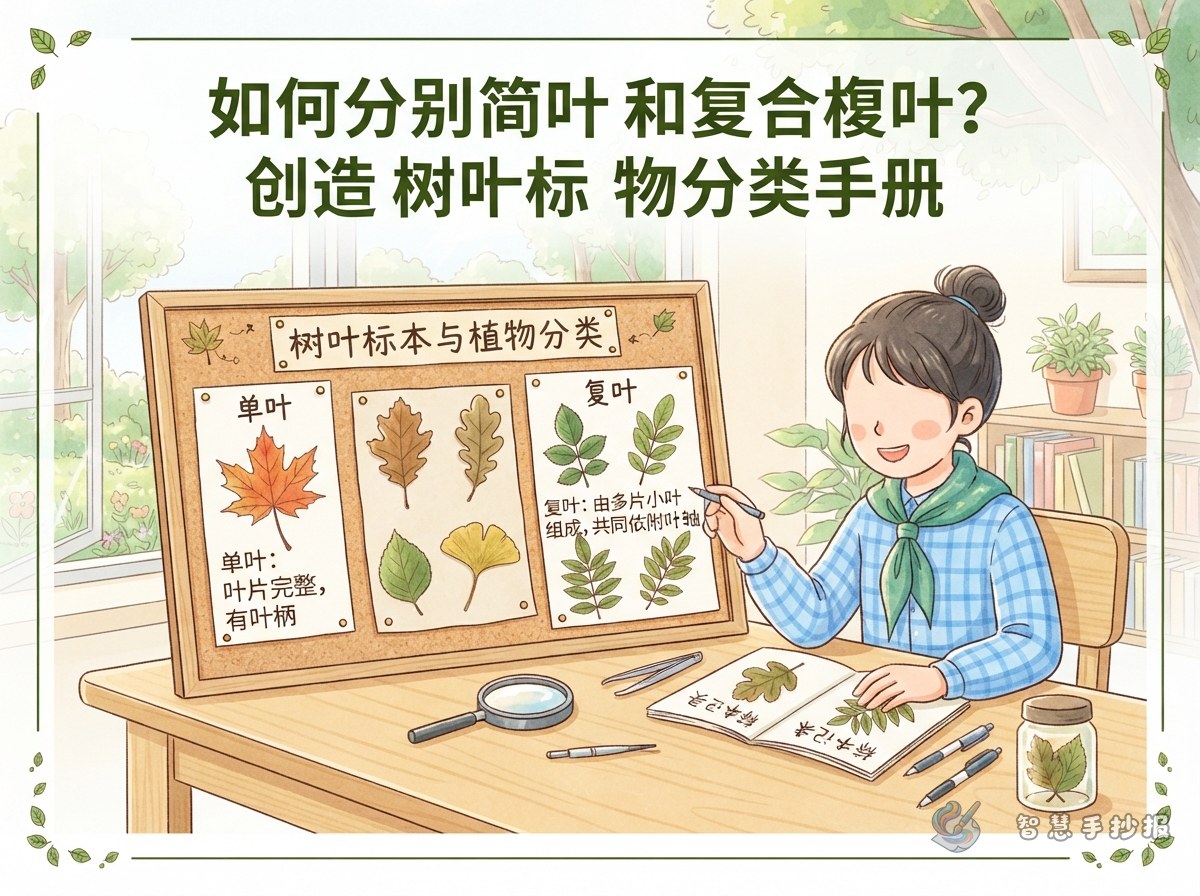
Add a short comparison sentence beside two clear specimens: “The lobes of a simple leaf remain part of one blade, while the leaflets of a compound leaf attach separately to a rachis.”
Useful Writing Sections for the Poster
- Meet the simple leaf: Explain that one petiole carries one complete blade and that cuts or lobes do not automatically make it compound.
- Meet the compound leaf: Describe how a petiole continues as a rachis with two or more leaflets attached to it.
- Evidence from my specimen: Record the general collection setting, visible structure, bud observation, and conclusion.
- Common mistakes: Warn readers not to classify a deeply lobed leaf as compound or a fallen leaflet as a complete simple leaf without checking its attachment.
Match the Layout to the Comparison
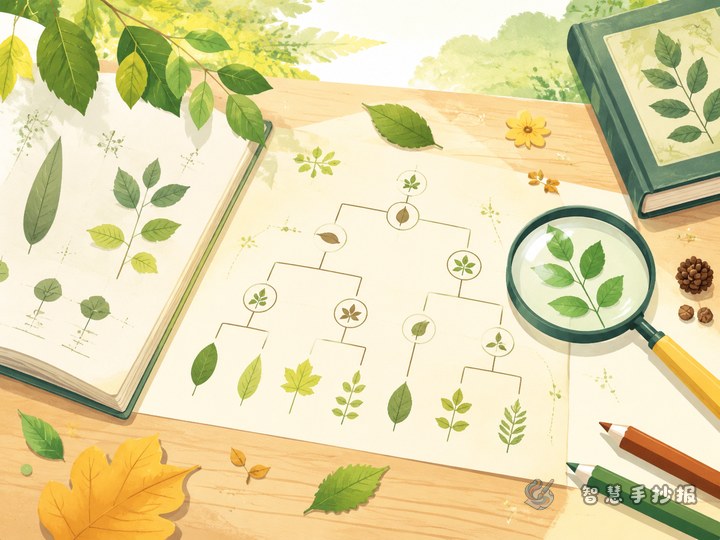
Use a left-and-right layout. Place simple-leaf specimens and evidence cards on one side and compound-leaf specimens on the other. A short decision path can run down the center. Use one pale border color for each category, while keeping labels dark and easy to read.
Press every leaf until fully dry. Secure the petiole, rachis, and broad sections of the blade with narrow paper strips, taking care not to cover the bud or attachment points. If a specimen is large, reduce decorative elements and use small leaf outlines, buds, or magnifying-glass symbols only where space needs balance.
Test the Classification Before Finishing
Check that each specimen includes enough connecting structure and that every conclusion is supported by visible evidence. Ask a classmate to cover the answers and classify the leaves from the specimens and evidence cards alone. If the clues are unclear, revise the labels. Once the content is ready, scan the code to open the Smart Handwritten Poster WeChat Mini Program and continue arranging the title, sections, and printable layout.