Turn the Theme into “ID Cards for Leaves”
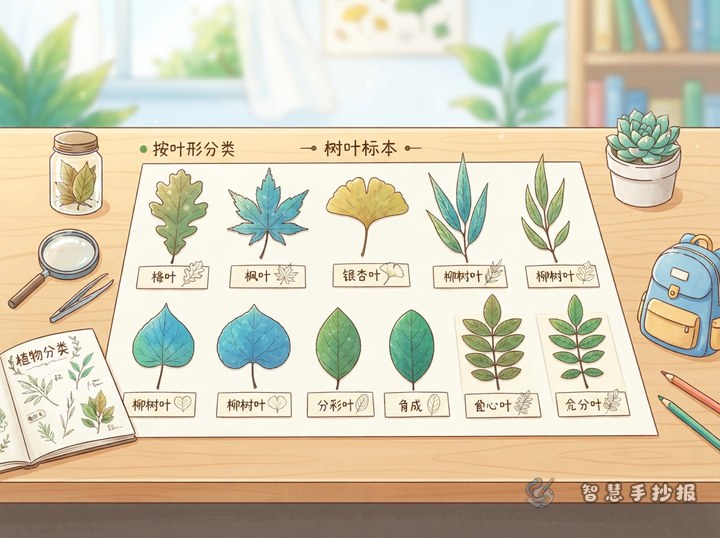
This poster works best when it is not only a display of pasted leaves. A clearer idea is to make every leaf look like it has its own plant ID card. Next to each specimen, add a small label with the plant name, where it was found, leaf shape, margin, veins, and one personal observation.
A short sentence for the top of the page could be: A leaf is like a small name card of a plant. Its shape, edge, veins, and texture can help us learn how to classify plants.
What to Write on Each Leaf Label
Keep each label short and neat. Four to six items are enough for an elementary school handwritten poster.
- Plant name: ginkgo, maple, plane tree, camphor tree, osmanthus, or “unknown plant” if you are not sure.
- Collection place: school garden, community path, park lawn, or under a tree.
- Leaf shape: fan-shaped, palm-shaped, oval, lance-shaped, or heart-shaped.
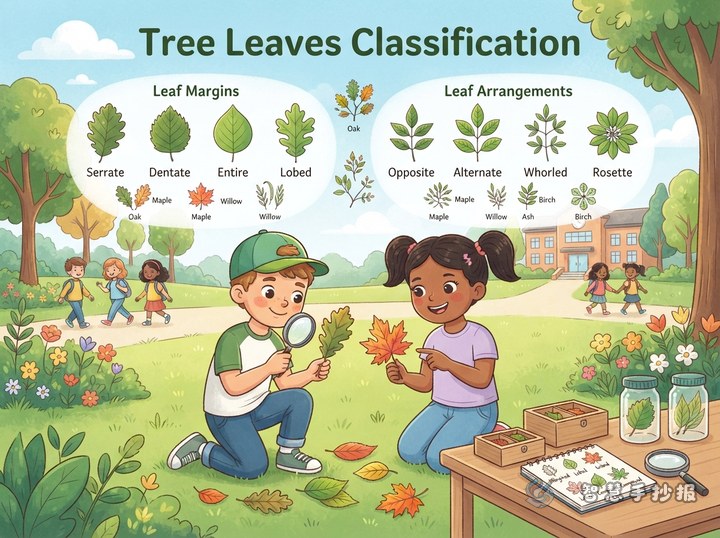
- Leaf margin: smooth, toothed, wavy, or lobed.
- Leaf veins: netted veins, parallel veins, palmate veins, or pinnate veins.
- My finding: color, smell, thickness, softness, or tiny hairs on the surface.
Short Text Materials for the Poster
What Is a Leaf Specimen?
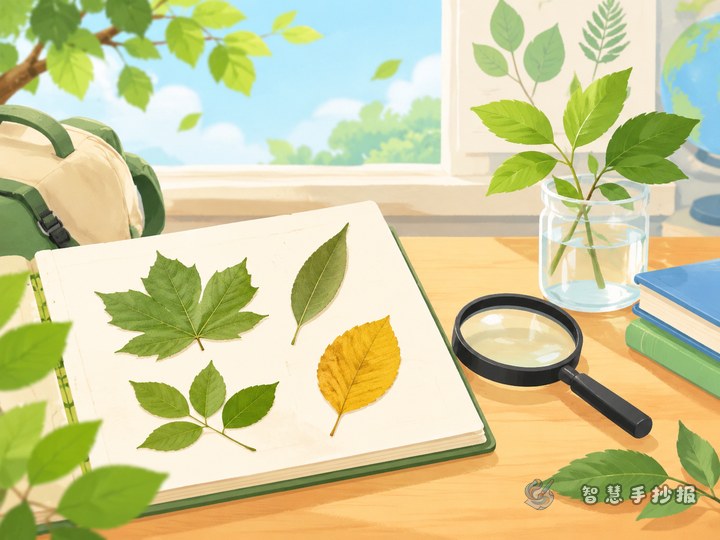
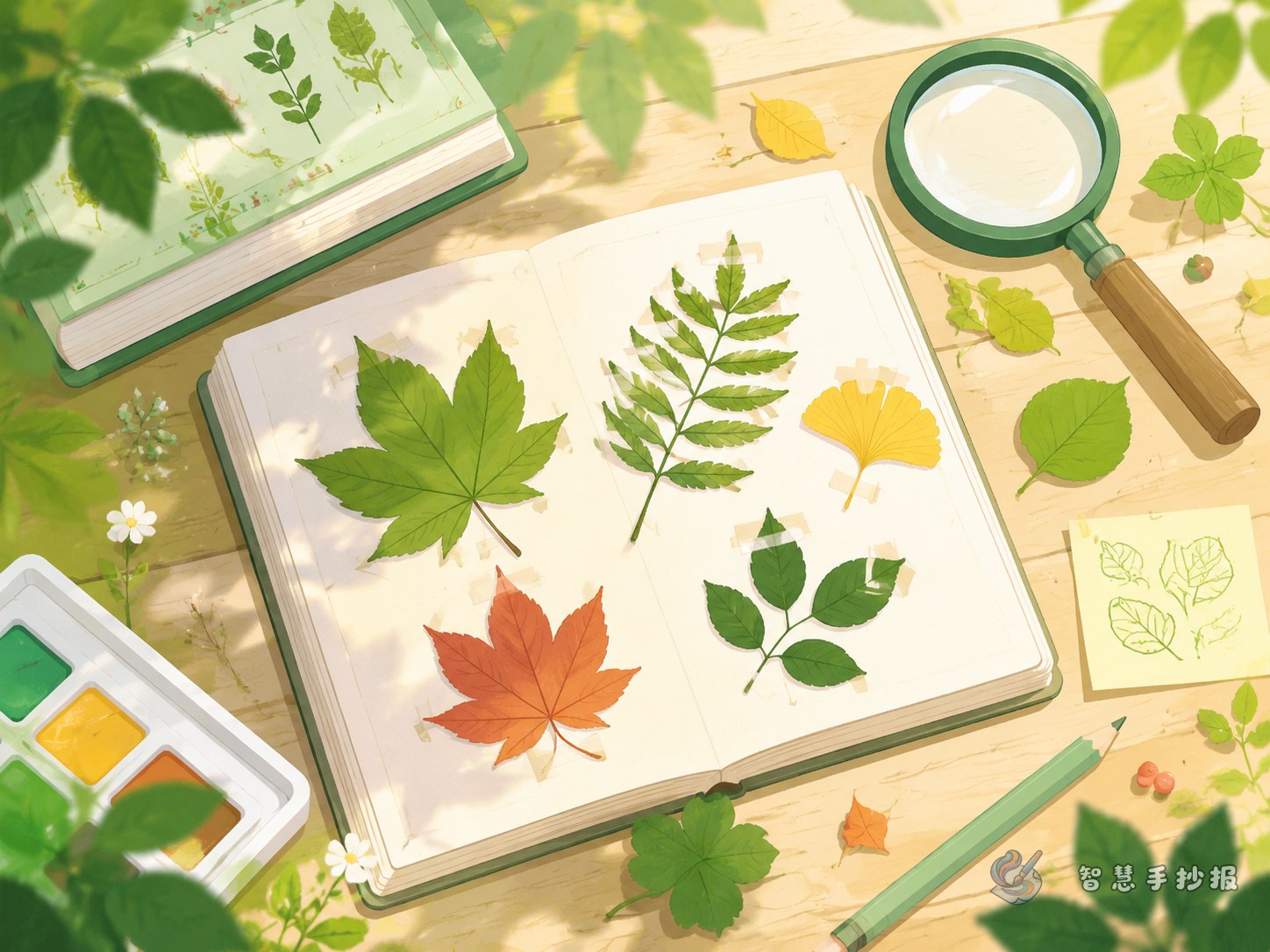
A leaf specimen is a leaf that has been pressed, dried, and saved for observation. It helps us record the shape, color, veins, and edge of a leaf, and it also makes it easier to compare different plants in class.
How Can Leaves Help with Plant Classification?
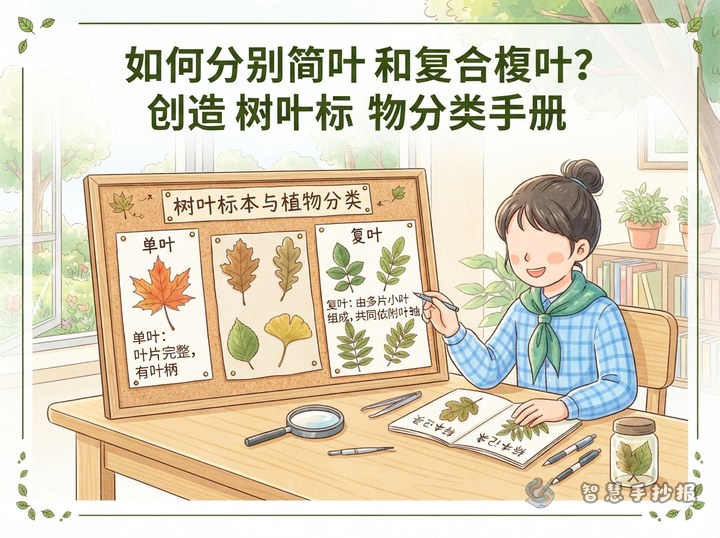
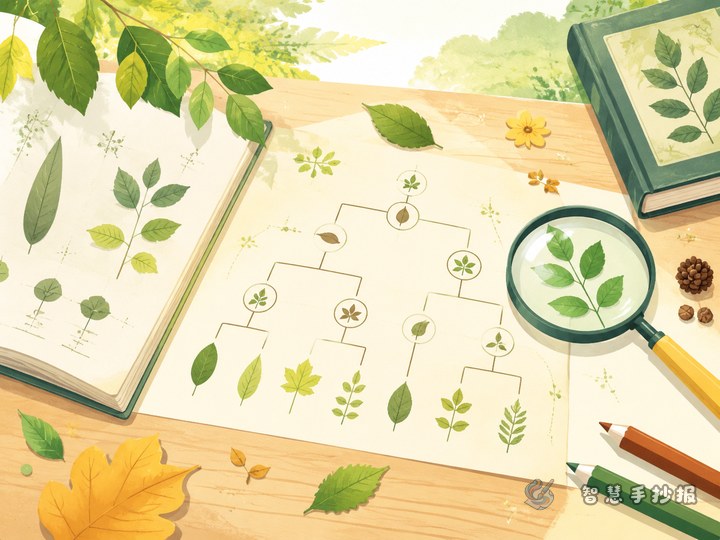
When observing leaves, we can first check whether the leaf is simple or compound. Then we look at the leaf shape, margin, and veins. These details are useful clues that help us describe and group plants more clearly.
A Safe Collection Reminder
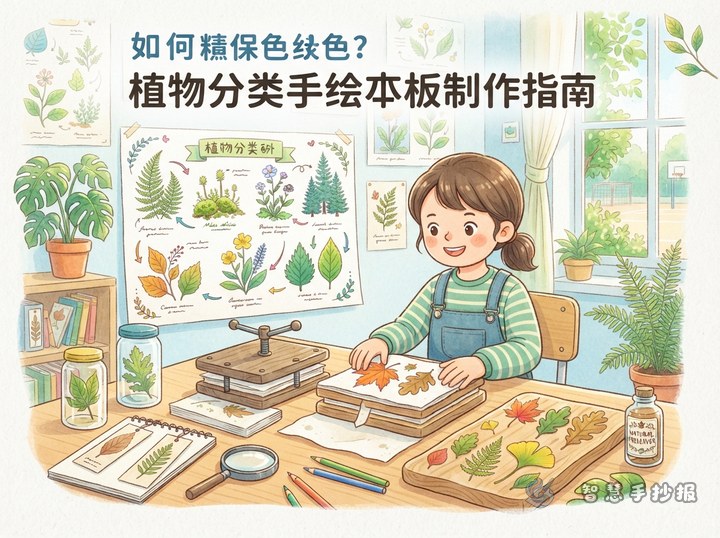
When collecting leaves, try to choose fallen leaves or leaves from common plants. Do not break branches or damage flowers. After collecting, press the leaves between sheets of paper and write down the date and place.
Design the Page Like a Plant File Cabinet
Write the main title at the top and decorate it with a magnifying glass, paper clips, small labels, and a notebook. The center of the poster can look like four file drawers: leaf shapes, leaf margins, leaf veins, and specimen display. This makes the classification idea easy to see.
- Top left: write the steps for observing a leaf.
- Top right: add a small plant dictionary explaining words such as simple leaf, compound leaf, and leaf veins.
- Center: paste or draw three to five leaves with labels.
- Bottom: create a “My Discovery” box for one or two observation sentences.
Small Details That Make the Poster Neater
Because real leaves already have rich colors, use light green, cream, or pale yellow as the background. Add simple vine borders, leaf outlines, and dotted label lines. Make sure the specimens are flat and dry before pasting, and do not cover the writing area.
If you want to organize headings, columns, and short text faster, you can continue creating in the Zhihui Shouchaobao WeChat mini program. Try prompts such as “leaf specimen labels” or “plant classification file” to get more classroom-friendly poster ideas.