Start with one clear focus: leaf veins
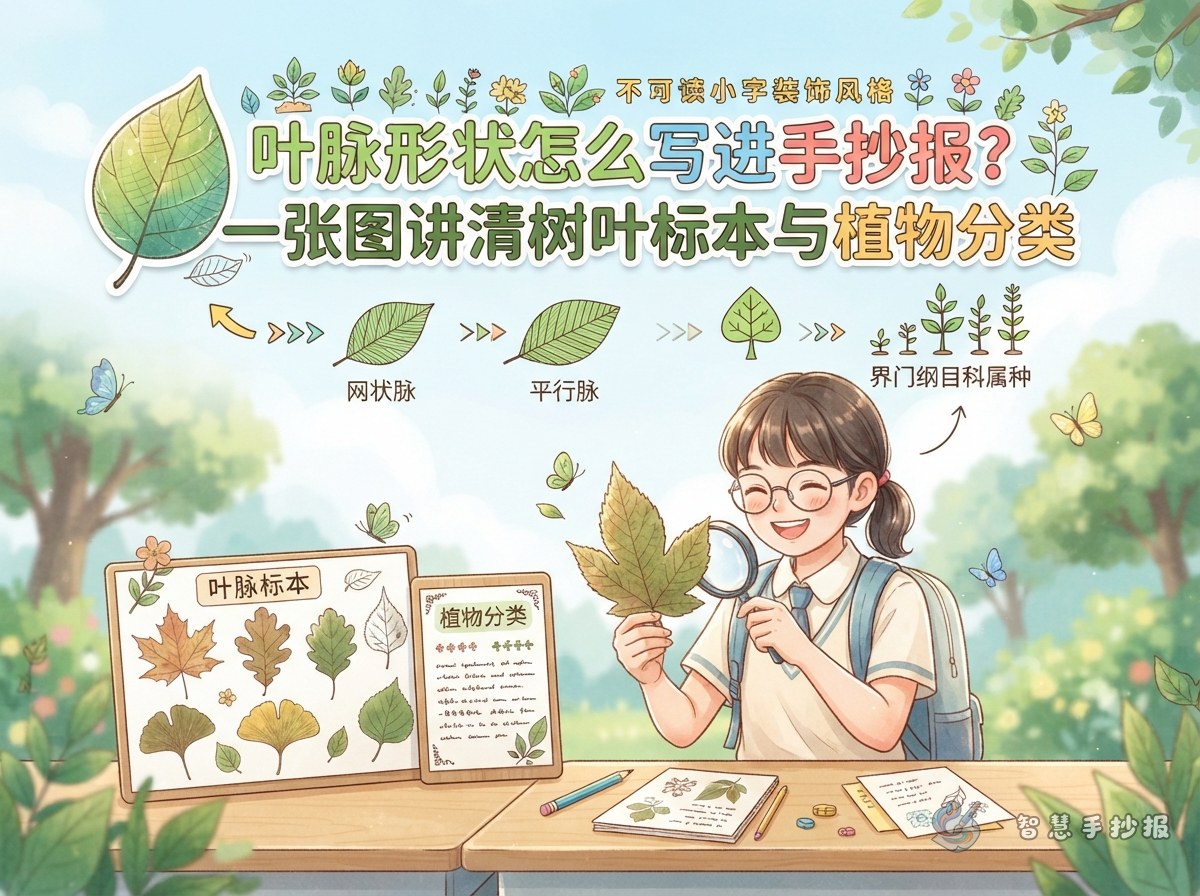
Many students collect beautiful leaves but struggle to turn them into a strong handwritten newspaper topic. A good solution is to narrow the theme to leaf vein shapes. Veins are easy to notice, easy to compare, and closely related to plant identification. Once the theme becomes specific, the whole page feels more organized.
You can use a title such as “Learning Plants Through Leaf Veins” or “The Patterns Hidden in Leaves” to make the topic feel lively and science-based at the same time.
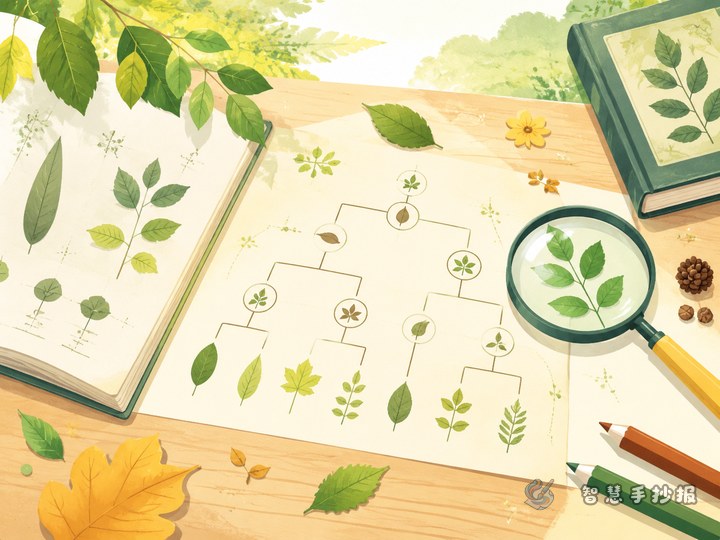
Three main vein types that are easy to explain
Parallel veins
These veins run in nearly the same direction, looking tidy and straight. They are simple to describe and easy for children to identify on long, narrow leaves.
Netted veins
This type forms a network across the leaf surface. It is common and visually clear, so it works very well as a main comparison section in a handwritten newspaper.
Curved veins
These veins rise from the base of the leaf and bend upward in soft arcs. This category adds variety to the page and helps students notice that not all vein patterns look the same.
- Describe what the veins look like before explaining how to tell them apart.
- Keep each category short and readable.
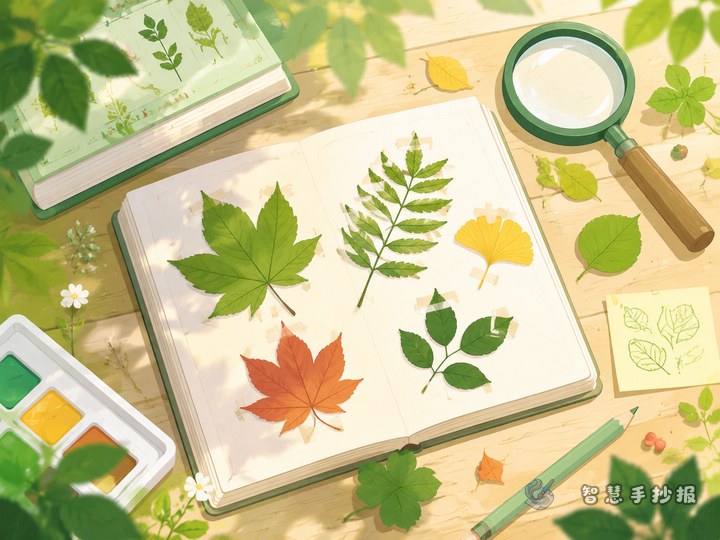
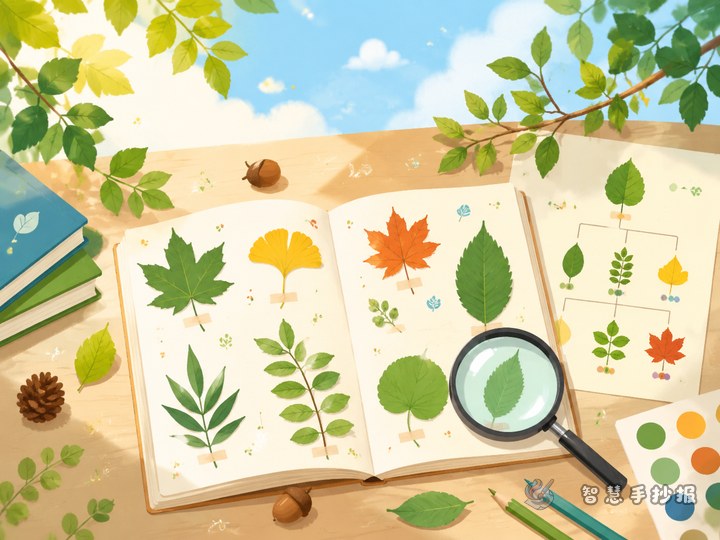
- Leave room for real specimens or hand-drawn leaf outlines.
Add three more observation angles for a fuller page
If the page only talks about veins, it may feel a little short. A better approach is to build one main theme with a few supporting sections.
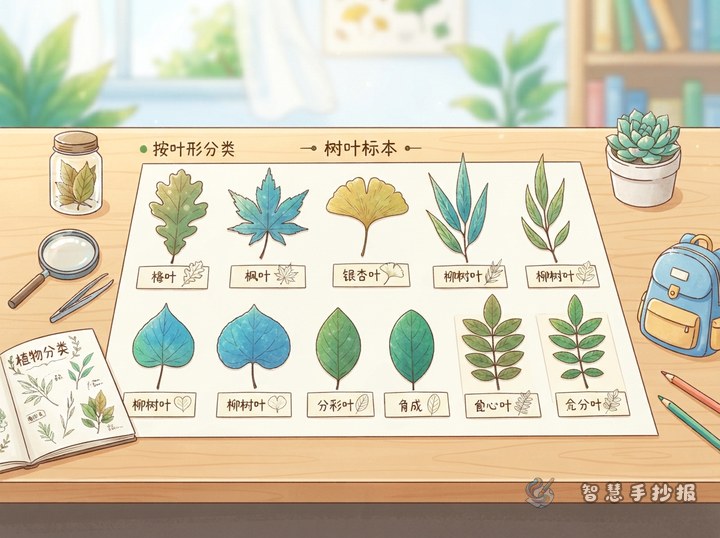
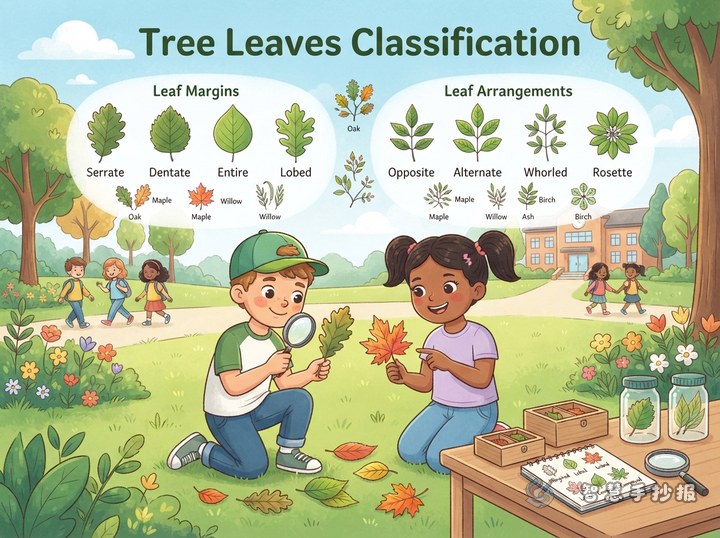
- Leaf shape: oval, heart-shaped, needle-like, fan-shaped, and more.
- Leaf margin: smooth, serrated, or wavy edges.
- Color change: light green, dark green, yellowing, or turning red with the season.
This combination gives the handwritten newspaper more depth while still keeping leaf veins as the center of attention.
How to write the specimen-making section
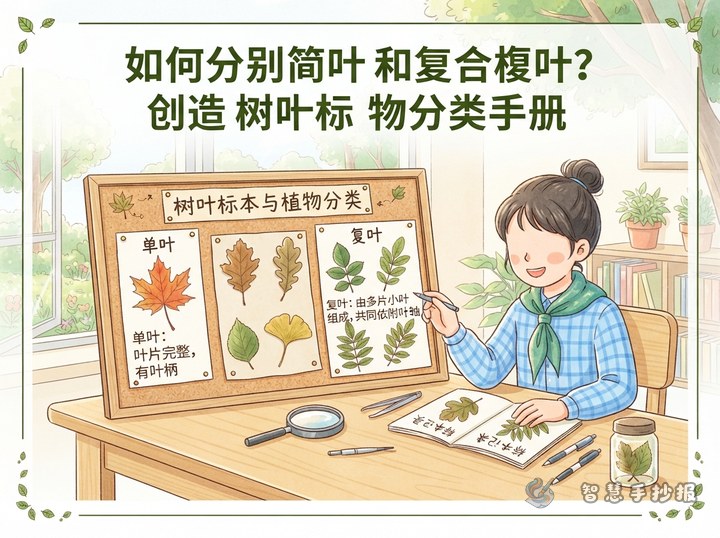
A leaf specimen section should show both process and observation. It is not only about pasting leaves onto paper. Students can explain the basic steps like this:
- Choose a complete and fairly flat leaf.
- Gently remove moisture from the surface.
- Place it between pages or thick paper to press it flat.
- Wait until it becomes dry and easy to store.
- Label it with vein type, shape, and color notes.
You can also add a small note beside each specimen, such as “This leaf has a net-like pattern” or “This edge has tiny teeth.” That makes the page feel more like a real observation record.
Ready-to-use text for the handwritten newspaper
Text sample 1: A leaf is not only part of a plant but also an important clue for identifying it. By observing veins, shapes, and margins, we can sort leaves into different groups.
Text sample 2: Leaf specimens help us keep our short moments of nature study. Pressing, classifying, and labeling leaves can turn simple observation into a meaningful science display.
Text sample 3: Plant classification is not far away from daily life. It can begin with the leaves we see on school trees and roadside plants.
Try a card-style layout instead of equal blocks
This topic looks especially good in a card-style design. Put a large title at the top, three classification cards in the middle, and the specimen steps plus observation notes at the bottom.
- Use green, yellow, and brown for a natural look.
- Shape section borders like leaves to match the topic.
- Keep observation notes short.
- Add small decorations such as tiny leaves or magnifying glass icons.
If you want to turn these notes into a polished final page more quickly, you can continue arranging the content and layout in the Zhihui Shouchaobao WeChat mini program.