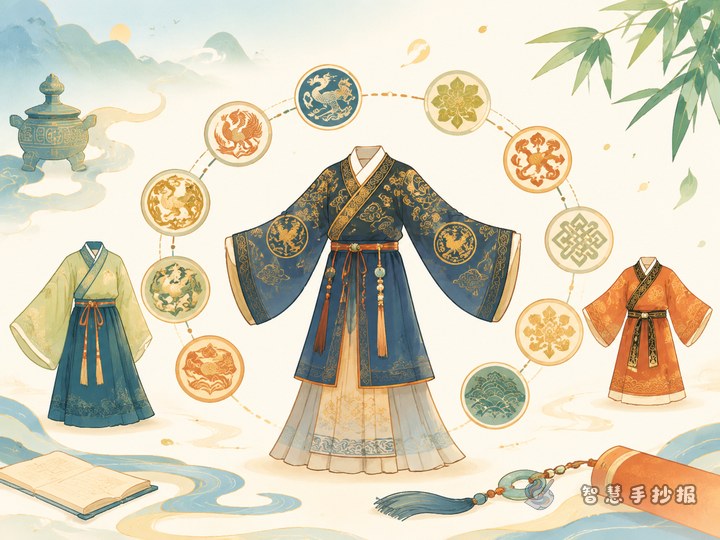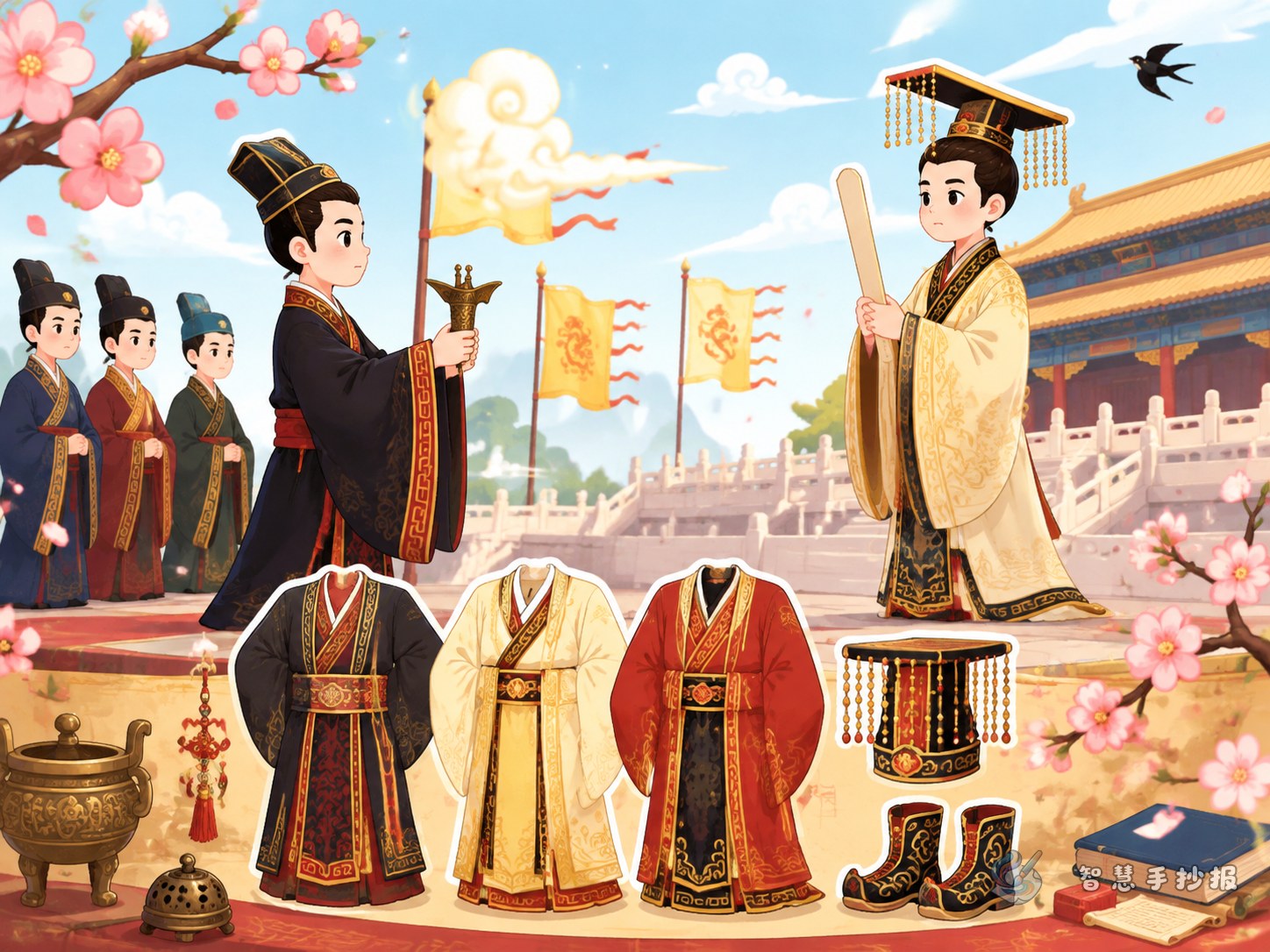
Begin with a map of ritual occasions
This handwritten poster can be organized around the idea that clothing changes with the occasion. Instead of filling the page with dynasty names, place the main title in the center and arrange four scenes around it: sacrifice, court audience, wedding, and mourning. This helps readers see how clothing and ritual rules work together.
- Sacrifice: show reverence and a solemn atmosphere with a ritual vessel, a respectful gesture, or a standing figure.
- Court audience: show order, formal positions, and controlled movement with rows of figures and a palace background.
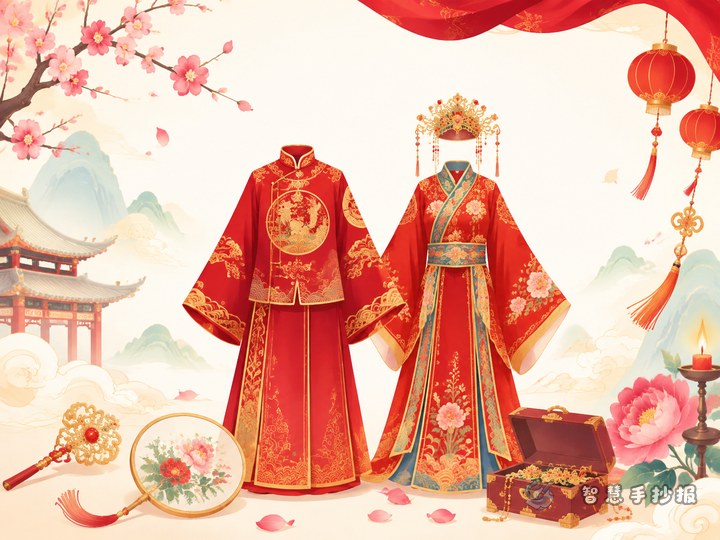
- Wedding: include welcoming and bowing ceremonies, while noting that clothing customs changed across periods and regions.
- Mourning: express remembrance and grief through a quiet composition and restrained decoration.
Give every scene the same three clues
To keep the poster from becoming an ordinary clothing introduction, make each section answer three questions: When was it worn, who wore it, and what attitude did it express? This connects garments, belts, shoes, and headwear with actual ceremonies instead of presenting isolated names.
- Name the occasion, such as a sacrifice, court audience, or wedding.
- Describe the overall impression of the clothing: solemn, orderly, formal, or restrained.
- Add a ritual action or setting, such as bowing, standing in line, welcoming, worshipping, or saying farewell.
A small note can read: “Clothing systems differed across ancient periods, so this poster focuses on their ritual functions.” This wording keeps the history accurate without making overly absolute claims.
Ready-to-use writing for the page
Central introduction
In ancient China, clothing was used not only for covering the body and decoration. It was also connected with ceremonies, identity, and social order. During sacrifices, court audiences, weddings, and mourning rituals, garments, posture, and ceremonial actions expressed reverence, respect, celebration, or remembrance. Clothing rules changed over time, but they consistently showed the importance people placed on ritual.
Short lines for the four panels
- Sacrifice shows reverence: clothing and posture create a solemn ceremonial atmosphere.
- Court audiences show order: formal dress and arranged positions reflect rules and roles.
- Weddings carry good wishes: clothing accompanies welcoming and bowing rituals and expresses hopes for a new life.
- Mourning shows remembrance: garments and ceremonies express grief and respect for the dead.
Use a center-and-four-corners layout
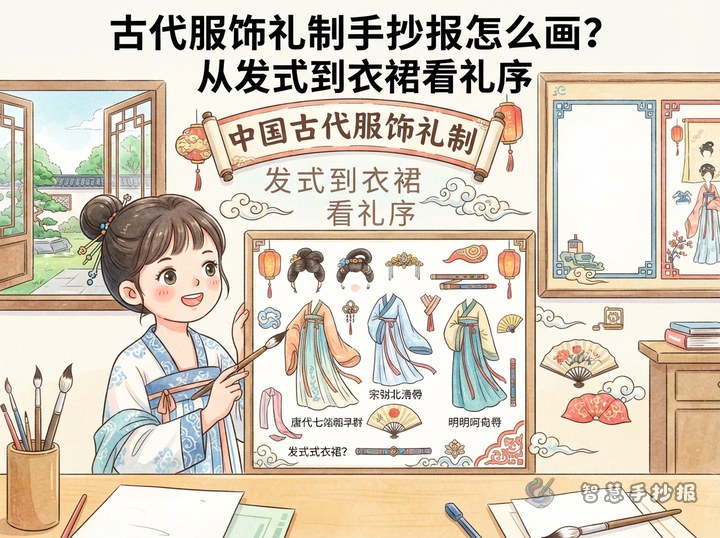
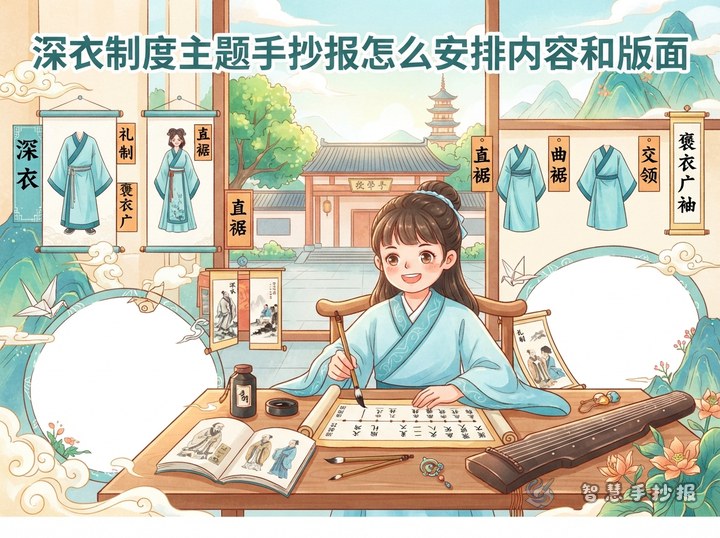
Draw an open scroll or a simple traditional screen in the middle of the page and write “Clothing Changes with Ritual” as the main title. Put four scene cards in the corners. Each card can include a small figure, two or three clothing keywords, and one sentence about the ritual. Connect the cards with thin lines or arrows to show that all four are different occasions governed by ideas of etiquette.
- Place sacrifice and court audience near the top, using upright compositions to suggest public ceremony.
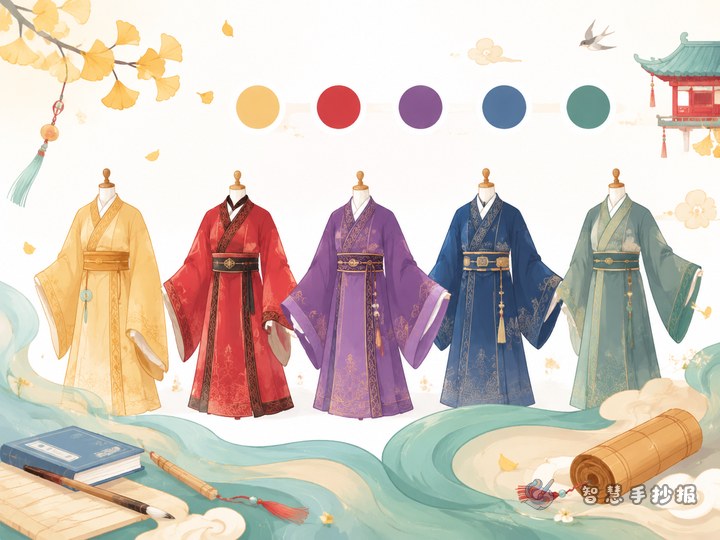
- Place wedding and mourning near the bottom, giving them clearly different moods without letting color overpower the text.
- Decorate the border with belts, cloud patterns, window-grid lines, or scroll shapes.
- Keep each panel to three to five keywords and short sentences so children can read and copy it easily.
Drawing and final-check tips
You do not need to recreate every historical detail. Use a similar simple figure in each scene, then distinguish the occasions through ritual objects, rows of people, bowing gestures, and background changes. Draw the outline of the clothing clearly; sleeves, waistbands, and hems can be shown with a few layered lines. If a specific period style is uncertain, use careful phrases such as “ancient ceremonial dress” or “ritual clothing.”
- Check that every scene includes an occasion, a clothing feature, and a ritual meaning.
- Make sure sacrifice, court audience, wedding, and mourning are visually easy to tell apart.
- Add the connection between clothing and ritual instead of listing garment names alone.
- Use larger lettering for the title and headings so the page has a clear visual focus.
After the text and sketch are ready, open the WeChat Mini Program “智慧手抄报” to organize the sections, adjust the layout, and continue making the handwritten poster.