Choose One Clear Story: How Wedding Dress Expressed Ritual
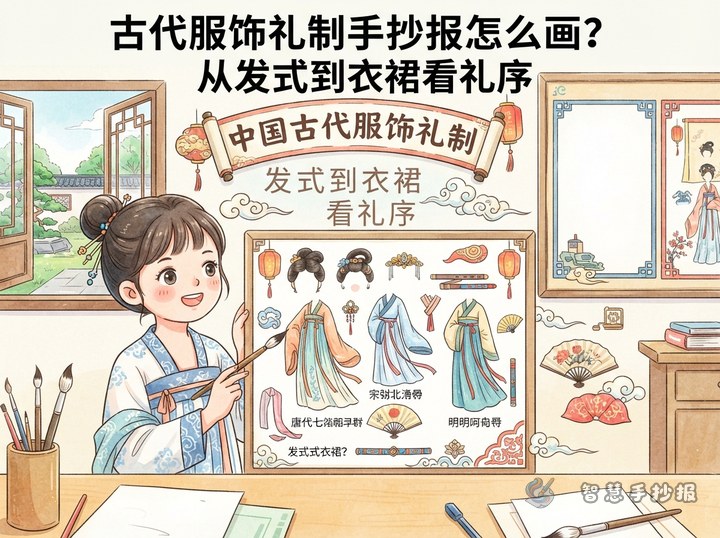
Build the poster around ancient Chinese wedding clothing and ceremony instead of listing costumes from every dynasty. Start with a simple question: why was special clothing worn at a wedding? Formal dress could create a solemn atmosphere while also showing a person’s identity, the occasion, and the expected manners.
Main idea: Ancient wedding clothing was not ordinary daily wear. It changed with the period, social position, region, and ceremony, making dress an outward expression of traditional ritual culture.
Make the Wedding Scene the Visual Center
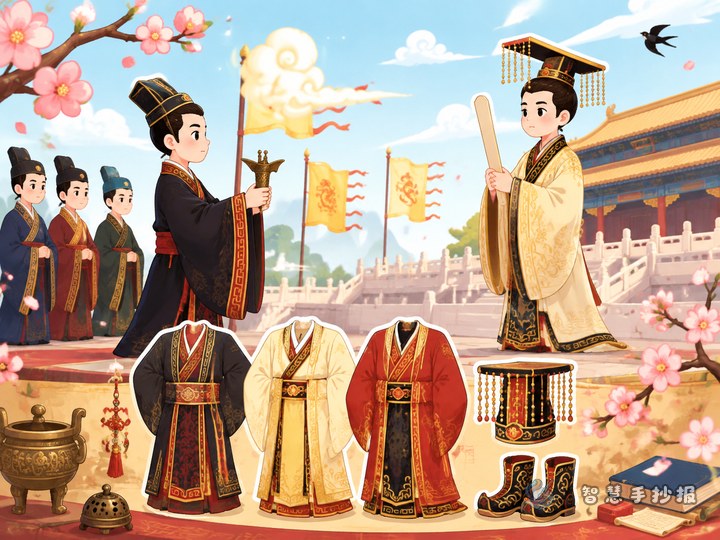
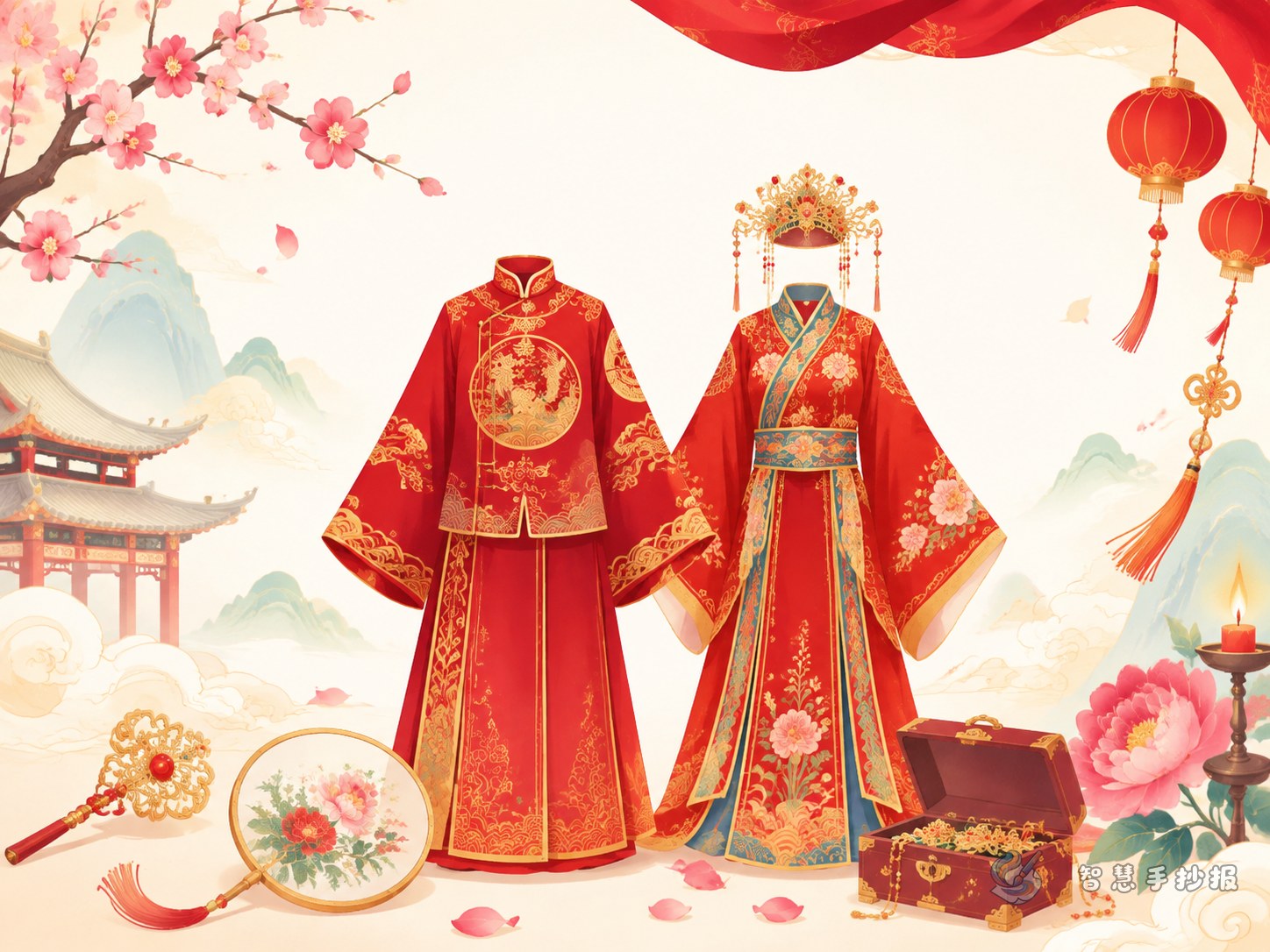
Draw a couple performing a wedding courtesy in the middle of the page. Sleeves, belts, headwear, or a formal cap can show the layers of the clothing. The figures do not need to be complicated: clear outlines and respectful poses are more important. Add small labels beside each part to explain the clothing and accessories.
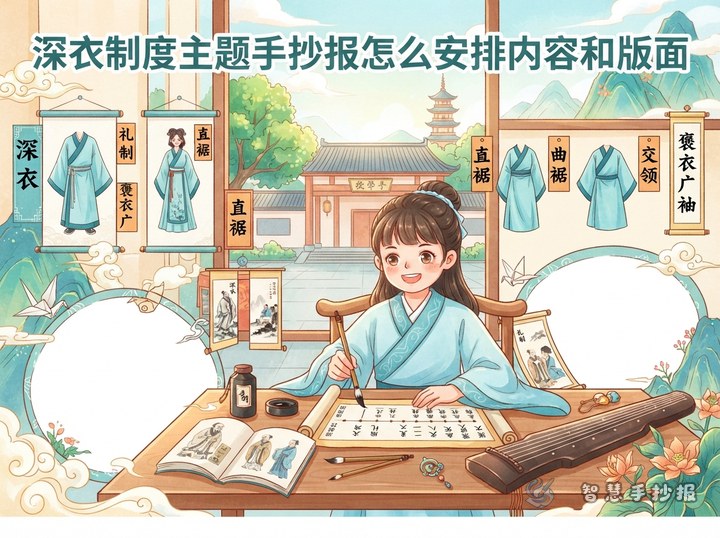
- Place the title and a simple floral, jade pendant, or collar motif at the top.
- Use the silhouettes of the couple or a wedding procession as the main focal point.
- Put clothing cards on both sides for robes, skirts, headwear, and waist accessories.
- Draw a short ceremony timeline at the bottom to connect dress with the occasion.
Four Ready-to-Use Text Sections
Wedding dress: explain the occasion before the clothing
You may write: An ancient wedding was an important ceremonial occasion, so participants generally wore clothing that was more formal and symbolic than everyday dress. Wedding clothing differed across dynasties, regions, and social positions. Add a note saying that styles varied by period instead of presenting one costume as universal.
The six rites: connect clothing with the wedding process
The traditional six rites are often summarized as proposal, inquiry about the bride’s birth details, approval, betrothal gifts, setting the wedding date, and welcoming the bride. Their details changed over time. For a poster, you do not need a long explanation of each step. Give special emphasis to welcoming the bride, where clothing, procession, and social roles can be observed together.
Accessory notes: use details to show dignity
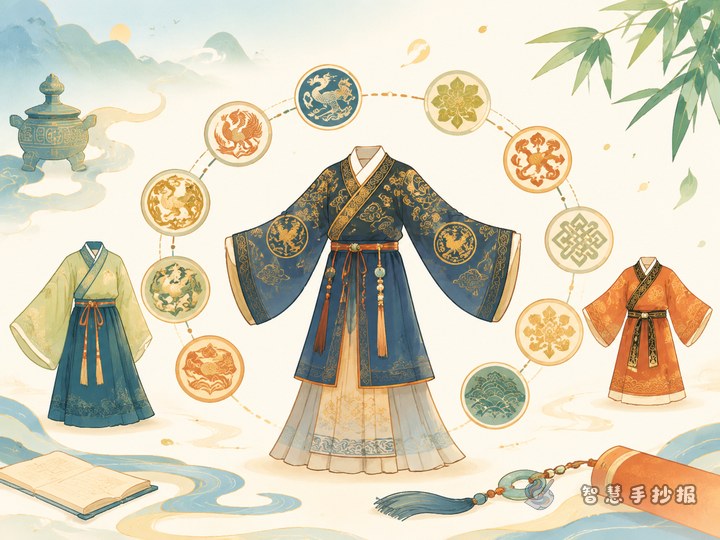
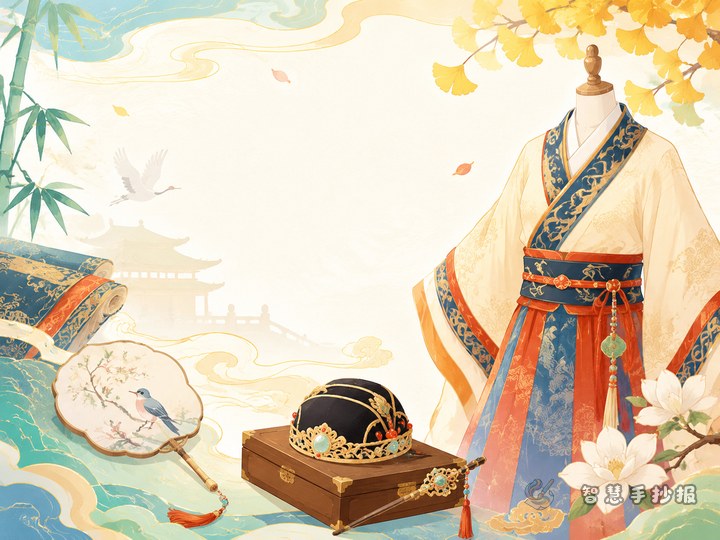
Turn collars, wide sleeves, belts, headwear, and jade pendants into small icons with short captions. Wide sleeves can suggest ceremony, a neatly tied belt can make the figure look composed, and headwear or pendants can offer clues about identity and occasion.
Ritual rules: look beyond beauty
Clothing ritual was not only about color and decoration. It also involved when a garment could be worn, who could wear it, how it should be arranged, and how the wearer should behave. Connect the four words “occasion, person, clothing, courtesy” with arrows to make the poster show cultural understanding.
Use Color and Decoration Carefully
Vermilion, ivory, ink black, and a touch of gold can create a bright yet classical mood. Add a note that wedding clothing changed according to dynasty, status, and region, so no single color represents every historical period. Choose simple cloud, floral, or geometric motifs rather than filling the page with details that are hard to recognize.
Shape text boxes like collars, jade pendants, or folding fans so that the layout echoes the theme. Keep each paragraph to two or three sentences, and circle key terms with colored pencils for easier reading and copying.
Finish with a Clothing Observation Line
End with a sentence such as: From one wedding garment, we can see how ancient people valued identity, occasion, and proper conduct. Clothing was more than decoration; it also recorded ways of living and cultural ideas. Before coloring, check that the title stands out, the timeline reads smoothly, and historical differences are clearly noted. Then unify the outlines and palette. To continue arranging columns, colors, and layout, open the Zhihui Handwritten Newspaper WeChat mini program.