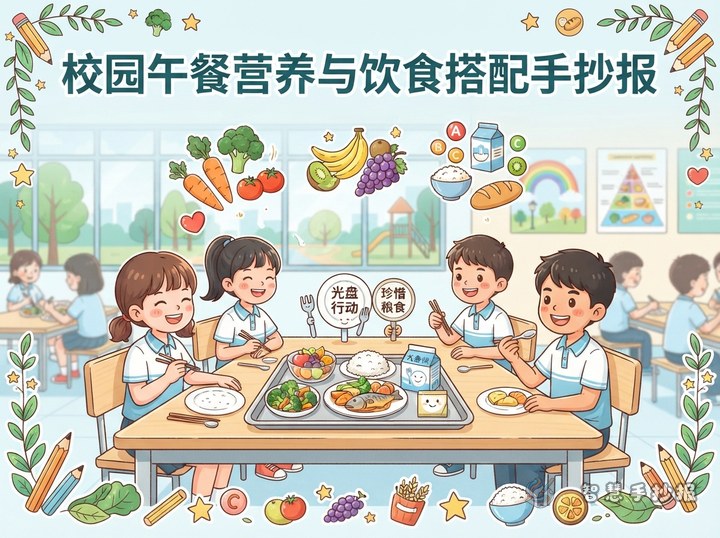
Turn Lunch into a Talking Plate
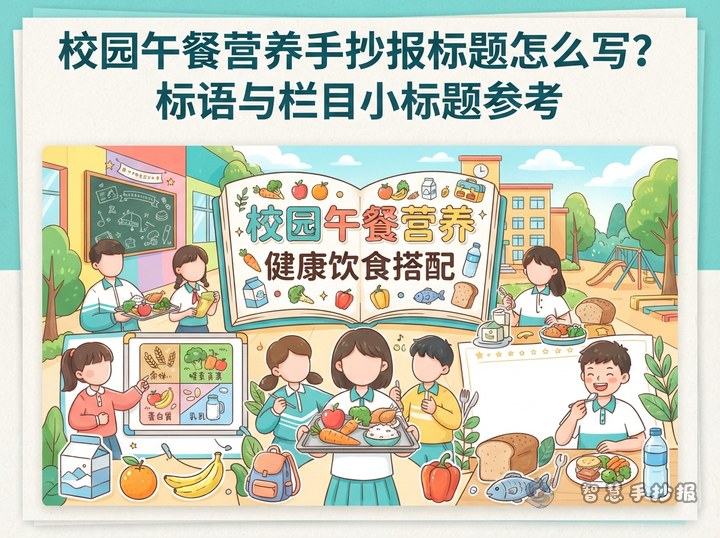
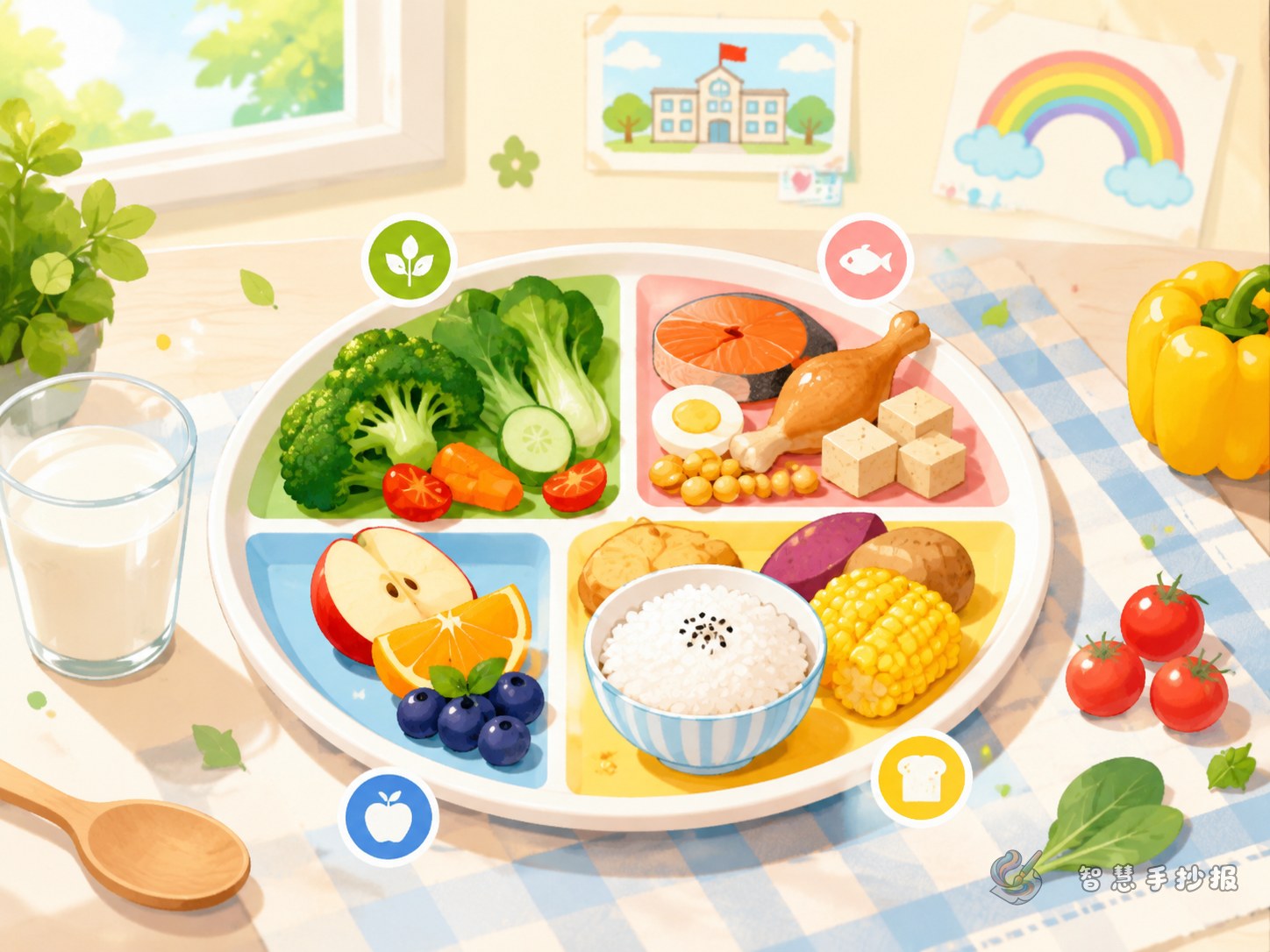
This hand-copied poster can begin with the idea of “my school lunch plate.” Instead of listing difficult nutrition terms, draw a large round plate in the center and divide it into staple food, vegetables, protein foods, and a small reminder for fruit or dairy. This makes the message easy for children to understand: lunch should be balanced, not just filling.
Possible titles include “A Smart Lunch Plate for School” or “Did You Match Your Lunch Today?” Add small drawings such as a lunch box, chopsticks, tomatoes, eggs, leafy greens, rice, and milk to make the page bright and friendly.
Short Columns Students Can Use
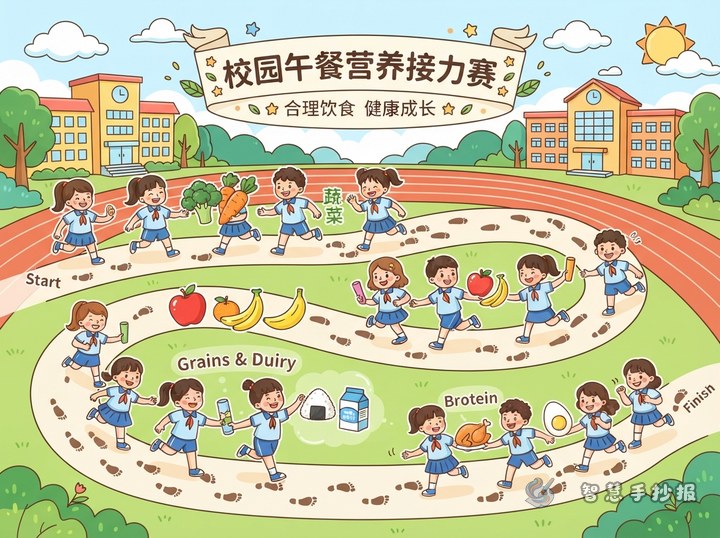
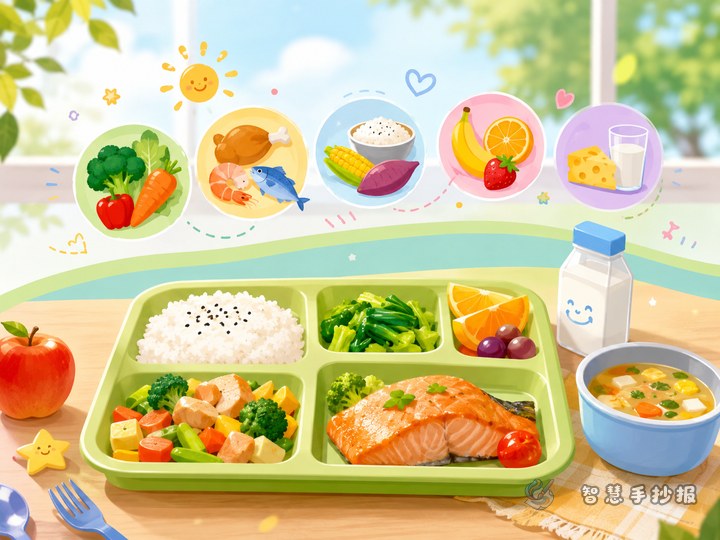
- Staple foods give energy: Rice, noodles, steamed buns, corn, and sweet potatoes help students regain energy after a busy morning.
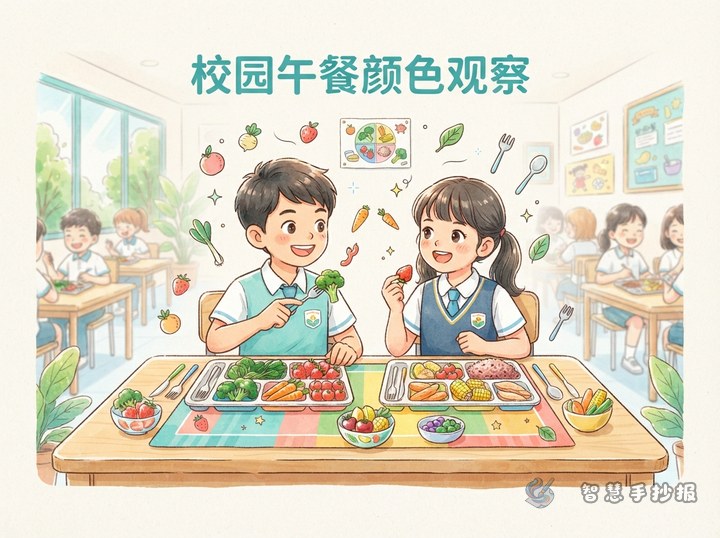
- Vegetables add colors: Green, orange, yellow, and purple vegetables make the lunch plate more colorful and help children build a habit of trying different foods.
- Protein helps us grow: Eggs, fish, lean meat, tofu, beans, and milk are good partners for growing bodies.
- Less oil and salt feels better: A school lunch should be light and comfortable. Avoid too many salty, greasy, or very sweet foods.
Three Lunch Match Ideas for Mini Cards
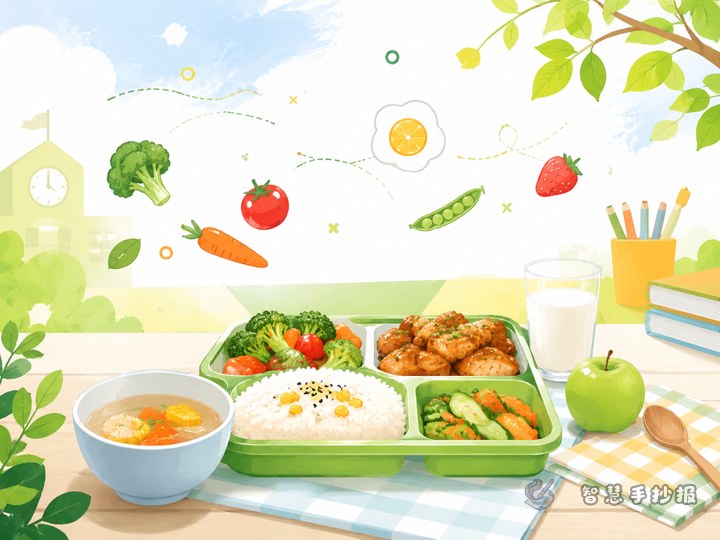
- Rice, tomato scrambled eggs, and green vegetables: A bright red, yellow, and green combination that is easy to draw and easy to understand.
- Mixed-grain rice, chicken, and broccoli: This shows a good mix of grains, protein, and vegetables.
- Noodles with tofu and vegetable soup, plus an apple: A nice example showing that noodles also need vegetables and protein.
The poster does not need long explanations. The key point is simple: a good school lunch usually includes staple food, vegetables, and protein foods. More natural colors often make the meal more attractive.
A Clear Page Layout
Place the main title and a short slogan at the top. Draw the large lunch plate in the middle. On the left, write “Four Good Friends of Lunch.” On the right, add “Three Sample Lunches.” At the bottom, create a small checklist: Did I eat staple food today? Did I eat vegetables? Did I have a protein food? Did I avoid too many sweet drinks?
Good color choices include light yellow, fresh green, orange, and warm white. Use boxes, labels, or small icons to separate each part. This keeps the poster neat and easy for younger students to copy.
Finish with a Small Promise
At the end, students can write: “From today on, I will enjoy a balanced lunch and try not to be picky.” If you want to turn these ideas into a complete poster, you can continue in the WeChat mini program of Zhihui Shouchaobao and adjust the title, sections, and layout for your grade level.