Choose a clear comparison theme first
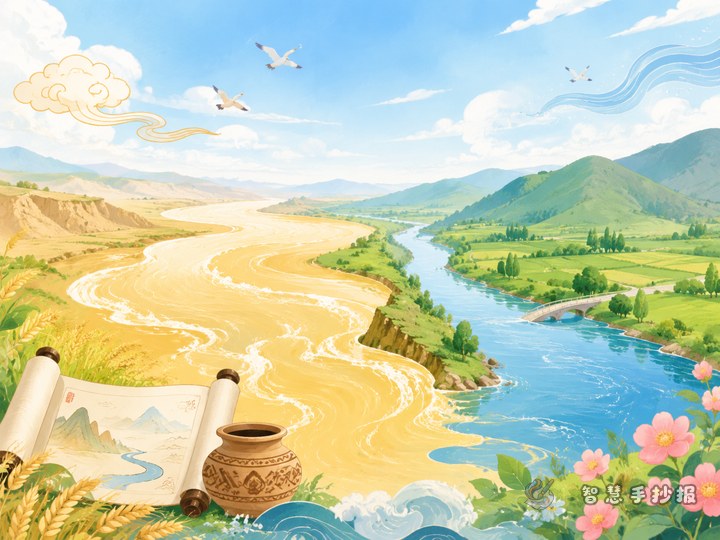
A practical way to start is to use a theme such as “A Conversation Between a Great River and a Local River” or “The Yellow River and My Hometown River”. This keeps the poster focused and helps readers understand the topic at a glance.
If the topic feels difficult, begin with one guiding sentence: the Yellow River is an important mother river in Chinese culture, while my hometown river is the waterway closest to my daily life. This sentence can guide all later sections.
Four easy sections children can write
1. What the rivers look like
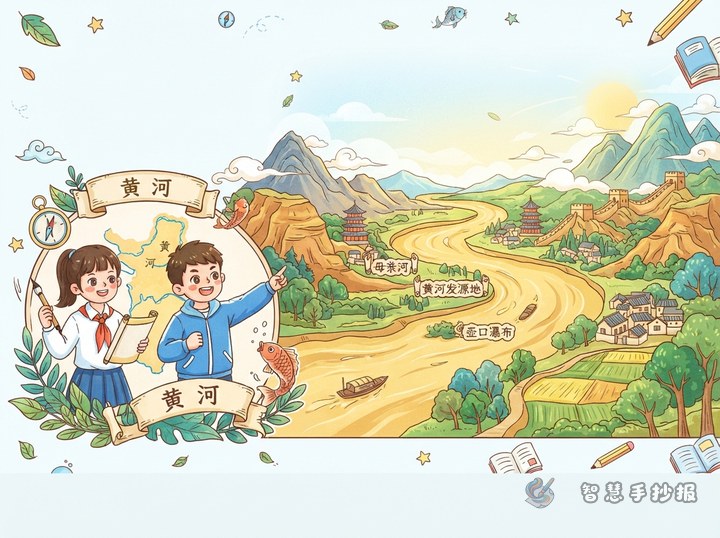
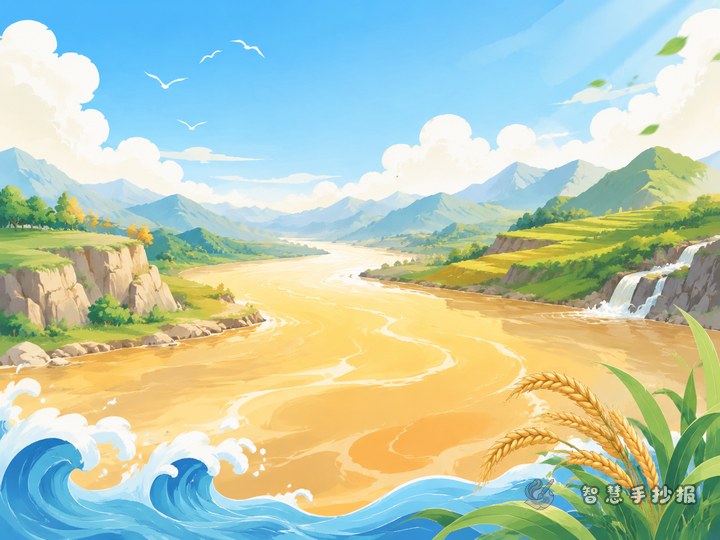
- The Yellow River: broad, powerful, historic, and full of energy.
- My hometown river: width, seasonal changes, plants, bridges, walking paths, and familiar scenery.
2. How the rivers support life
- The Yellow River: irrigation, farming, and the development of communities.
- My hometown river: neighborhood life, watering fields, raising fish, leisure, and local views.
3. Cultural memory in the rivers
- The Yellow River: history, perseverance, unity, and traditional spirit.
- My hometown river: place names, family stories, village memories, or local customs.
4. What we can do to protect them
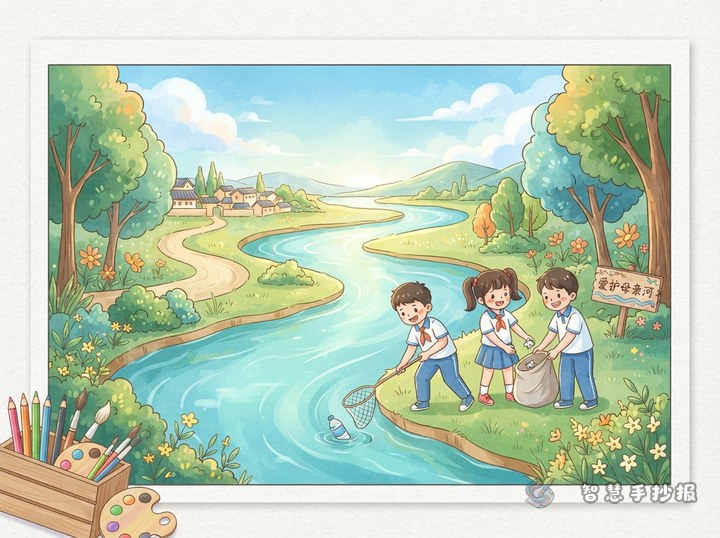
- Do not throw rubbish into rivers.
- Save water in daily life.
- Help keep the riverbank clean.
These four parts are easy to understand and work well in a school poster.
Try a left-right layout with a connecting center
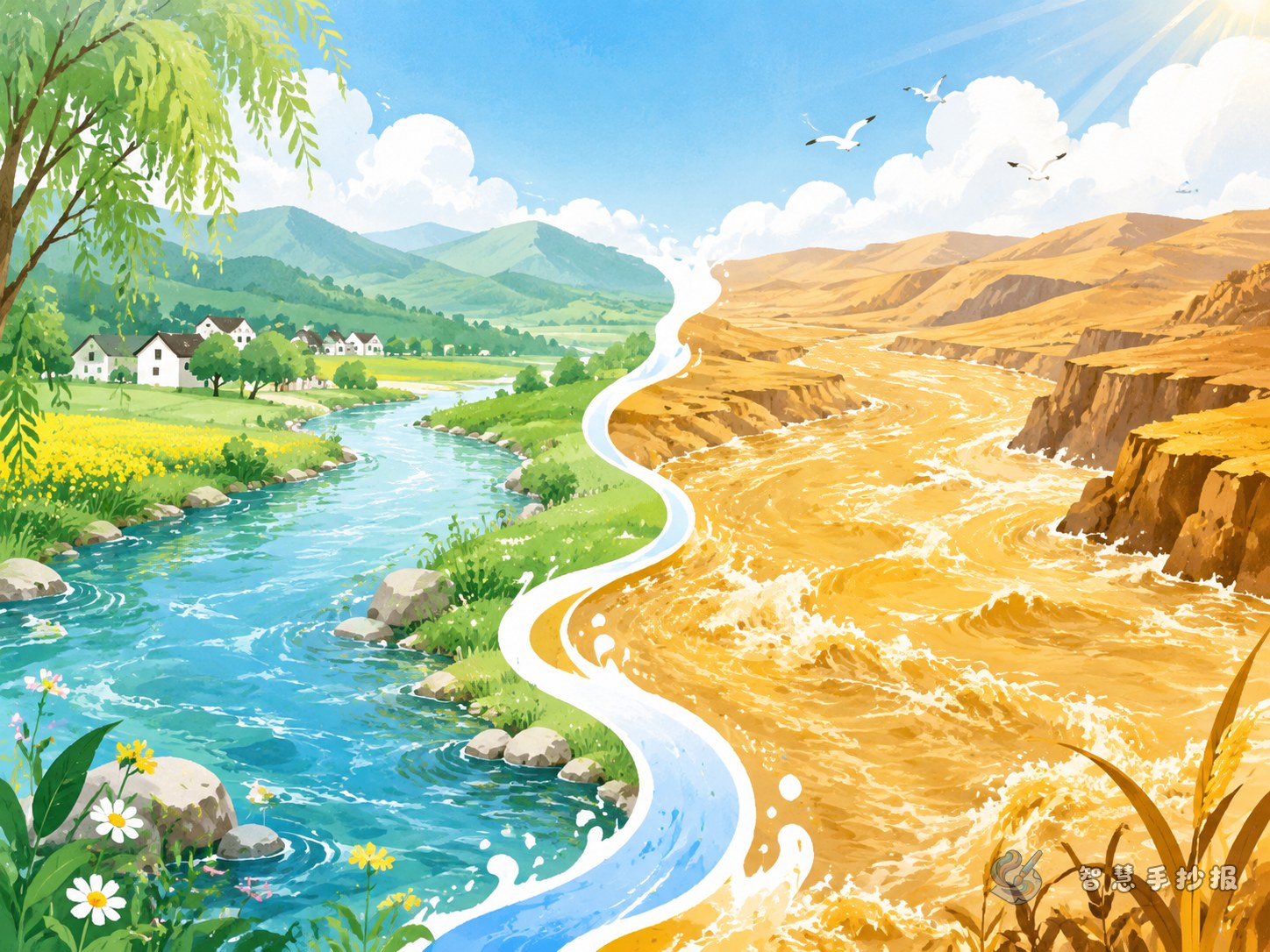
Instead of splitting the page evenly, divide it into three zones. Put the Yellow River on the left, your hometown river on the right, and use a flowing center strip for shared values, personal thoughts, and protection ideas. This layout feels more purposeful than a simple top-to-bottom design.
- Left heading: “Impression of the Yellow River”
- Right heading: “By My Hometown River”
- Center heading: “What Connects Them”
Decorations can stay simple: waves, clouds, fish, reeds, or water drops. Repeating the same style across the page will make the poster look neat.
Short writing materials that can be used directly
Children often write better with short sentences followed by one summary idea. Here are useful lines to adapt:
- Opening: The Yellow River flows through history, while my hometown river flows through my daily life.
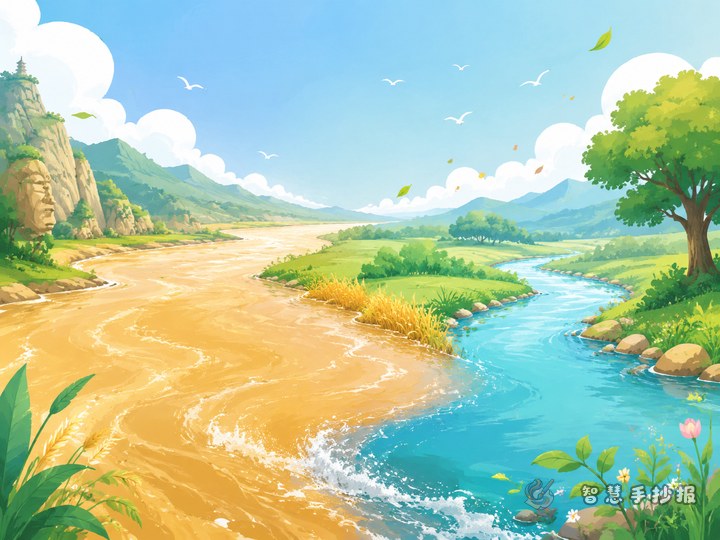
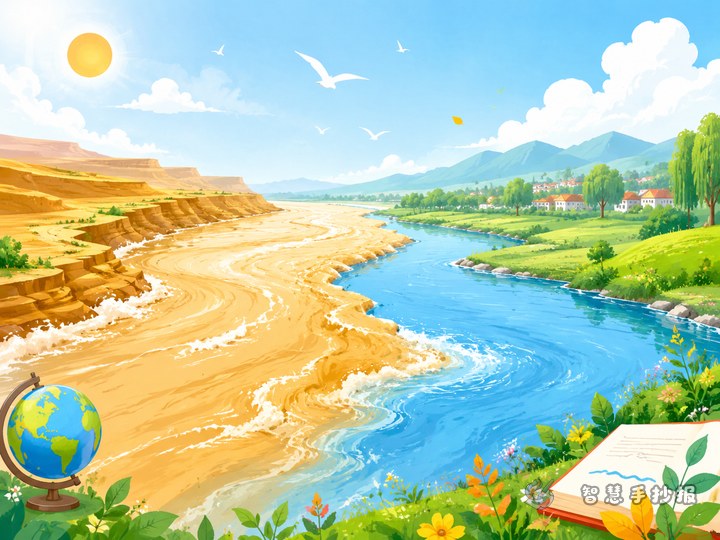
- Comparison: One is grand and mighty, the other is gentle and familiar, but both nourish the land and the people.
- Reflection: Learning about the Yellow River helps me understand history, and watching my hometown river teaches me to treasure nearby water resources.
- Ending: Protecting every river means protecting our home and passing on valuable river culture.
Simple and sincere language is better than long and difficult words.
Small details that improve the final poster
- Make the main title larger than the section headings.
- Keep each text block short so the page does not feel crowded.
- Add a small box for “What I Want to Say to My Hometown River.”
- Use blue, green, and earthy yellow as the main colors.
- Draft the layout first, then copy it neatly.
If you already have your theme and want help refining titles, sections, and page decoration, you can continue your work in the Zhihui Shouchaobao WeChat mini program.