Organize the Page by How the Instruments Are Played
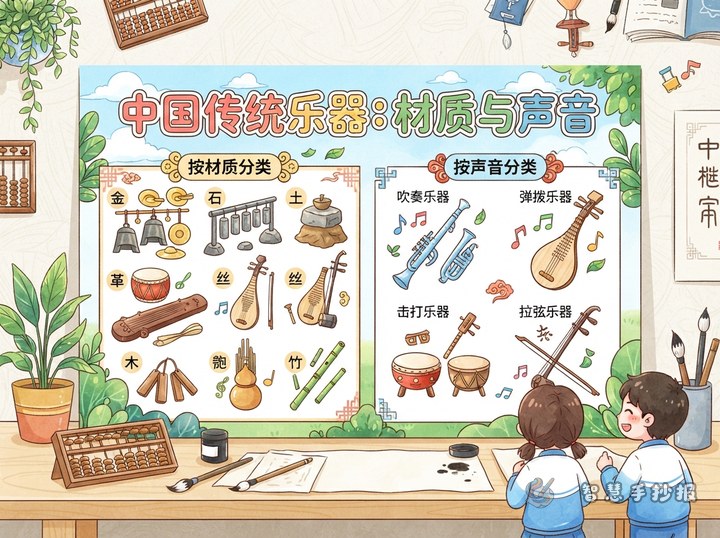
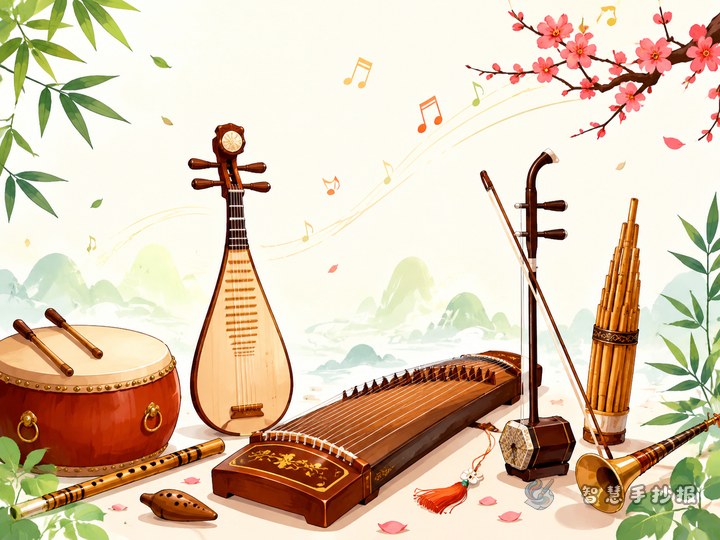
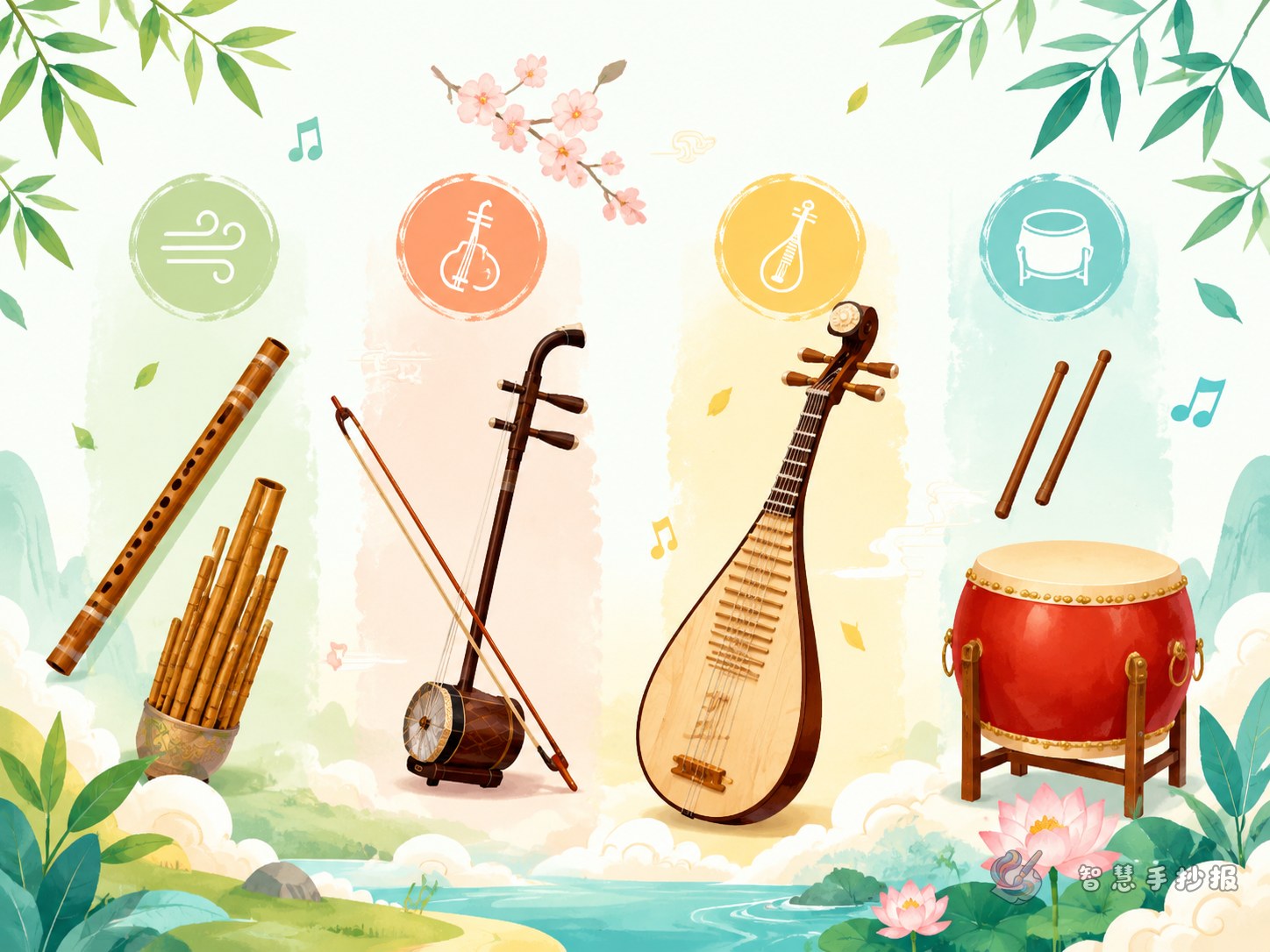
A handwritten newspaper about traditional Chinese musical instruments becomes much clearer when it is organized by playing methods. You can divide the content into wind, bowed strings, plucked strings, and percussion. This helps readers understand how different instruments make sound.
- Wind instruments: Dizi, xiao, and suona are played by blowing. Their sounds may be bright, gentle, or powerful.
- Bowed string instruments: Erhu, jinghu, and banhu are played with a bow. Their tones are expressive and emotional.
- Plucked string instruments: Pipa, guzheng, and ruan are played by plucking strings. Their melodies are graceful and vivid.
- Percussion instruments: Bianzhong, gongs, drums, and wooden fish create rhythm and atmosphere.
Make Four Small Sections Instead of a Long Encyclopedia
For a student-friendly handwritten newspaper, choose only a few representative instruments instead of listing too many names. Each section can include one or two instruments, short descriptions, and simple drawings.
Section One: Guess the Instrument by Its Sound
You may write sentences such as: “The dizi sounds clear like a breeze in the mountains,” “The erhu seems to tell a moving story,” and “The drumbeat feels like the footsteps of a festival.” These lively descriptions are easier to read than long definitions.
Section Two: Instrument Fact Cards
Create small cards for the dizi, erhu, pipa, and bianzhong. Each card may include the category, playing method, appearance, and the feeling of its sound. Rounded frames, scroll-shaped boxes, or music-note borders work well.
Section Three: Instruments in Daily Culture
You can mention folk music performances, Chinese opera accompaniment, festival celebrations, and school art activities. This makes the page not only about instruments, but also about traditional culture.
Short Text Materials for Students
Opening paragraph: Traditional Chinese musical instruments are rich and varied. Some are played by blowing, some by vibrating strings, and some by striking. They create beautiful melodies and carry the Chinese love for rhythm, beauty, and emotion.
Instrument notes: The dizi has a bright sound that reminds people of nature. The erhu has a soft and expressive tone. The pipa uses many playing techniques and creates changing sounds. The bianzhong is an ancient percussion instrument that shows the musical wisdom of early China.
Cultural reflection: Learning about traditional instruments is more than remembering names. It helps us understand how people in China have expressed feelings, ceremonies, and beauty through music. A handwritten newspaper is a good way to share these sounds with classmates.
Design It Like a Mini Folk Music Concert
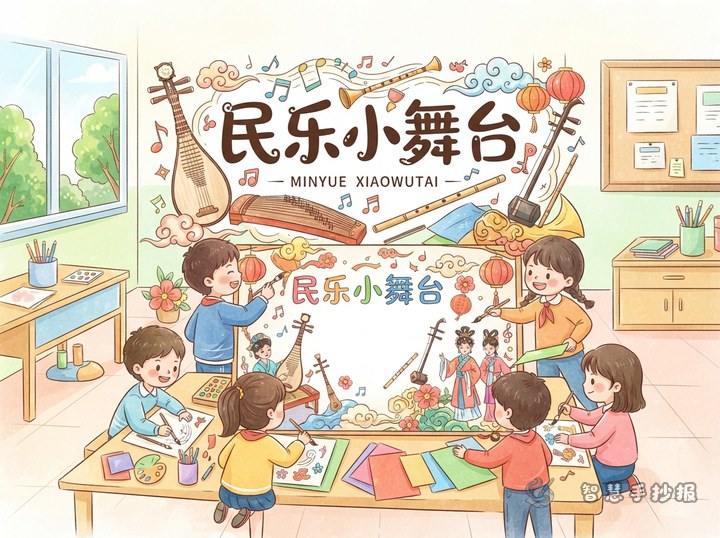
This topic works well with a stage-style layout. Place the title in the center, arrange the four instrument groups around it, and decorate the bottom with music notes, cloud patterns, lanterns, or simple classical borders. Use light beige, green, and red to keep the page fresh and traditional.
- Use a scroll-shaped title area to highlight the traditional theme.
- Put wind instruments in one corner with bamboo or airflow lines.
- Place plucked instruments in another corner with string patterns.
- Use bows, drums, rhythm dots, and small notes to fill empty spaces neatly.
Build the Layout Before You Start Copying
If you are not sure how to arrange the sections, list the four groups first and then use the Zhihui Handwritten Newspaper WeChat mini program to choose a suitable traditional culture layout. After the framework is ready, copy the text materials into each section to make the page cleaner and easier to finish.