Start with a clear idea: one page, two instruments
A Guzheng and Erhu theme is ideal for a comparison-style handwritten newspaper. The Guzheng often feels bright, flowing, and elegant, while the Erhu sounds deeper, more emotional, and full of story. Putting them together helps students show the variety of traditional Chinese music in a simple and interesting way.
Possible titles include “The Beauty of Guzheng and Erhu,” “Two Voices of Traditional Chinese Music,” or “Listening to the Guzheng and Erhu.”
Five practical sections to organize the page
1. Instrument profile
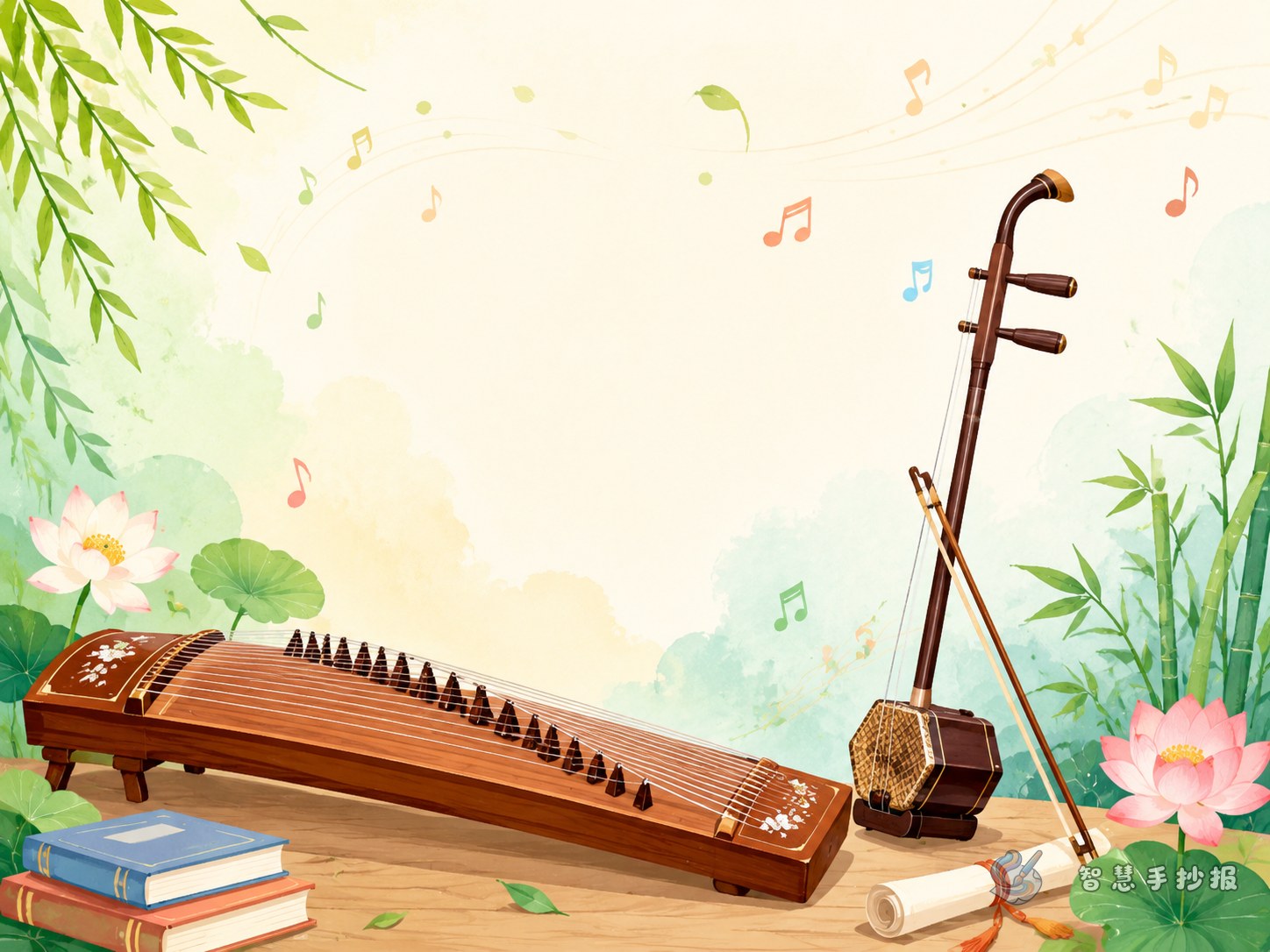
- Guzheng: a plucked string instrument with many strings, usually played on a stand.
- Erhu: a bowed string instrument with two strings, usually played while seated.
2. How their sounds are different
The Guzheng can sound like flowing water or a gentle breeze. The Erhu often feels warm, touching, and emotional. This section works best with short, vivid sentences.
3. Playing posture and movement
The Guzheng is played by plucking strings with the fingers, while the Erhu requires one hand for fingering and the other for bowing. This comparison gives students something visual and easy to describe.
4. Cultural notes
- Both instruments are important in Chinese traditional music.
- They are not only musical tools but also part of cultural heritage.
- Learning about them helps students appreciate Chinese art and history.
5. My own impression
This final section adds personality. Students can write simple thoughts such as “The Guzheng sounds like spring rain, and the Erhu sounds like a voice telling a story.”
Short text materials students can use
For the Guzheng: The Guzheng has a bright and graceful tone. It can express lively feelings as well as quiet and gentle moods. When the strings are plucked, the sound spreads beautifully across the melody.
For the Erhu: The Erhu has a simple structure but a rich emotional voice. Its tone can feel soft, deep, and expressive, making listeners think of memory, longing, and warmth.
For both together: Traditional Chinese instruments do more than make music. They also carry culture, emotion, and artistic beauty. The Guzheng and Erhu each have their own charm and together show the richness of Chinese musical tradition.
Layout ideas that look neat and balanced
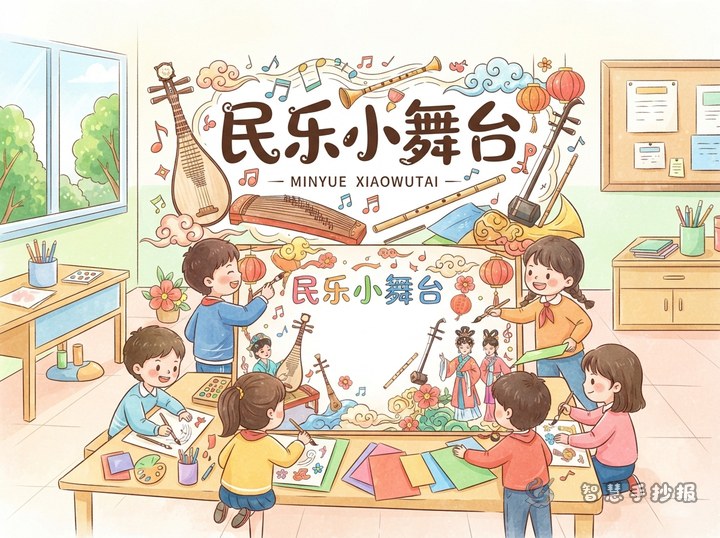
This topic works especially well with a left-right comparison layout or a center title with four surrounding sections.
- Place a large title at the top and decorate it with clouds, sound waves, or simple classical patterns.
- Use the left side for the Guzheng and the right side for the Erhu.
- Add a shared section near the bottom for cultural meaning or personal reflection.
- Decorate empty spaces with line patterns, strings, or music symbols, but do not overcrowd the page.
If the writing is short, make the section headings larger. If there is more text, keep each paragraph compact and easy to read.
Simple production tips for students and parents
- Plan the page structure before copying the final text.
- Keep each section focused on one clear point.
- Use different colors for headings and body text.
- Make sure decorations support the theme instead of covering the words.
If you want more layout inspiration, title ideas, or faster page planning, you can continue exploring the Zhihui Shouchao Bao WeChat mini program.