Turn the Page into a Porcelain Journey
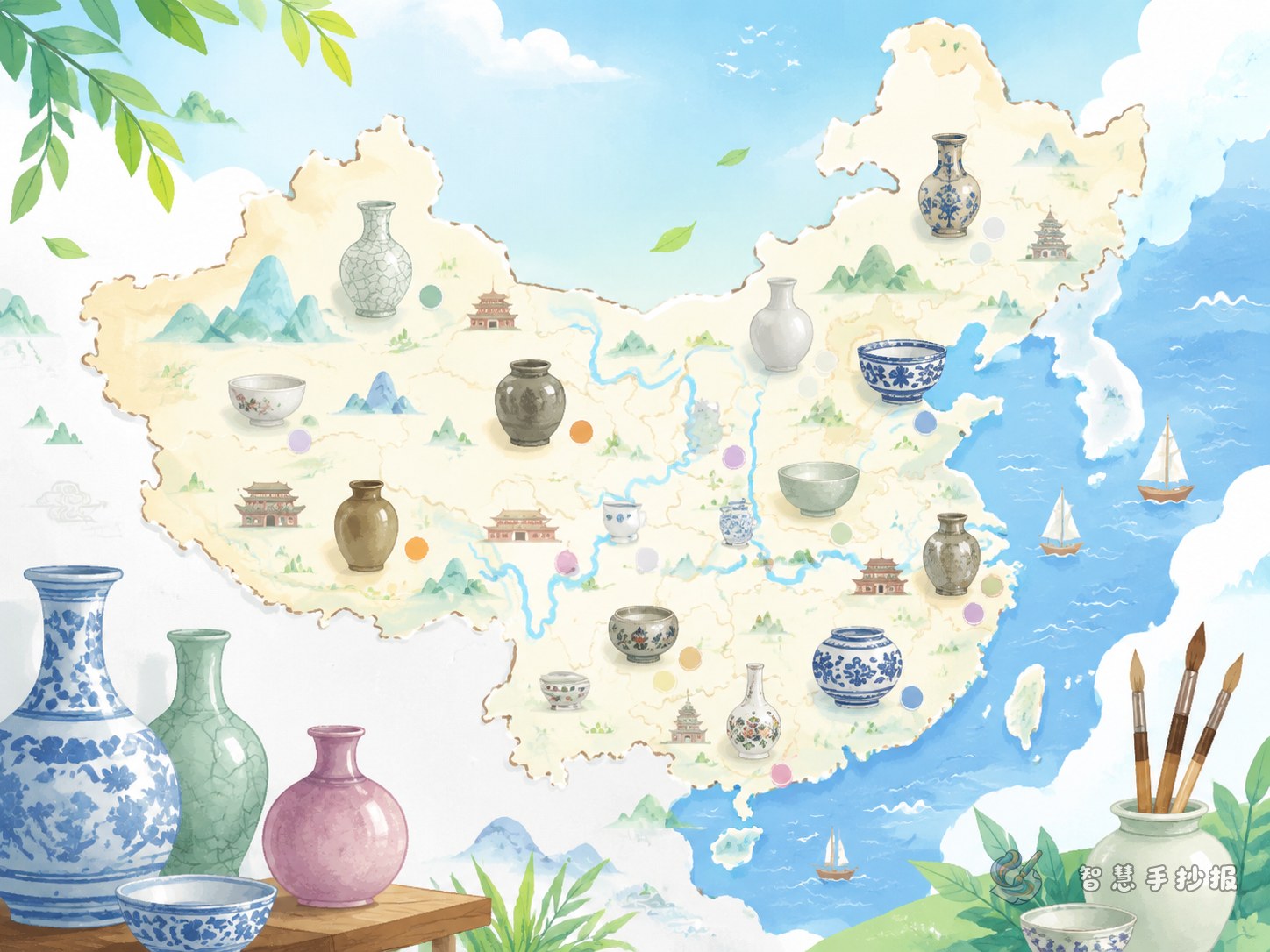
Instead of using only traditional box-shaped sections, design the whole handwritten newspaper as a map of a porcelain journey. Place the main title in the center, connect different kiln sites with paths, and add simple vessel outlines, signature colors, and short notes. This layout shows the regional character of Chinese ceramic culture while making the information easy to follow.
Suggested theme: Where does porcelain come from? Discover ceramic culture along a map of China's famous kilns.
Which Kilns Can Appear on the Map?
There is no need to include too many kiln sites. Choose four to six representative points. The map is a visual guide rather than a precisely scaled map, so clear labels and recognizable features matter most.
- Ru Kiln: Use a pale blue-green tone to suggest its elegant glaze and write a short note such as “quiet, refined, and gentle.”
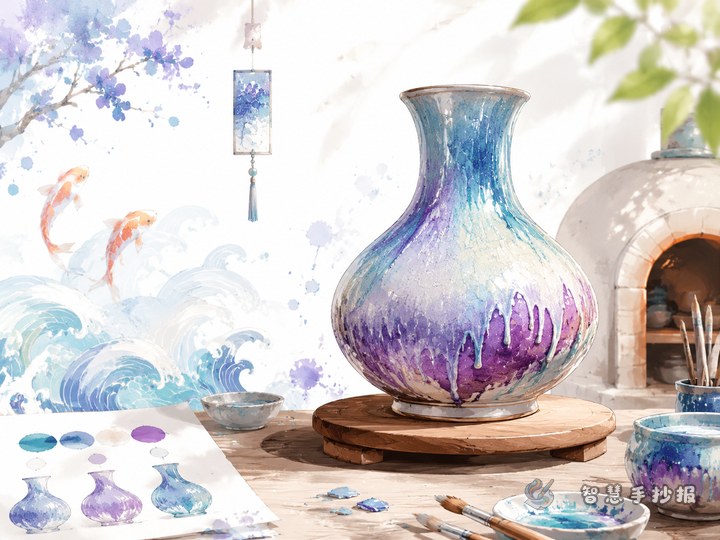
- Jun Kiln: Combine blue, purple, red, and milky white to show the varied colors created by the kiln fire.
- Longquan Kiln: Use fresh green shades and draw a small bowl or meiping vase to suggest the calm beauty of celadon.
- Jingdezhen: Mark the site with a white vase decorated with blue patterns and introduce the impression of blue-and-white porcelain.
- Dehua Kiln: Draw a white figurine or vase to highlight the clean and delicate appearance of Dehua porcelain.
- Yixing Pottery: Use purple-brown tones for a small teapot, creating a contrast with white porcelain and green celadon.
Add a Simple Pottery and Porcelain Note
To keep the page from becoming only a list of kiln names, add a small section titled “How Are Pottery and Porcelain Different?” You can write: Both pottery and porcelain are made from clay-like materials and both are shaped and fired. Porcelain usually uses finer materials and becomes denser after firing, often showing a clean and bright surface. Different regions develop their own styles because of their materials, glazes, techniques, and local traditions.
You can also add this child-friendly sentence: “With shaping, glazing, and fire, a piece of earth becomes a useful object and keeps a memory of Chinese artistic wisdom.”
Create the Feeling of a Travel Map
- Center: Draw a round compass or an open map and write “A Journey through China's Famous Kilns” as the main title. Add small flames, clay lumps, and porcelain fragments around it.
- Routes: Connect the kiln sites with dotted lines, arrows, or colored ribbons. Place a round seal at each stop to make the page feel like a travel journal.
- Sections: Put the kiln map on the left, “signature colors” and “vessel impressions” on the right, and ceramic notes plus “What I Discovered” at the bottom.
- Colors: Use warm ivory for the background, dark blue or brick red for the title, and celadon green, indigo, and purple-brown for the routes and decorations.
Ready-to-Use Text for the Page
Opening
Chinese ceramics have a long tradition of making and use. The clay, glaze, kiln fire, and artistic habits of different regions have created many distinctive kiln styles. Let us follow the map and see how ceramic objects tell stories about China.
Travel Notes
I learned that famous kilns differ in more than color. Some works are quiet and simple, some have changing glaze effects, some are known for blue decorations, and some turn clay into practical and charming teapots. Ceramics serve daily life while also showing how craftspeople explore shape, color, and fire.
Closing
A lump of clay becomes a warm and meaningful object through shaping, glazing, and firing. Learning about China's famous kilns helps us understand the wisdom of traditional craft through each ceramic work.
Finish the Handwritten Newspaper in Three Steps
- Use a pencil to plan the map outline, title, and main routes, leaving enough space between sections.
- Write the kiln names and short notes. Keep each location to two or three lines so the page does not look crowded.
- Add small drawings of vases, teapots, kilns, clay, and seals, then unify the outlines and colors.
Before finishing, check that the title stands out, the routes are easy to follow, and every section supports the theme of ceramic culture. For help arranging the layout and text, continue creating in the WeChat mini program 智慧手抄报.