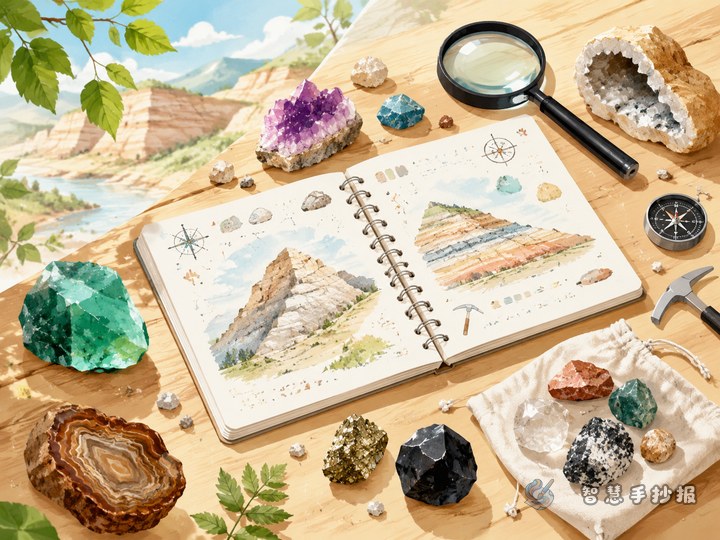
Turn the Newspaper into a Schoolyard Rock Detective Journal
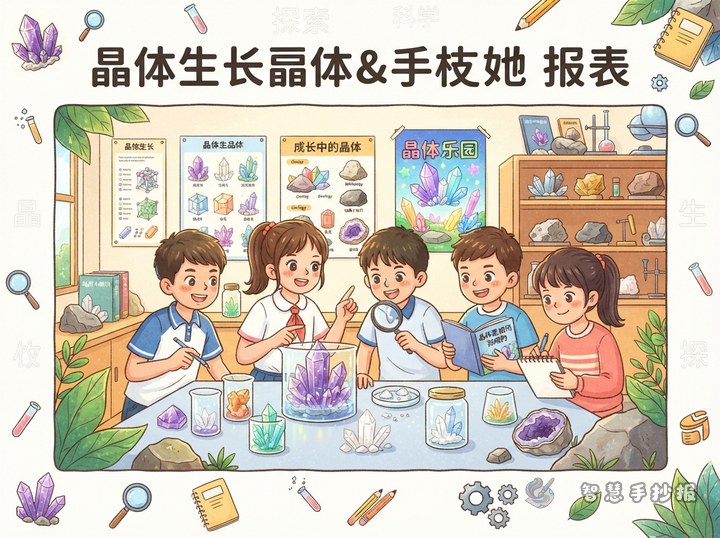
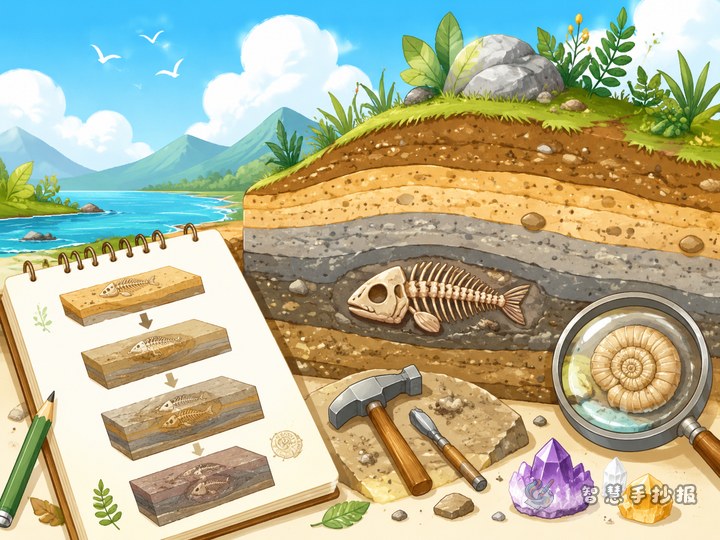
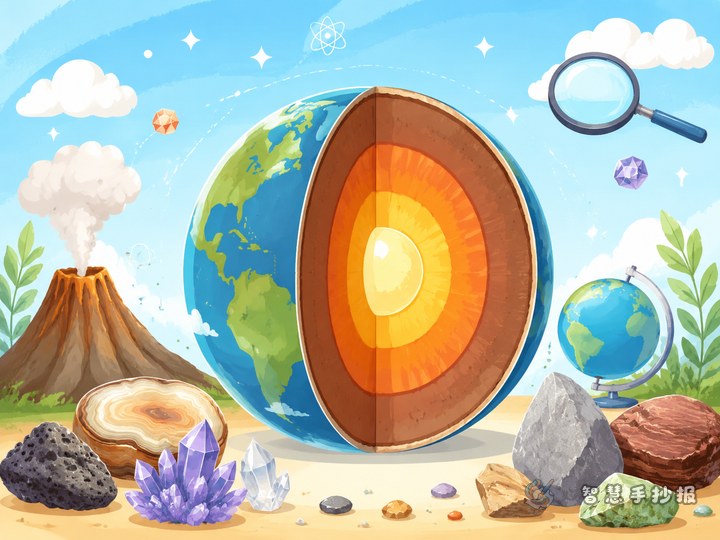
This handwritten newspaper can focus on the question, “What kind of rock did I find at school?” Instead of presenting too many difficult geology facts, use observation, notes, and questions to introduce geology in a child-friendly way. A suitable title is “Schoolyard Rock Detective”, with the subtitle “Learning about nature from one little rock.” Add a magnifying glass, notebook, footprints, and rocks of different shapes to create an exploration theme.
Four Sections for Studying One Rock
1. My Discovery
Record where the rock was found, its color, size, shape, and surface. For example: “I found a small gray-white rock beside the flower bed. It has rounded edges and feels fairly smooth.”
2. Rock Observation Card
- Color: gray, white, black, reddish brown, or another shade.
- Shape: round, flat, irregular, or sharply edged.
- Surface: smooth, rough, dotted with small holes, or marked with shiny grains.
- Safety note: Observe rather than scratch with sharp objects, and never break an unfamiliar rock.
3. What Might Have Happened to It?
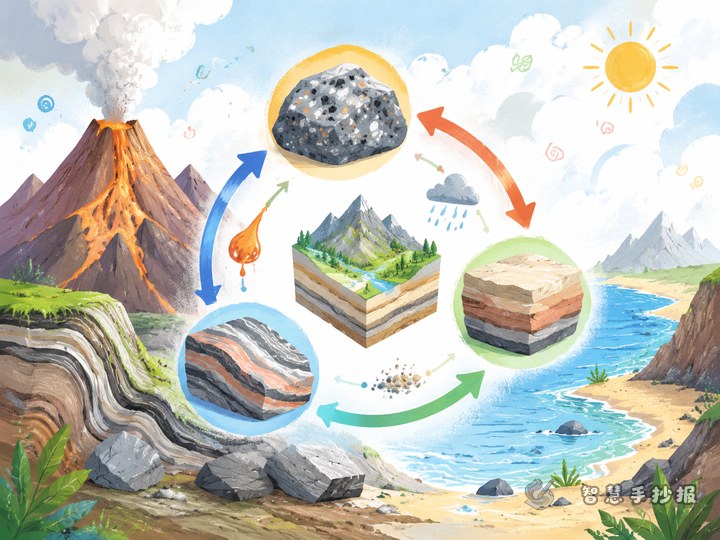
Use child-friendly imagination: “This rock may once have rested on a hillside and later been carried beside a path by rainwater. Its rounded edges might be related to long-term rolling and collisions.” Use words such as “may” and “might” so that guesses are not presented as certain facts.
4. A Promise to Protect Nature
Write a simple promise such as “Do not dig, smash, or take away valuable rocks. Return an ordinary rock to its place after observing it.” This section connects curiosity with care for nature.
Design the Page as an Observation Trail
Arrange the page as “discovery spot at the upper left, observation card in the center, questions on the right, and the nature promise at the bottom.” Draw one enlarged rock as the visual focus, with arrows pointing to its color, texture, and shape. Make the four sections look like stations on an adventure map. Brown, gray-blue, and light green create a natural but balanced palette.
Short Facts to Copy onto the Page
- Rocks are common solid materials found in nature, and different rocks may have different colors, textures, and hardness.
- A rock’s appearance may be influenced by its mineral contents, formation environment, and long-term weathering.
- When studying a rock, look first, touch carefully, and then record your observations instead of rushing to a conclusion.
- Geology can begin with one small rock found close to us.
Three Easy Crafting Tips
- Sketch the reading path and section borders with a pencil before writing, outlining, and coloring.
- Keep each section to two or three key sentences so the illustrations have enough space.
- Do not color every rock gray. Use small touches of pale yellow, blue-purple, or white to show patterns and highlights.
For a quicker way to combine a title, sections, and decorative elements, open the WeChat mini program 智慧手抄报 and continue creating your handwritten newspaper with your own schoolyard observations.