Build the theme around four role types
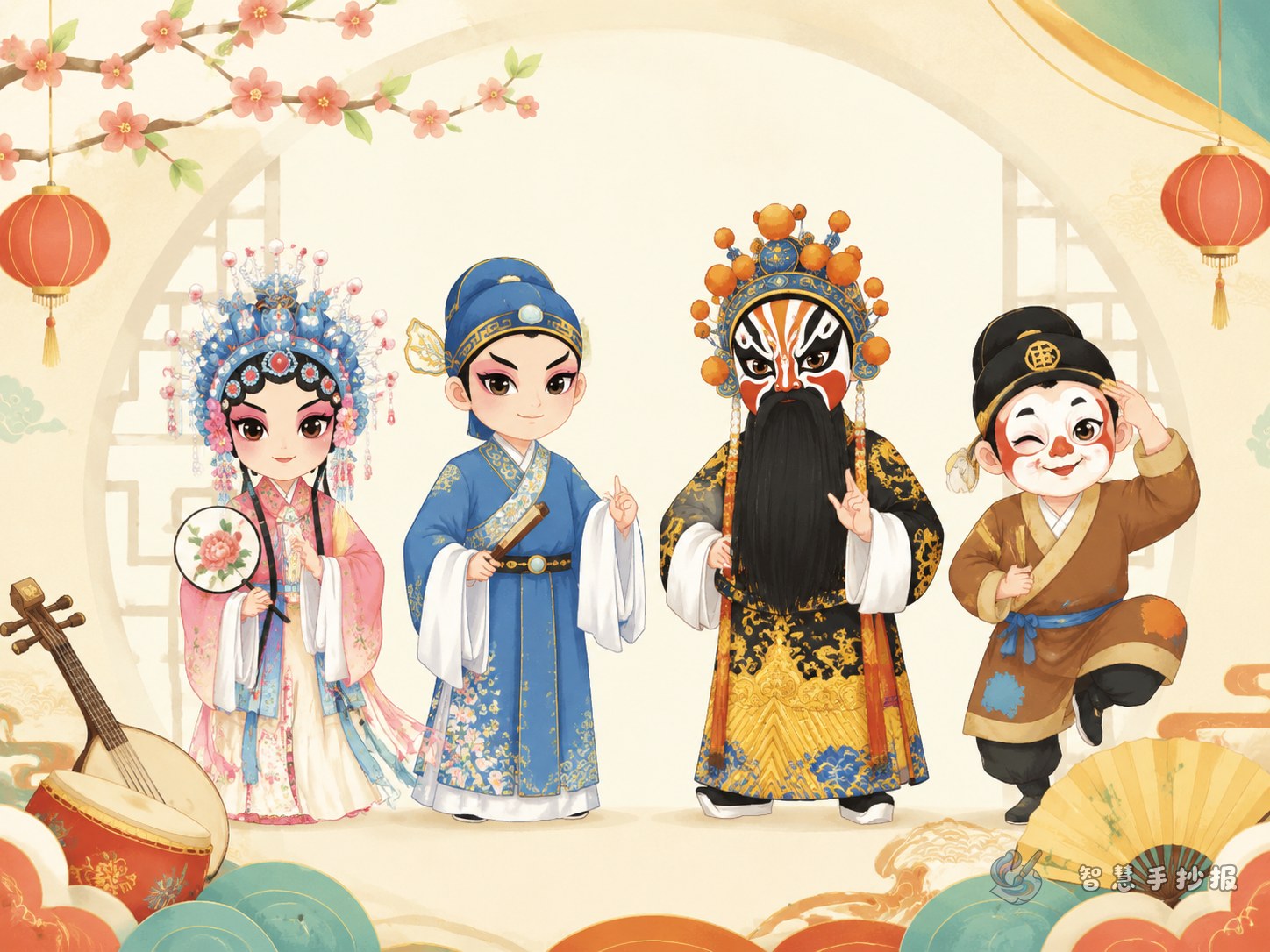
This handwritten newspaper can use Sheng, Dan, Jing, and Chou as four windows into traditional Chinese opera instead of simply listing opera genres. Begin by explaining that role types are traditional categories used to organize characters, performance features, and stage appearances. In many opera traditions, Sheng commonly refers to male roles, Dan to female roles, Jing to roles with striking facial designs and bold characterization, and Chou to comic or witty roles.
The central title could be “Many Characters on One Stage: Sheng, Dan, Jing, and Chou.” Add a short line such as “Different roles bring order and variety to the opera stage.” This gives the page a clear theme and helps readers follow its content.
What to write in the four sections
- Sheng: Introduce common qualities such as uprightness, steadiness, or bravery. You can also mention that Sheng roles may be divided further by age, identity, and performance style.
- Dan: Introduce different kinds of female characters, including younger and older roles. Emphasize that singing, gestures, and personality should be appreciated together.
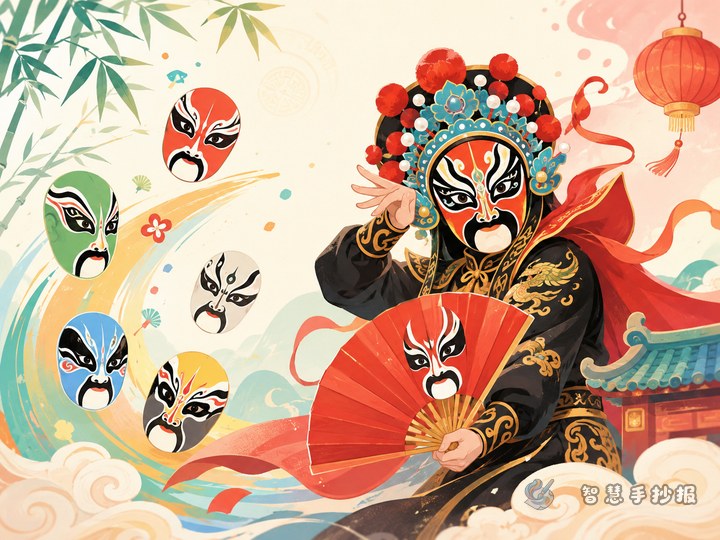
- Jing: Explain that Jing characters often have strong personalities, noticeable facial designs, and powerful movements. Avoid treating facial colors as a simple fixed code for good and evil.
- Chou: Explain that Chou roles do more than make the audience laugh. Their quick speech, flexible movements, and clever reactions can also move the story forward.
For each section, write only three short lines: “role features,” “stage performance,” and “a question I want to explore.” Questions such as “Why is the Chou role important?” or “Are role types exactly the same in every opera tradition?” can make the page more thoughtful.
Turn information into an easy-to-read layout
A four-petal flower or stage spotlight layout works well. Draw a small opera stage in the center and place the main title there. Arrange four fan-shaped or petal-shaped sections around it for Sheng, Dan, Jing, and Chou. Give each section one main color, and add sleeve-like curves, cloud patterns, drum beats, or window lattice designs to create a traditional stage atmosphere.
If the page is narrow, use two columns: place Sheng and Dan on the left, Jing and Chou on the right, and connect them with a “roles entering the stage” line in the middle. Make section headings large and explanations short. Highlight key words with colored pens or bold lettering, while keeping decorations away from the main text.
Simple drawing and writing materials
For the text area, include a short message such as: “Opera tells stories through singing, speech, movement, and martial performance. Sheng, Dan, Jing, and Chou give stage characters different personalities. By understanding role types, we can notice how traditional performers use appearance, voice, and movement to express character.”
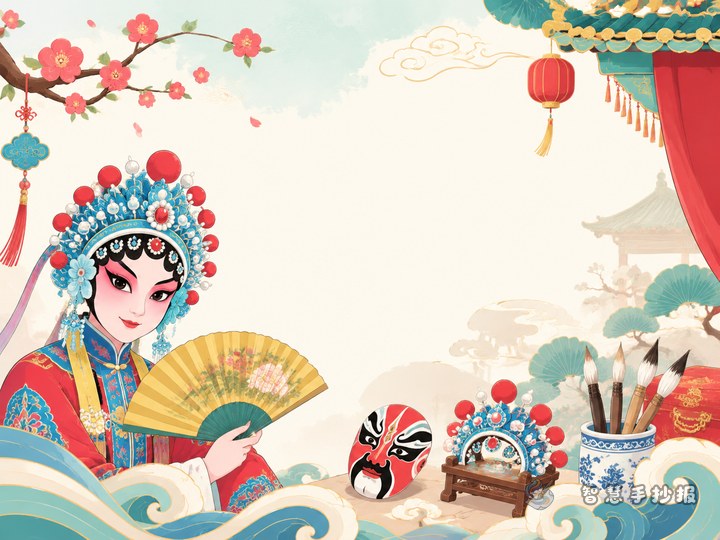
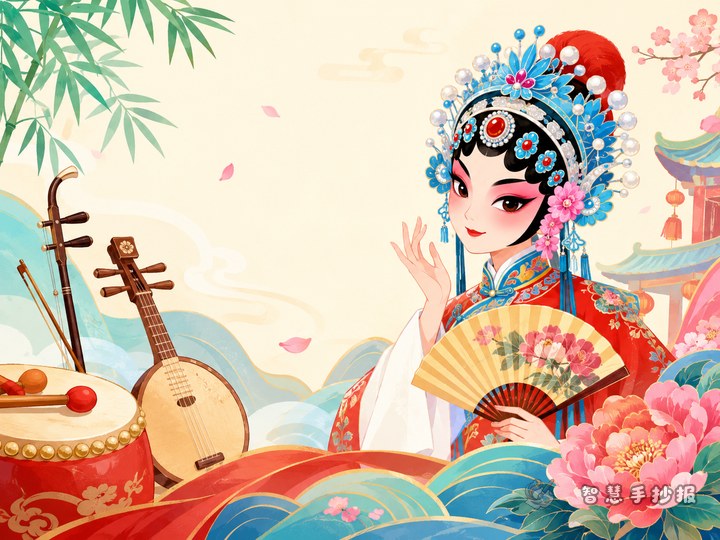
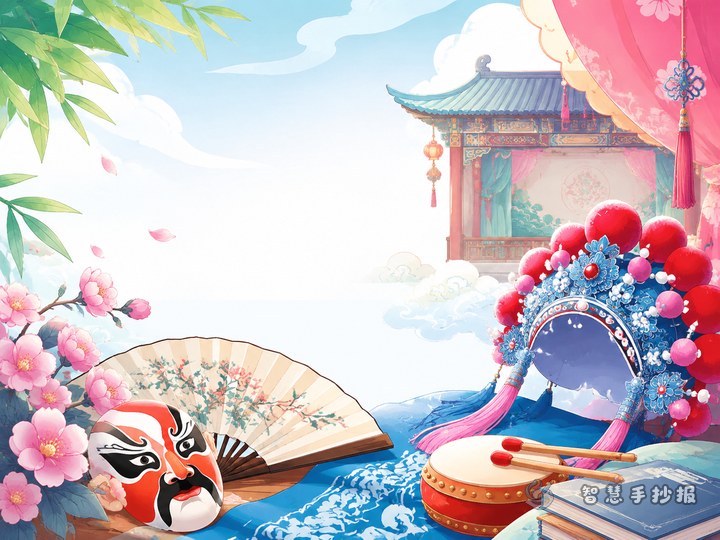
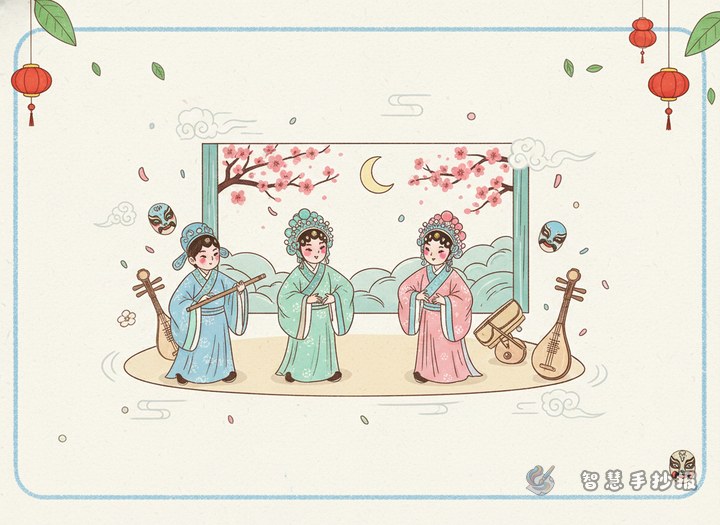
The drawing area does not need complicated figures. Try stage curtains, drums, flowing sleeves, folding fans, or silhouettes of opera movements. Add one simple action symbol beside each role. This is clearer than filling the page with too many details. Give the figures different expressions and leave enough open space around them.
Four checks before you finish
- Does the title clearly show that the topic is opera role types rather than only masks or costumes?
- Does each of the four sections have a short explanation, and is the Chou role presented as more than a comic character?
- Are the text, drawings, and borders clearly separated so the main information can still be found from a distance?
- Have you added a personal thought, such as “I would like to learn how a performer uses movement to show personality”?
Sketch the section positions first, then add the writing and colors. When you want to organize the title, sections, and decorations more quickly, you can continue making the page in the WeChat mini program 智慧手抄报.