Why Breakfast Deserves Its Own Poster
After a night of sleep, the body has used up much of its energy. A suitable breakfast helps children stay active and focused during the morning. A poster that combines breakfast and the digestive system can teach both nutrition and the first part of the food journey, making the topic clear and easy to research.
The poster does not need to be complicated. Focus on three questions: Why is breakfast important? What makes a better breakfast? Where does food go after we eat it?
Three Knowledge Sections You Can Use
Section 1: The Breakfast Trio
Divide breakfast into three simple groups so readers can understand it at a glance.
- Grain staples: porridge, noodles, whole-wheat bread, corn, and sweet potato provide main energy.
- Quality protein: eggs, milk, soy milk, tofu, and lean meat help the body grow and repair.
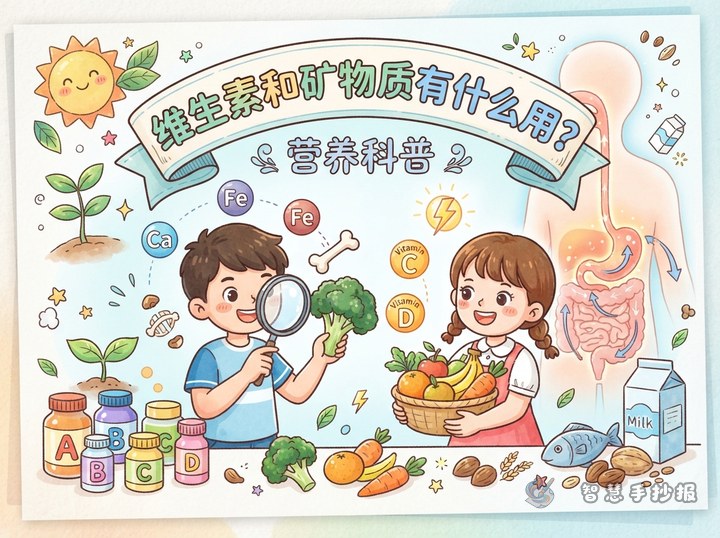
- Vegetables and fruit: cherry tomatoes, cucumber, apples, and bananas add vitamins and dietary fiber.
If there is still space, add a line such as “A small handful of nuts makes breakfast more balanced,” but do not overcrowd the page.
Section 2: The Morning Digestion Journey
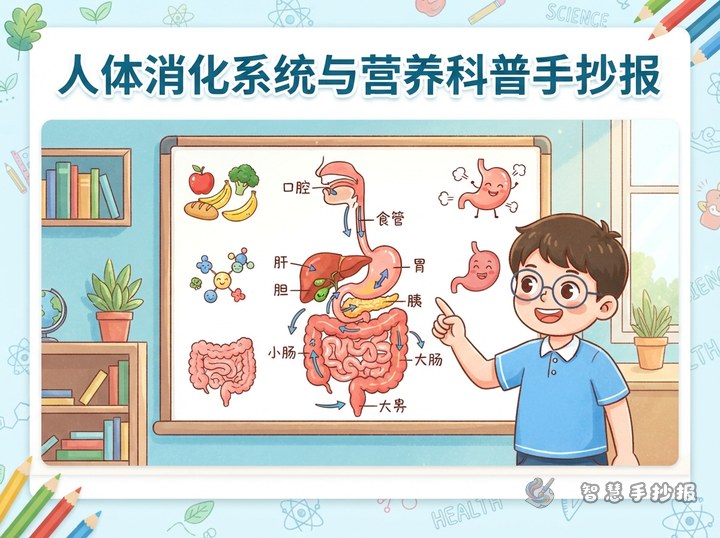
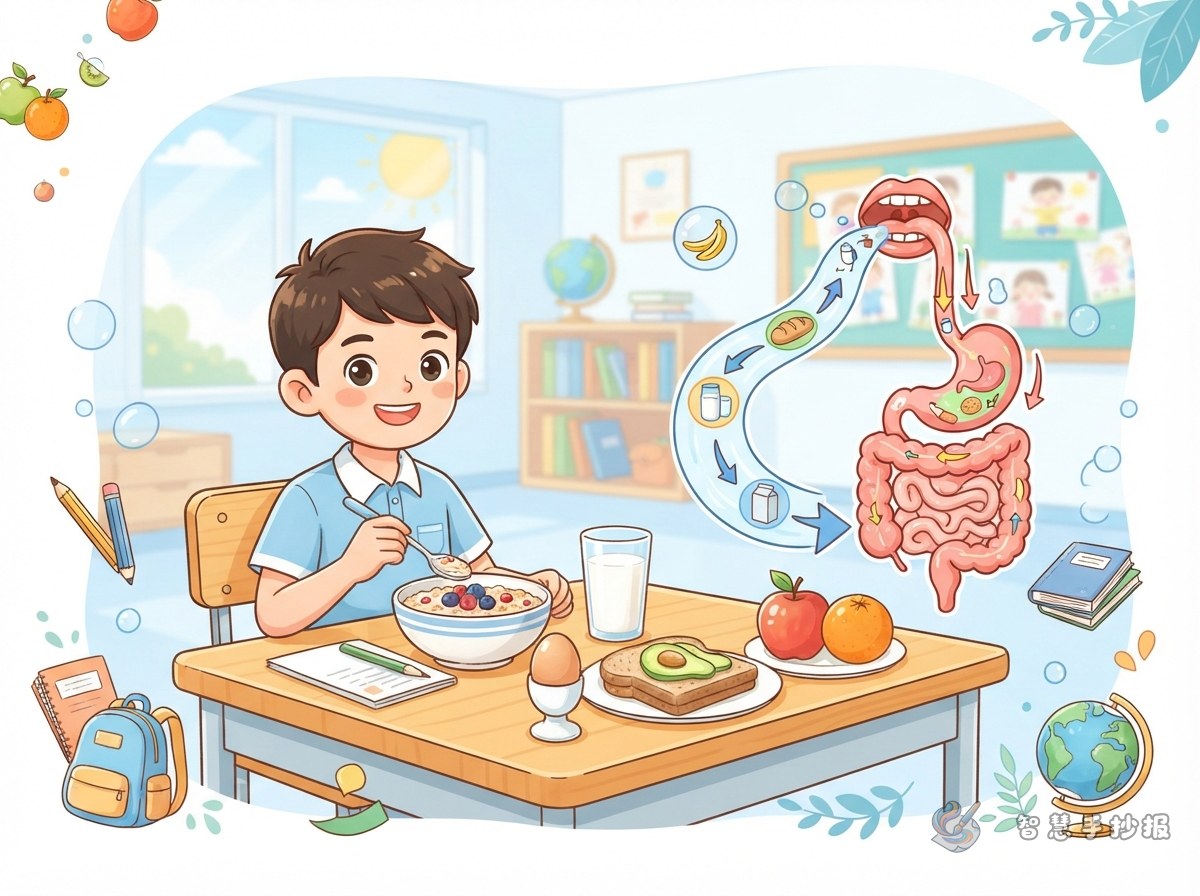
Draw an arrow route to show where food travels in the morning.
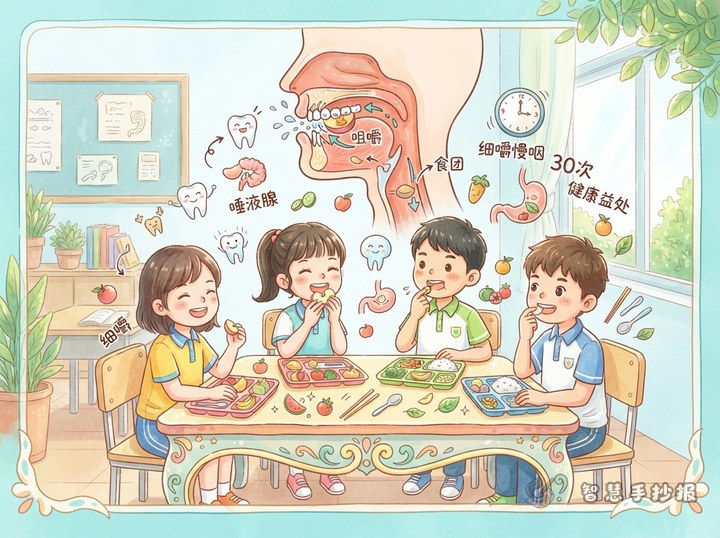
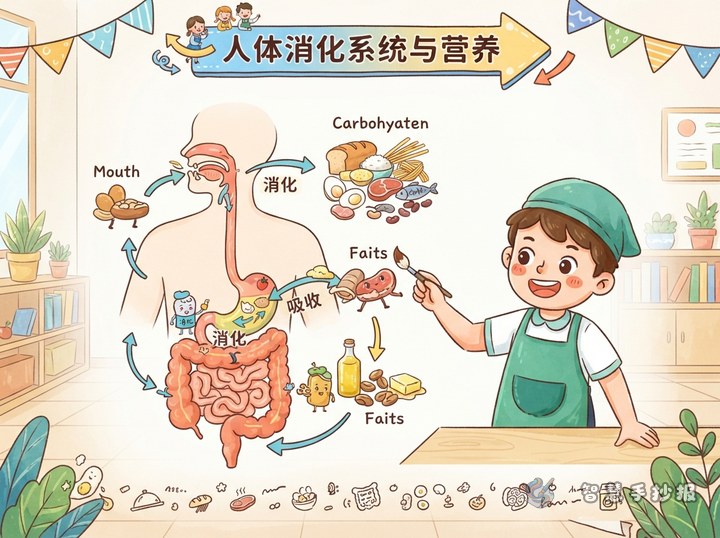
- Mouth: teeth break food into smaller pieces, and saliva moistens and begins to break it down.
- Esophagus: food is moved down toward the stomach.
- Stomach: the stomach churns and mixes food into a softer mass.
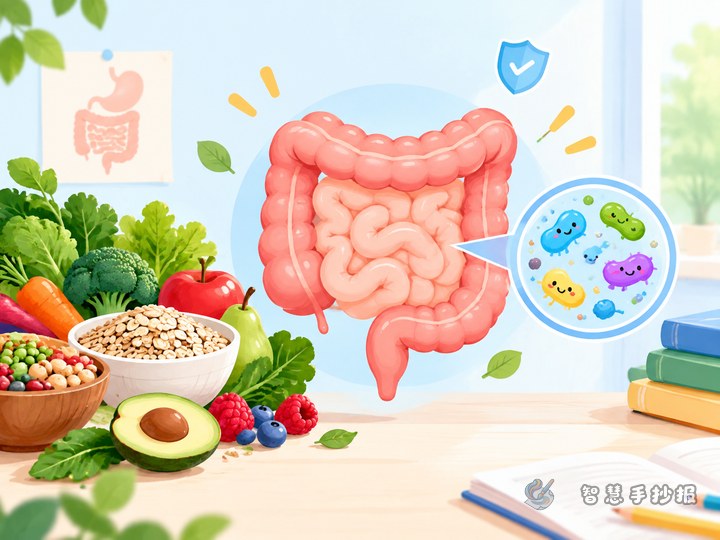
- Small intestine: nutrients are absorbed here.
- Large intestine: some water is absorbed, and the remaining waste forms stool and leaves the body.
Section 3: Compare Breakfast Choices
- A more balanced choice: whole-wheat bread, an egg, milk, and a few apple slices.
- A choice that needs improving: only a sweet drink, or only a piece of cake.
- A helpful reminder: a good breakfast is not about eating a lot, but about eating a complete combination.
Short Sentences You Can Copy
- A good breakfast gives you more energy for the morning.
- Chew slowly and give your stomach less work to do.
- Staples, protein, and fruits or vegetables: do not leave any of the three out.
- Food starts in the mouth and sets off on an amazing journey.
- Do not be picky, and your nutrition will be more complete.
These sentences work well as small headings, border notes, or captions beside your drawings.
Layout Ideas for a Clear, Bright Page
Try a “knowledge on the left, drawings on the right” layout. Put the breakfast trio and digestion route on the left, and draw a bowl of porridge, an egg, a carton of milk, and a plate of fruit on the right. Write the main title at the top in larger letters.
- Colors: warm yellow, orange, and light green give a morning feeling.
- Borders: use the outlines of toast, eggs, or a milk carton as frames.
- Columns: separate knowledge areas with straight or dotted lines so the page stays neat.
- Focus: make the “Breakfast Trio” and “Digestion Route” the most noticeable parts.
Before You Start Drawing
Sketch lightly in pencil first to decide where the title, sections, and drawings will go. Then outline and color with markers. If you prefer not to design the layout from scratch, open the Smart Handwritten Newspaper WeChat mini program, choose a nutrition or digestion template, add your text, and keep adjusting until the poster has your own style.