Choose a clear question for the poster
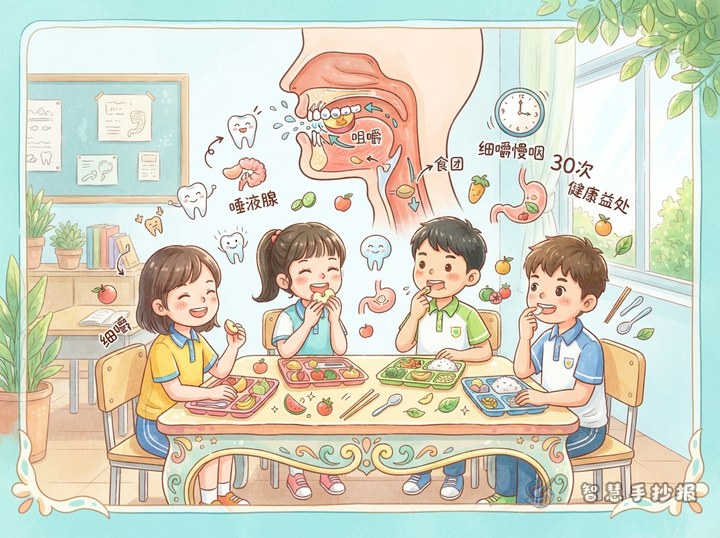
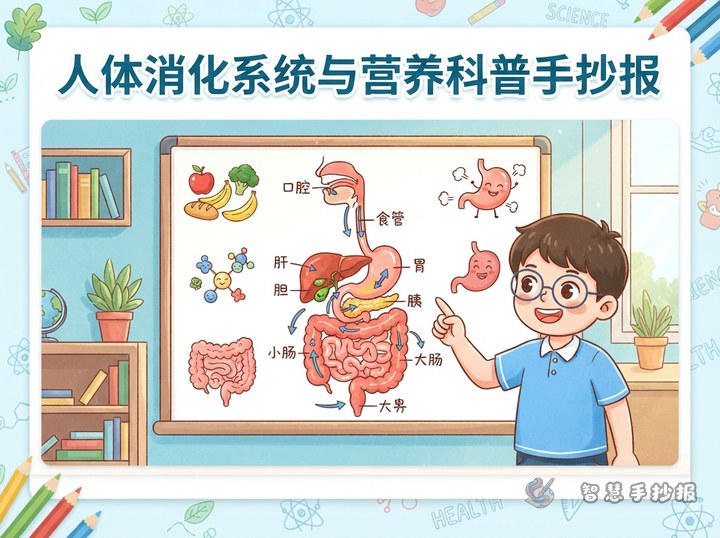
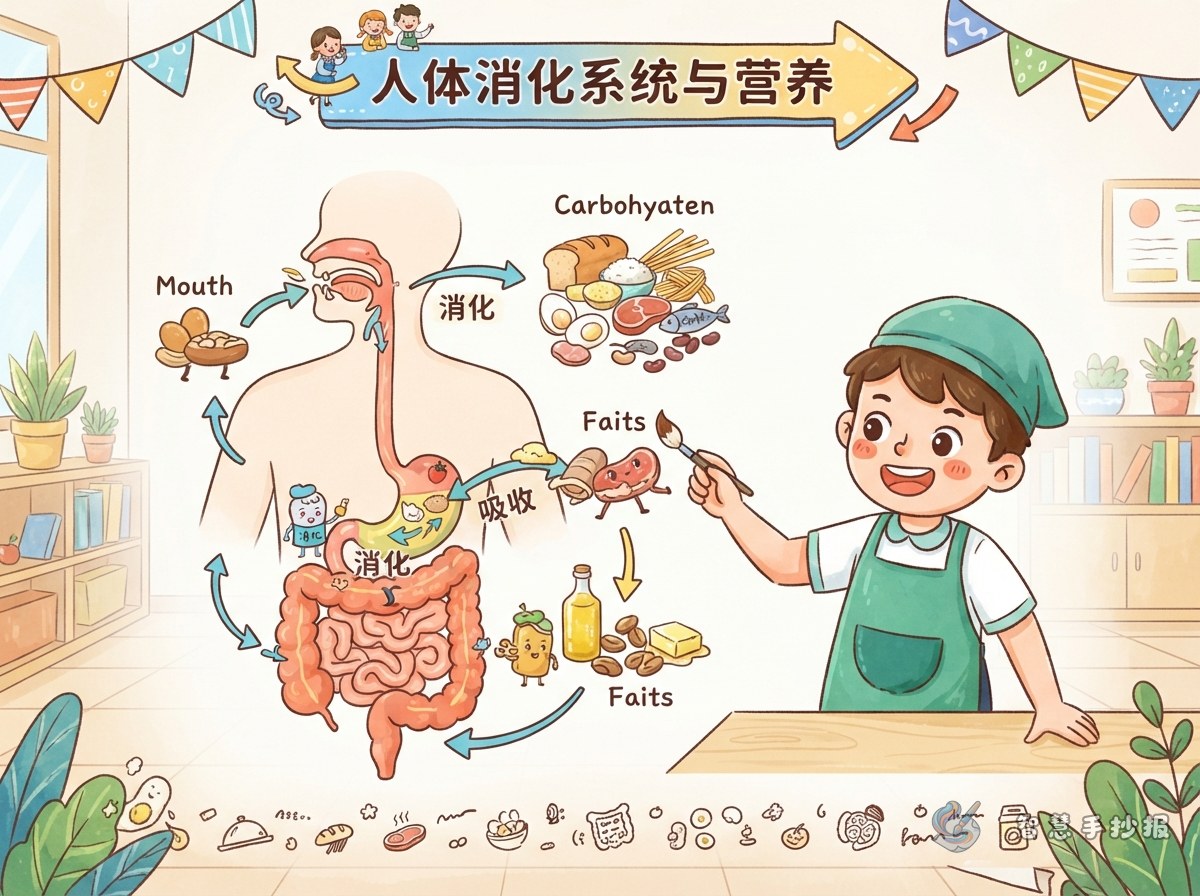
This poster can focus on the question, “How do nutrients in food become energy and building materials for the body?” The theme is digestion, absorption, and nutrition rather than simply listing the organs food passes through. Draw a central “nutrient molecule” symbol and connect it to carbohydrates, proteins, fats, vitamins, minerals, and water so the main idea is easy to understand.
A suitable title is How Are the Three Main Nutrients Absorbed by the Body? Add the subtitle “A Digestion and Nutrition Science Poster.” You can begin with a short hook: the food we eat must be digested before the body can use it.
Make three nutrient cards
Carbohydrates: a common energy source
After digestion, carbohydrates are mainly changed into glucose. Glucose enters the blood and provides energy for studying, exercising, and everyday activities. Draw rice, bread, and corn beside this section, with a reminder that carbohydrates should be eaten in suitable amounts and combined with other foods.
Protein: material for growth and repair
Proteins are digested into amino acids. The body absorbs them to support growth and repair tissues. You can draw eggs, milk, fish, and soy products as a “repair team” and add the note, “A variety of foods gives the body more complete nutrition.”
Fat: stored energy and warmth
Fats are broken into smaller components during digestion and can support energy storage, warmth, and cell activities after absorption. Add a balanced reminder: fat is not something that must be completely avoided, but the type and amount matter. Too many fried foods are not a good choice.
Make the small intestine an absorption station
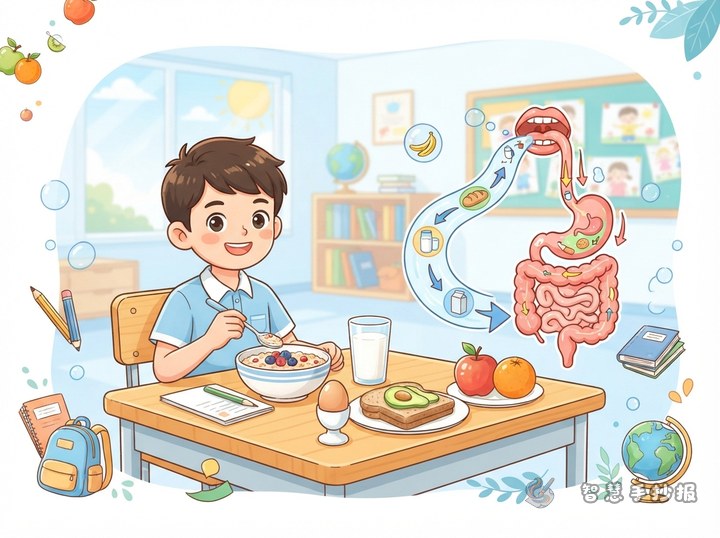
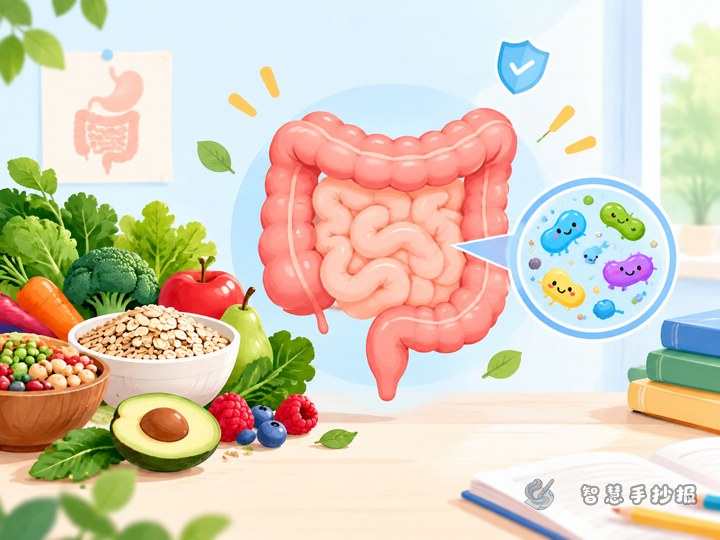
The small intestine is an important place where nutrients are absorbed, so it can become the visual center of the poster. Draw an “absorption station” that sends digested nutrient molecules into the blood or lymph for use throughout the body. Add three speech bubbles: digestion makes food smaller, absorption moves nutrients into the body, and utilization helps the body grow, move, and repair itself.
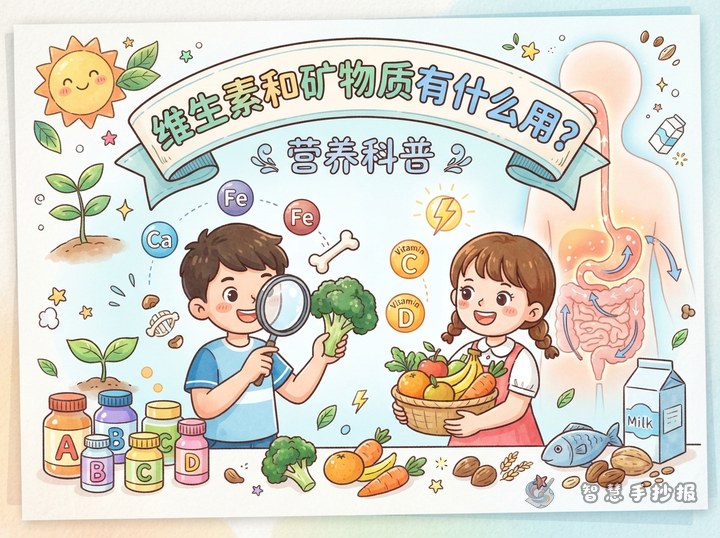
Vitamins, minerals, and water are also essential for normal body functions, even though they do not need to be broken down in the same way as the three main nutrients. Use small icons to explain their roles: water helps with transport and regulation, vitamins support many body processes, and minerals contribute to bones, blood, and other functions.
Use a “nutrition laboratory” layout
- Top: Place the large title with a magnifying glass to show an exploration of nutrition.
- Left side: Add three cards for carbohydrates, proteins, and fats. Each card can include food drawings, digestion results, and a main function.
- Center: Draw the small-intestine absorption station and use different arrow colors to show where each nutrient goes.
- Right side: Create a “Nutrition Tips” box with ideas such as eating a variety of foods, having regular meals, drinking enough water, and limiting excessive fried food.
- Bottom: Add a “What I Can Eat” checklist where readers can write examples of grains, vegetables, fruits, dairy, eggs, or soy products they enjoy.
Orange, green, and blue can represent energy, health, and water. Use a dark pen for the main text and colored pens to circle key words. Draw the frames and arrows first, then add illustrations and text so the layout does not become crowded. If you want to organize the title, columns, and layout more quickly, continue creating the poster in the WeChat mini program Zhihui Shouchaobao.
End with a simple science summary
Food does not become part of the body immediately after it is eaten. The digestive system breaks large food molecules into smaller ones that are easier to absorb. The small intestine then helps move many nutrients into the body, where they provide energy, support growth, and help maintain health. A healthy diet is not about eating only one kind of food; it is about variety, balance, and suitable portions.