Turn the Topic into a Little Gut Garden
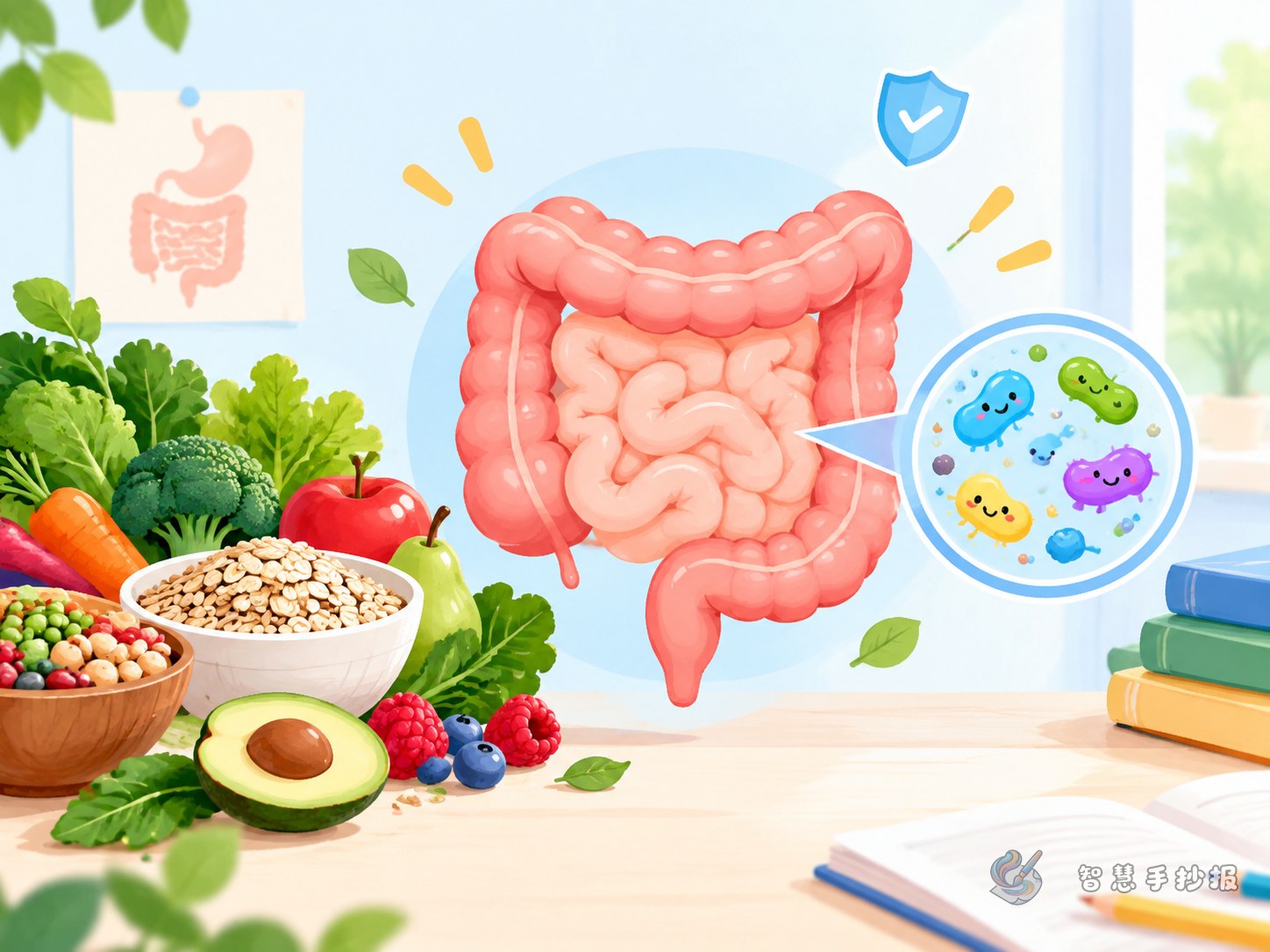
Build the poster around the question “How does dietary fiber help the gut?” Draw the gut as a small garden that is cared for by a variety of plant foods. Place this central line in a large, friendly font: Colorful plant foods bring energy to the gut.
Use green, orange, and yellow as the main colors to represent vegetables, grains, and fruit. This makes the nutrition theme clear as soon as someone looks at the poster.
Prepare Three Core Fact Cards
Card One: Where Does Fiber Come From?
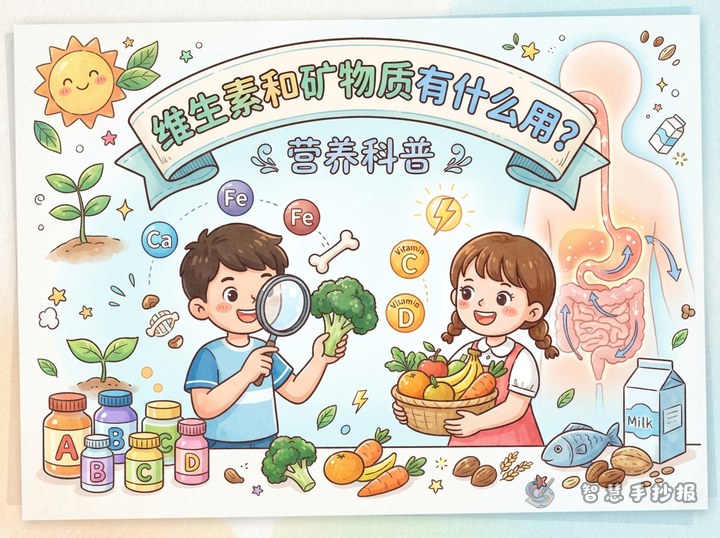
Dietary fiber is mainly found in plant foods. Common sources include oats, brown rice, corn, sweet potatoes, beans, apples, pears, leafy vegetables, and mushrooms. Draw these foods as a group of “fiber friends.”
Card Two: What Does It Do in the Gut?
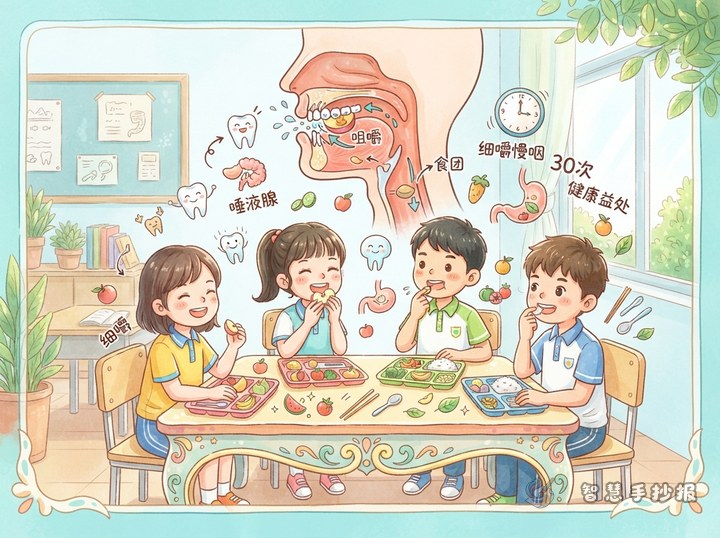
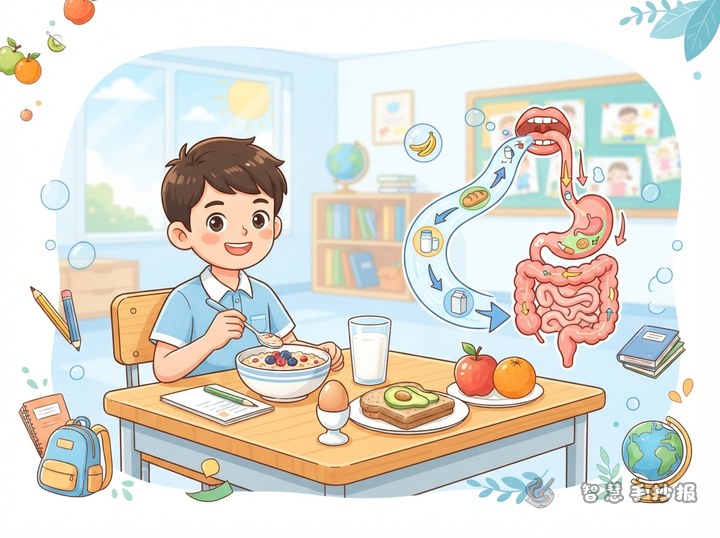
The human body cannot completely digest dietary fiber. Some fiber absorbs water and helps make waste softer. Other fiber adds bulk and helps gut contents move forward. Some types are also used by microorganisms in the large intestine.
Card Three: Two Fiber Profiles
- Soluble fiber: It becomes thicker when mixed with water and is found in foods such as oats, beans, and some fruits.
- Insoluble fiber: It does not dissolve easily in water and can add bulk to food waste. Whole grains and many vegetables contain this type.
Use a Colorful Plate for Drawing Ideas
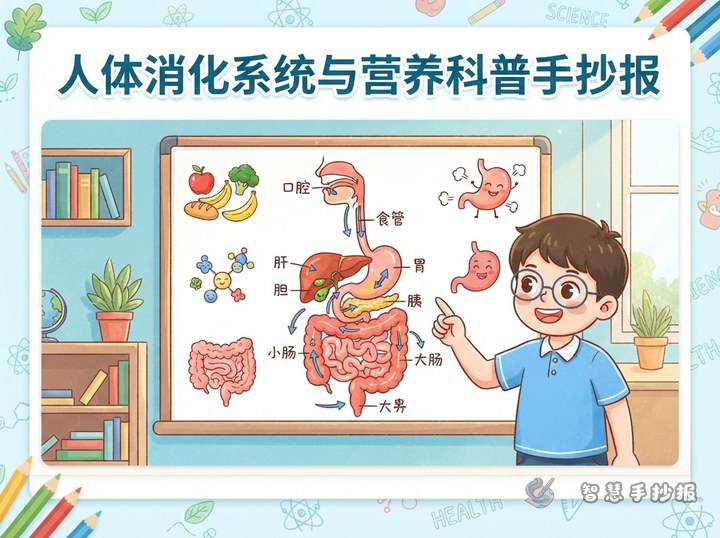
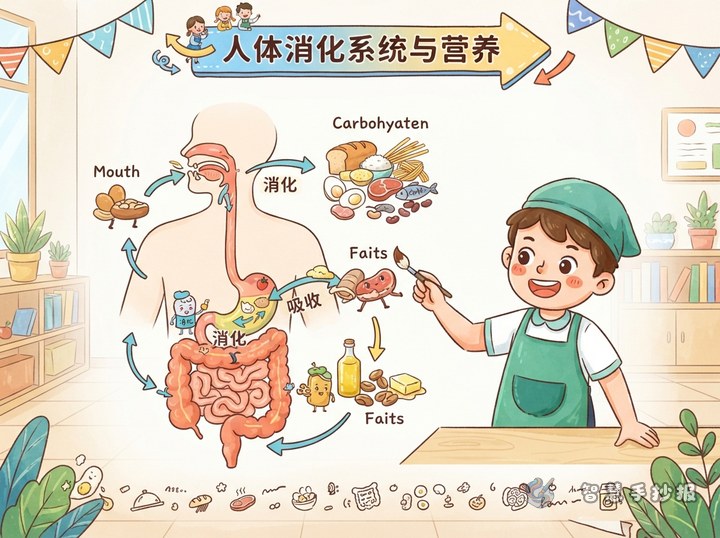
You do not need to draw a complicated anatomical diagram. Draw a colorful plate divided into grains, beans, vegetables, and fruit, then add arrows pointing toward the “little gut garden.”
- Grain section: oats, corn, whole-grain bread, or brown rice.
- Bean section: soybeans, mung beans, black beans, or other bean foods.
- Vegetable section: carrots, spinach, cabbage, broccoli, and mushrooms.
- Fruit section: apples, pears, and oranges. Add a reminder to drink enough water.
A sentence that can be copied onto the poster is: Dietary fiber is found in many plant foods, so variety matters more than relying on only one food.
Design the Page as a Fiber Adventure Map
- Place the title and a large “fiber planet” at the top to announce the theme.
- Draw the food plate on the left and label the section “Where does fiber come from?”
- Use curved arrows in the center to connect the ideas “absorbs water,” “adds bulk,” and “helps movement.”
- Draw the little gut garden on the right and add the action tip “Choose different plant foods each day.”
- Leave a “My Healthy Habit” box at the bottom for classmates to write a favorite vegetable, whole grain, or fruit.
Keep the Science Clear and Accurate
Use short sentences and give each fact card only one main idea. Make arrow directions easy to follow and label every food drawing. Do not describe dietary fiber as medicine or claim that more is always better. A balanced reminder is to increase high-fiber foods gradually and combine them with water and a varied diet.
After preparing the text and sketch, use the 智慧手抄报 WeChat mini program to organize the title, sections, and colors so the little gut garden poster looks neat and inviting.