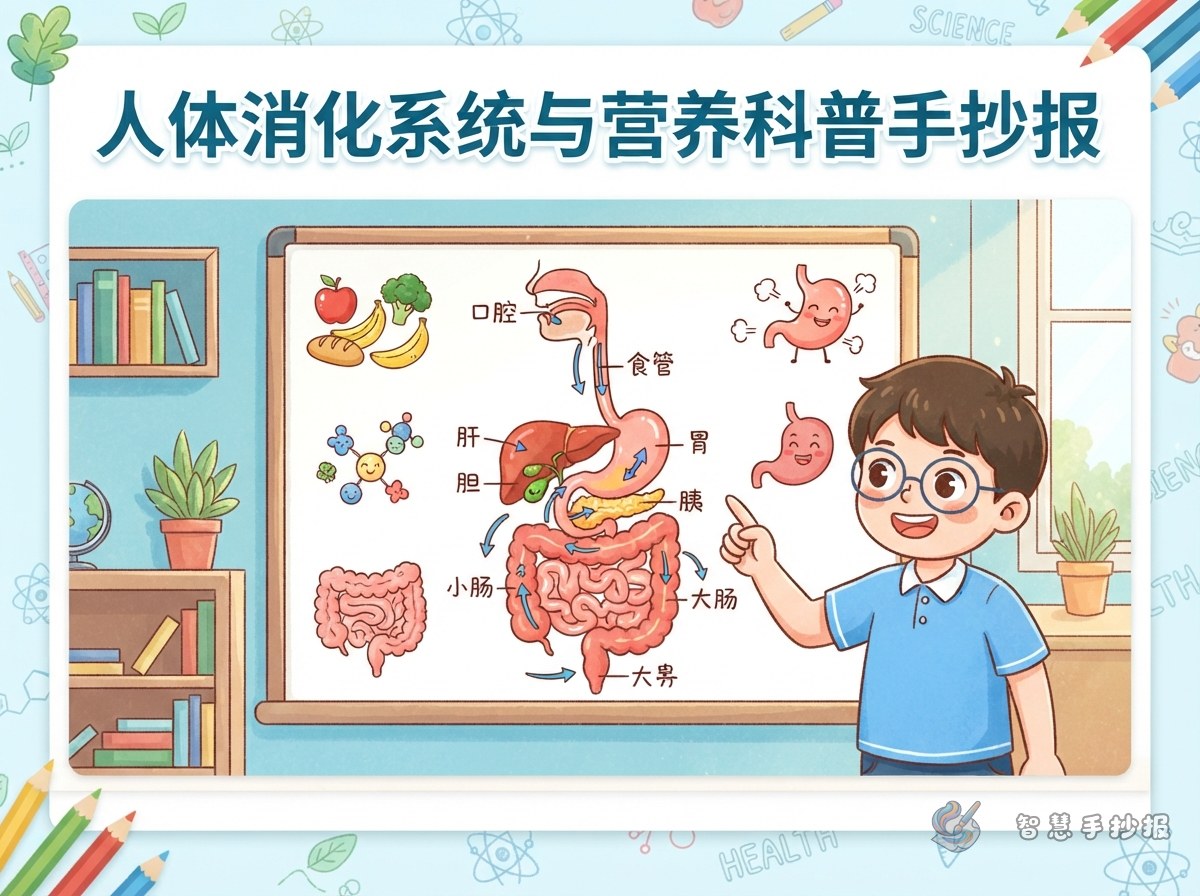
Turn Organ Functions into a Relay Race
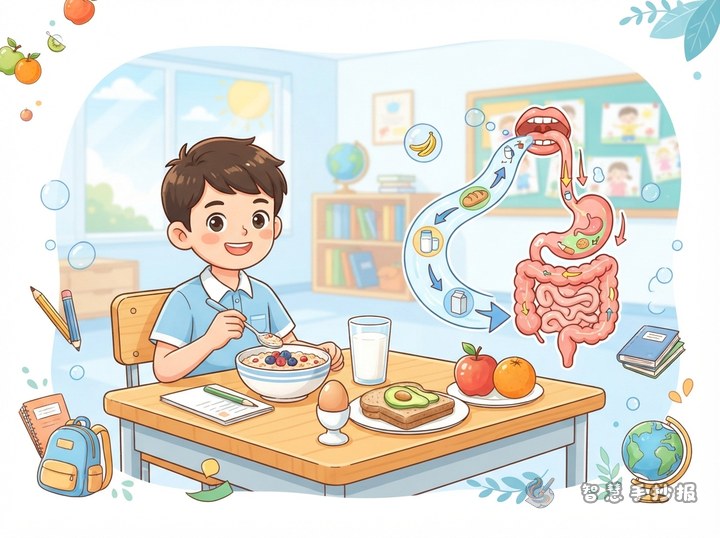
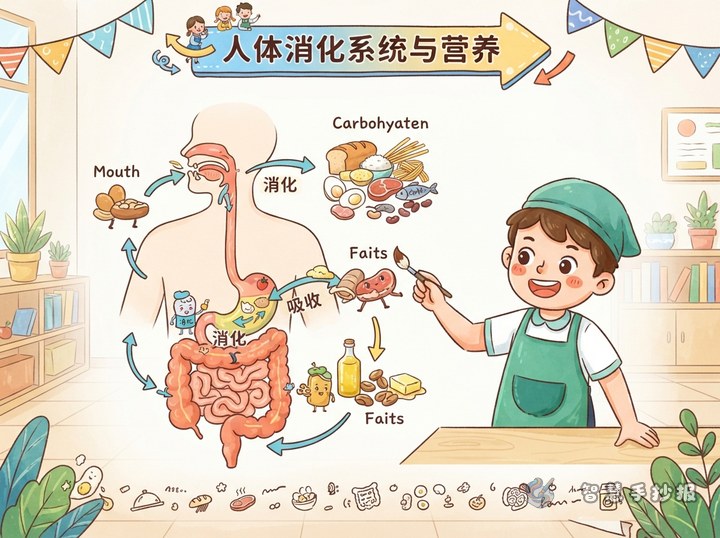
The clearest way to make this poster is to answer one simple question: what does each digestive organ do? Use the theme “The Digestive System Relay”. Draw a winding route through the body and place a short fact card beside each important organ.
Main heading: The Human Digestive System: Every Organ Has a Job.
- The mouth chews food and begins digestion.
- The esophagus moves food toward the stomach.
- The stomach stores and mixes food.
- The small intestine continues digestion and absorbs nutrients.
- The large intestine absorbs water and helps form waste.
Six Mini Fact Cards for the Poster
The Mouth: Where Digestion Begins
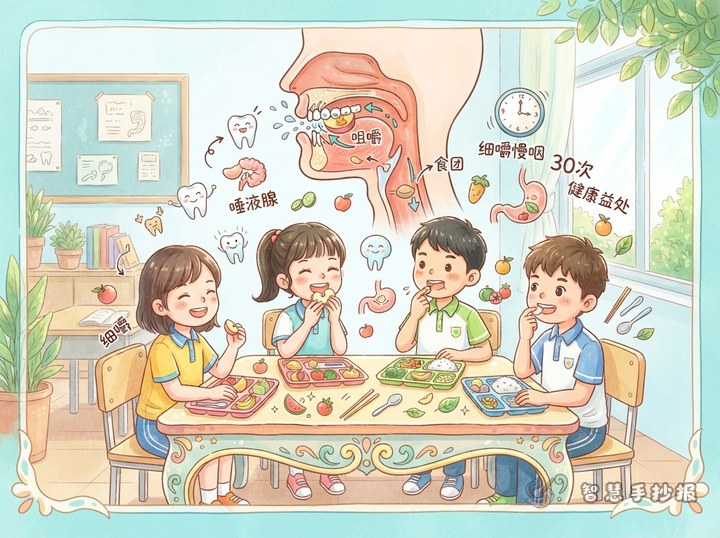
Teeth cut and grind food, while the tongue helps mix and swallow it. Saliva moistens food and begins the digestion of starch.
The Esophagus: A Food Passage
The esophagus is a flexible tube. Rhythmic muscle movements push swallowed food down into the stomach.
The Stomach: A Mixing Chamber
The stomach temporarily holds food and mixes it with muscular movements, helping the food continue its digestion.
The Small Intestine: The Main Absorption Area
Food is digested further in the small intestine. Useful nutrients can pass into the body and support growth and daily activities.
The Large Intestine: A Water Recovery Area
The large intestine absorbs some water from the remaining material and helps turn it into stool.
The Liver, Gallbladder, and Pancreas: The Support Team
These organs are not part of the main food passage, but they provide important support. The liver makes bile, the gallbladder stores bile, and the pancreas releases substances that help digestion.
Make Nutrition the Destination
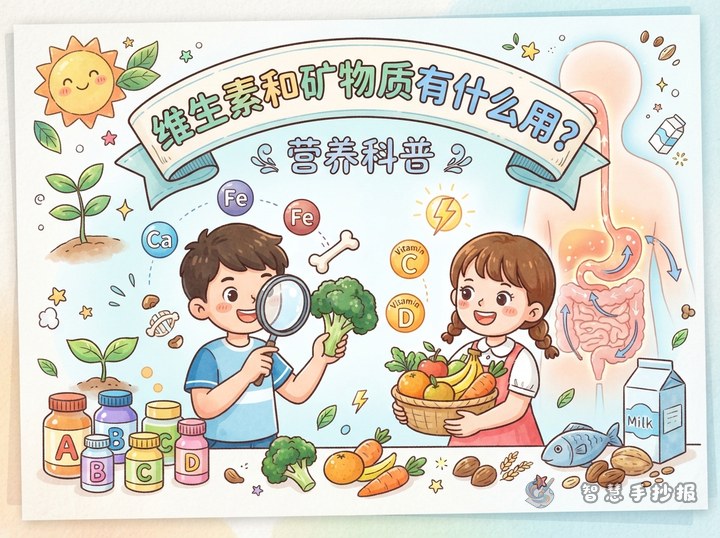
Reserve a bright corner for a section called “Where Do Nutrients Go?” Explain that after digestion, many useful nutrients are absorbed mainly in the small intestine and carried by the blood to different parts of the body. Add a seedling, energy stars, or an active child to make the idea easy to understand.
Short health tips to copy: Chew slowly so food is broken into smaller pieces. Pay attention while eating and move gently after meals. Choose a variety of foods so the body can receive different nutrients.
Build the Page Like a Classroom Map
- Draw a colorful route from the mouth to the large intestine in the center of the page, using arrows to show the direction of movement.
- Make the mouth, stomach, small intestine, and large intestine larger than the other drawings so the main path is easy to follow.
- Draw the esophagus as a narrow passage and place the liver, gallbladder, and pancreas beside the small intestine as the support team.
- Keep each fact card to two or three lines so the illustrations and words have enough space.
Use Color and Symbols to Clarify the Message
Orange can show the food route, blue can represent nutrient transport, and green can mark healthy habits. Add a mixing symbol near the stomach, small drops or energy signs near the small intestine, and a water cup near the large intestine. After sketching, check the arrow direction, organ names, and handwriting before emphasizing the title and key words with colored pencils.
When you are ready to turn this plan into a neat finished poster, continue in the 智慧手抄报 WeChat Mini Program to arrange the title, fact cards, and decorations more easily.