Why a Collection Record Makes the Poster Feel Real
Many leaf specimen posters only show pressed leaves and names, so the page looks like a specimen album. A collection record card adds where, when, and what the leaf looked like, which shows readers that the leaves were observed rather than casually cut and pasted. For primary school children, writing a short record is also easier than memorizing classification terms.
Five Fields for a Simple Observation Card
The card does not need to be large; a palm-sized box is enough. Keeping the fields fixed helps children write without feeling stuck and keeps the layout neat.
- Date and weather: Note the date, morning or afternoon, and sunny, cloudy, or rainy conditions so leaves from different times can be compared.
- Collection location: A school flower bed, a street tree in the neighborhood, or a lakeside in the park all work. Write enough detail to find the place again.
- Tree name or temporary name: Use a known common or scientific name. If unsure, write a temporary name with a question mark and fill it in after checking.
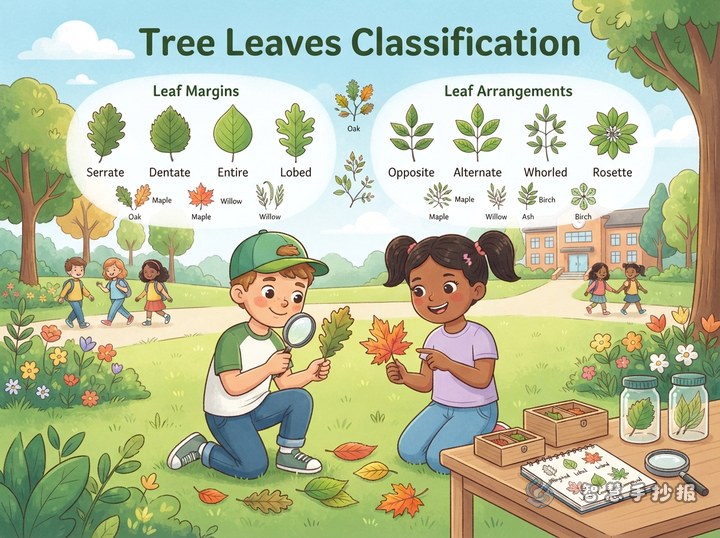
- Leaf features: Use three or four short words for shape, margin, veins, and color, such as heart-shaped, toothed edge, netted veins, yellow-green.
- Specimen number: Give each leaf a number such as A1 or A2 so it matches the specimen on the poster.
Layout Idea: Three Columns That Match Specimens to Notes
The biggest risk with collection records is ending up with a pile of cards and a pile of specimens that do not connect. Try a three-column plan:
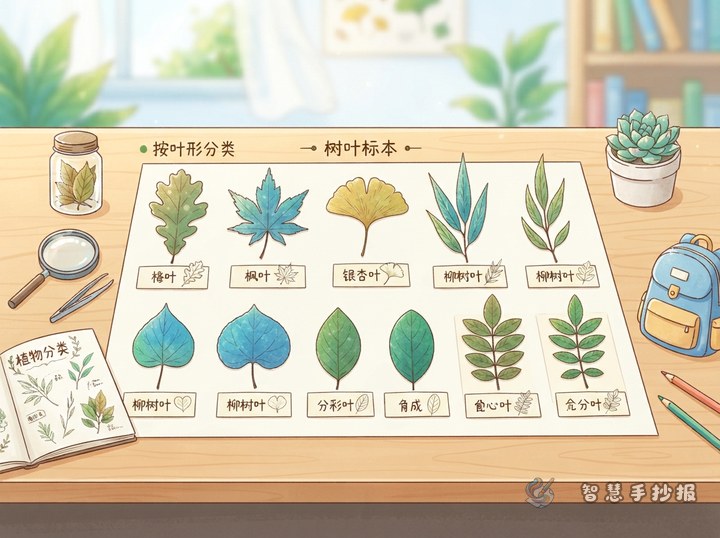
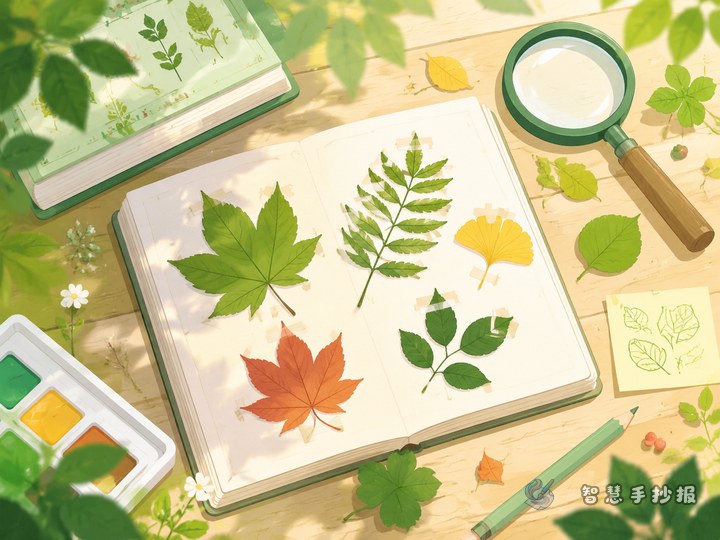
- Place specimens in the left column and add a small number tag below each leaf.
- Place observation cards in the middle column and write the same number in the top corner of each card.
- Leave a small “What I noticed” area on the right for one memorable detail, such as fine hairs on the underside or a scent from a broken leaf stalk.
If the page is narrow, turn the cards into horizontal strips placed under the specimens, with numbers at both ends. The page then reads like a band of observations.
Sentence Starters Kids Can Adapt
Children often freeze when asked what to write. These short examples can serve as templates and be changed to fit the actual leaf.
- This leaf was collected from the flower bed east of the classroom building at nine in the morning on a sunny day, and the surface had a thin layer of dust.
- The leaf margin has fine teeth that feel slightly rough, and the veins branch like small twigs.
- On the same tree, leaves facing the sun are darker, while leaves in the shade are thinner.
- I do not know this tree yet, so I am recording opposite leaves and an oval shape first and will add the name after checking.
Small Details That Keep the Poster Neat
- Number before attaching: Write specimen numbers before pressing or gluing so the leaves do not get mixed up.
- Keep writing away from the leaf: Leave a small gap between the card and the specimen, and put glue only on the stalk or tip.
- Save a “to be checked” corner: Group uncertain names in one corner. This is more honest than writing a wrong name and makes later corrections easy.
Once the collection records are written, users who want a different layout or an extra observation archive section can open the Smart Handwritten Poster WeChat mini program, choose a template in the leaf specimen and plant classification theme, and keep arranging the text and specimens.