Three Plant Groups That Give Your Layout a Backbone
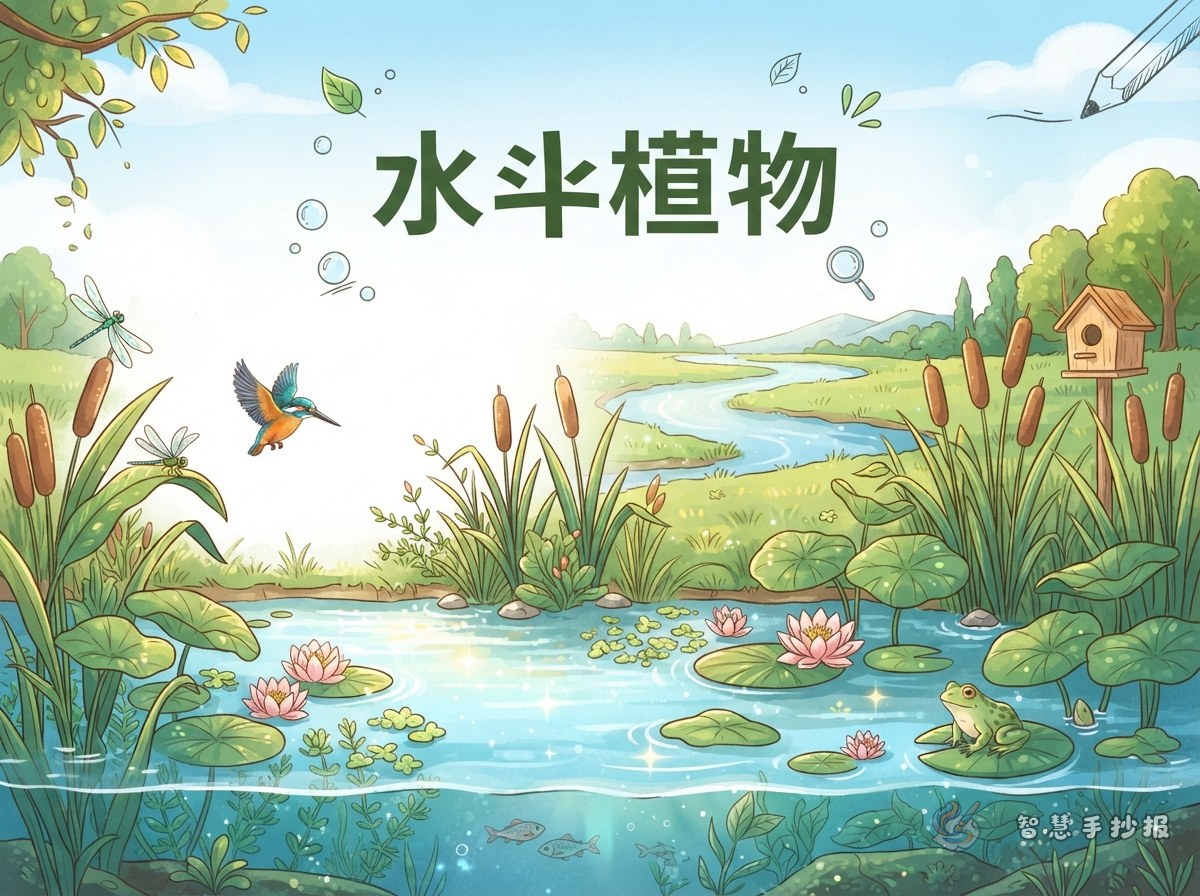
Most students think of lotus and reeds when they hear "wetland plants." In fact, wetland plants can be sorted by where they grow in the water, and that simple sorting system works as the main structure of your poster.
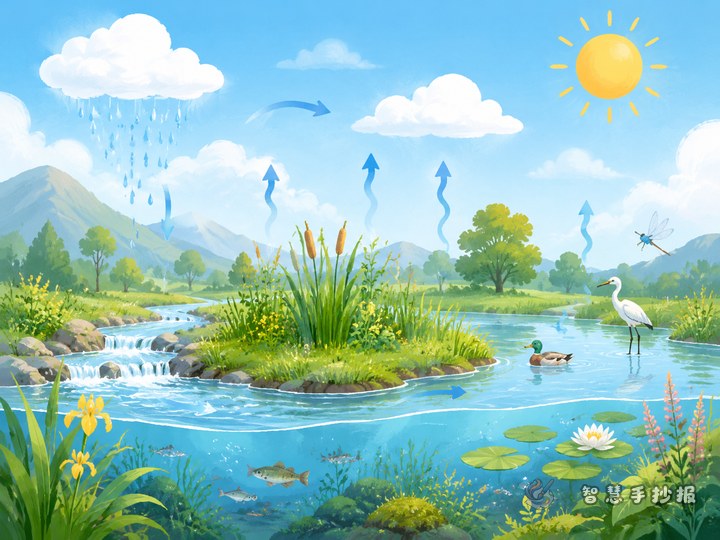
- Emergent plants: rooted in mud, with stems and leaves rising above the surface, such as reeds, cattails, sweet flag, club rush and lotus.
- Floating plants: leaves resting on the surface, such as water lilies, duckweed and floating heart.
- Submerged plants: growing entirely below the surface, such as hornwort and eelgrass.
Give each group its own column and your poster reads from the bank down to the riverbed in a clear order.
A Short List of Wetland Plants You Can Draw
The tall ones along the bank
- Reed: slim upright stems with a soft plume at the top.
- Cattail: long strap-like leaves plus a brown rod-shaped seed head.
- Sweet flag: long pointed leaves, often growing by stones at the water's edge.
- Club rush: round tube-like stems standing straight in shallow water.
The little discs on the surface
- Water lily: flat leaves with a notch, flowers resting on the water.
- Duckweed: tiny green dots crowded together, drifting with the current.
- Floating heart: small round leaves lying flat on the surface.
The hidden green carpet below
- Hornwort: thin stems ringed with forked little leaves.
- Eelgrass: ribbon-like leaves swaying underwater.
Turning Each Plant Into a Small Profile Card
To keep every column tidy, give each plant a card with four fixed lines:
- Name: the plant's name plus a tiny icon.
- Growing zone: emergent, floating or submerged.
- Key feature: one sentence describing the most noticeable shape.
- Why it matters: shelter for fish and insects, holding the bank together, or adding oxygen to the water.
Example: "Cattail, emergent plant, long strap leaves with a brown rod-shaped seed head, gives water birds and small fish a place to hide." That one sentence completes a card.
Laying Out the Page as a Riverbank Cross-Section
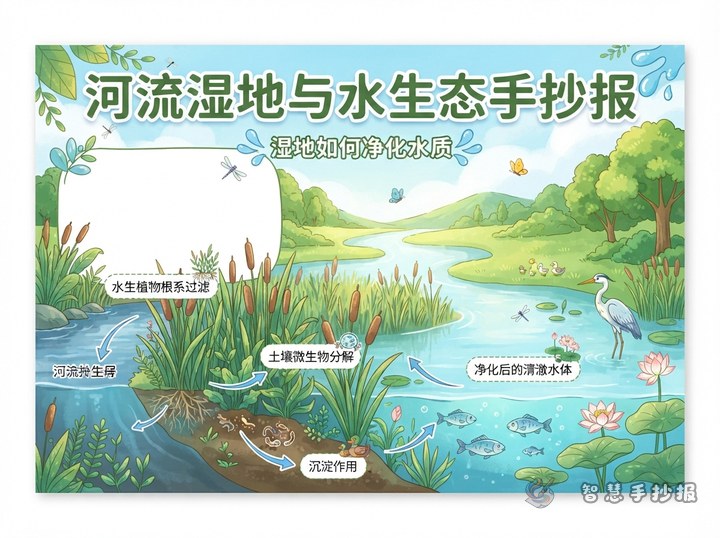
To make the wetland setting obvious at a glance, try a cross-section layout:
- Draw a slanted bank line down the left side as your divider.
- Place emergent plants above the line, floating plants on the line, and submerged plants at the bottom.
- Leave the top of the page for the title and one opening sentence, and the lower right corner for a short "how we can help" note.
- Tint the text boxes pale blue and pale green to suggest water.
On landscape paper, draw the cross-section on the left and stack the three plant columns on the right.
Ready-to-Use Opening and Closing Lines
Opening: A river or wetland may look like nothing but water and mud, but below the surface there is a green garden. From the reeds at the bank to the hornwort on the riverbed, every plant grows in its own place.
Closing: Aquatic plants are more than scenery. They keep the water clear, give fish and insects a home, and hold the bank in place. Protecting this greenery means protecting the wetlands around us.
Quick Tips Before You Start
- Sketch in pencil first and check that all three sections fit before adding color.
- Do not fill every space with drawings; leave room for text.
- Stick to blues and greens, with a little yellow and brown for flowers and seed heads.
- Read your text aloud once to catch repeated sentences.
If your draft is ready and you want a cleaner layout or neater plant illustrations, open the Smart Handwritten Newspaper mini program in WeChat, choose a river wetland and water ecology template, and finish your poster there.