Build the page around one clear visual idea
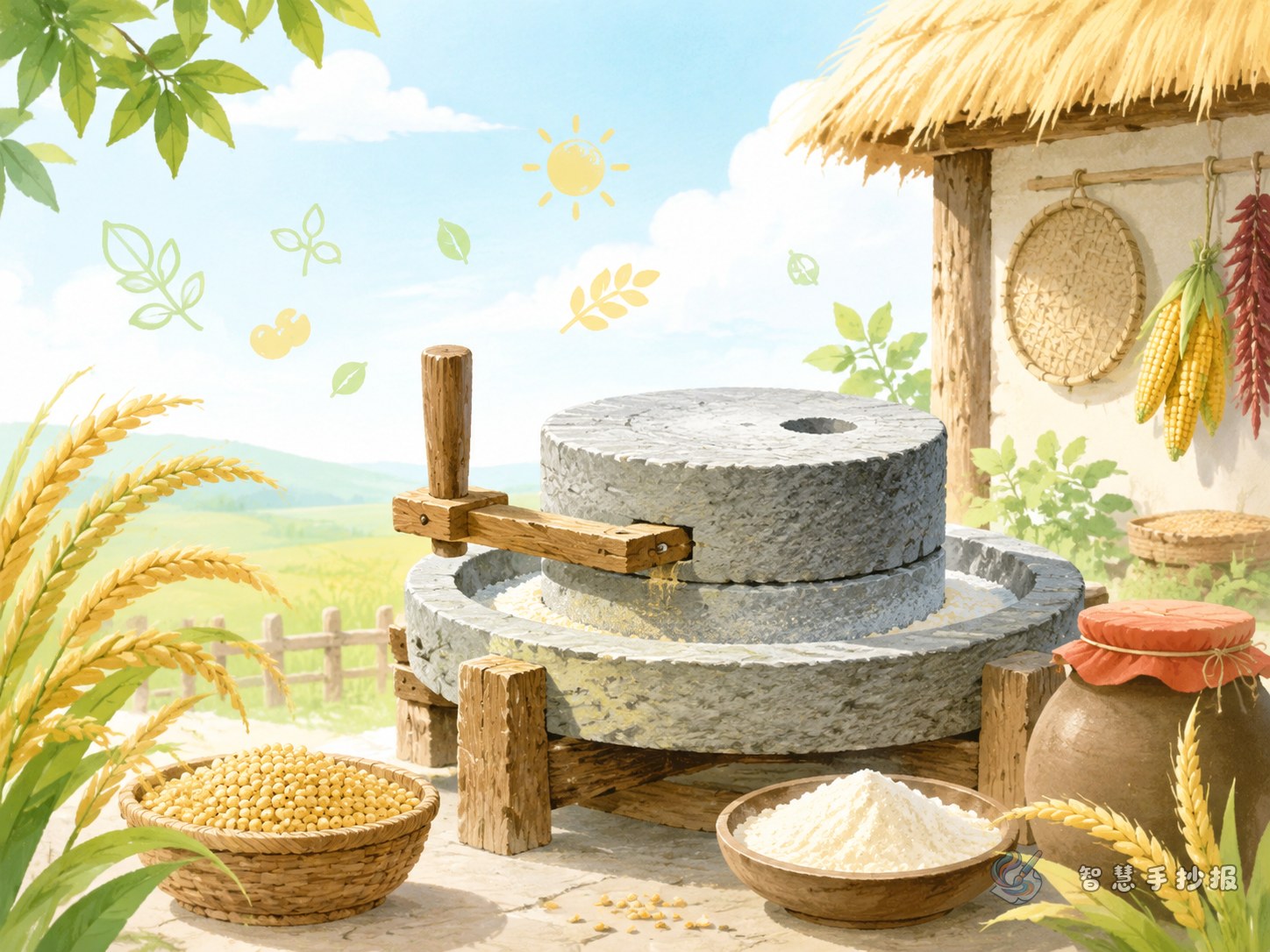
A stone mill is one of the most recognizable traditional farming tools, so the page should make that obvious at first glance. A title like Getting to Know the Stone Mill, Traditional Wisdom in the Stone Mill, or From Grain to Flour works well. The main drawing can show the round millstone, the handle, and flour coming out, which makes the topic easy to understand.
The most useful facts to include
1. What a stone mill is
A stone mill is a traditional tool used to process grain by grinding and pressing it. People used it to turn wheat, corn, soybeans, and other crops into flour or paste. It played an important role in everyday food preparation in the past.
2. Main parts of a stone mill
You can briefly introduce the upper stone, lower stone, grain hole, grooves, and wooden handle. Students do not need technical details. A simple explanation is enough to show that the tool works through different parts working together.
3. How it works
Grain is poured into the center opening, then the upper stone is turned. As the two stones rub and press the grain, it becomes flour or slurry and comes out from the side. A small step-by-step drawing can make this section clearer and more interesting.
4. What wisdom it shows
The stone mill reflects practical thinking in traditional production. People used simple mechanical movement to solve an everyday need: turning grain into food. It shows observation, experience, and the ability to improve life with basic tools.
Section ideas that are easy to arrange
If the page is horizontal, divide it into four blocks. If it is vertical, place a main drawing in the middle and smaller sections around it. These section ideas are especially useful:
- Stone Mill Facts: definition, use, and appearance
- How Grain Becomes Flour: the process in simple steps
- A Glimpse of Farm Labor: daily work in traditional homes or villages
- What I Learned: respect for food and hard work
This mix helps the page feel complete instead of becoming a plain tool description.
Short text lines students can use directly
- The stone mill is a traditional tool with a simple shape and an important use.
- People used it to turn grain into flour, rice paste, or soybean paste.
- Although it is slower than modern machines, it carries traditional production wisdom.
- Every grain of food is hard-earned, so we should value food and respect labor.
- The stone mill teaches us about diligence, thrift, and creativity.
These lines fit well in side notes, small boxes, or the ending reflection.
Color and illustration tips
This topic looks best with gray, earthy yellow, light brown, and green. These colors match stone, soil, and crops. The main illustration can be a large round millstone, with wheat, corn, beans, baskets, or wooden buckets around it. A slightly bold title style also matches the solid feeling of stone.
If the page feels too plain, add a mini sequence drawing showing grain changing into flour, or make a simple cutaway sketch of the stone mill to add more learning value.
A simple ending that fits a school project
The ending does not need to be long. Students can write that the stone mill shows how people in the past used simple tools to solve big daily needs. Even though modern machines are more convenient today, traditional tools still remind us of wisdom, hard work, and respect for food. After finishing the text, you can continue improving the title, boxes, and colors in the WeChat mini program.