Follow the Rice-Field Journey
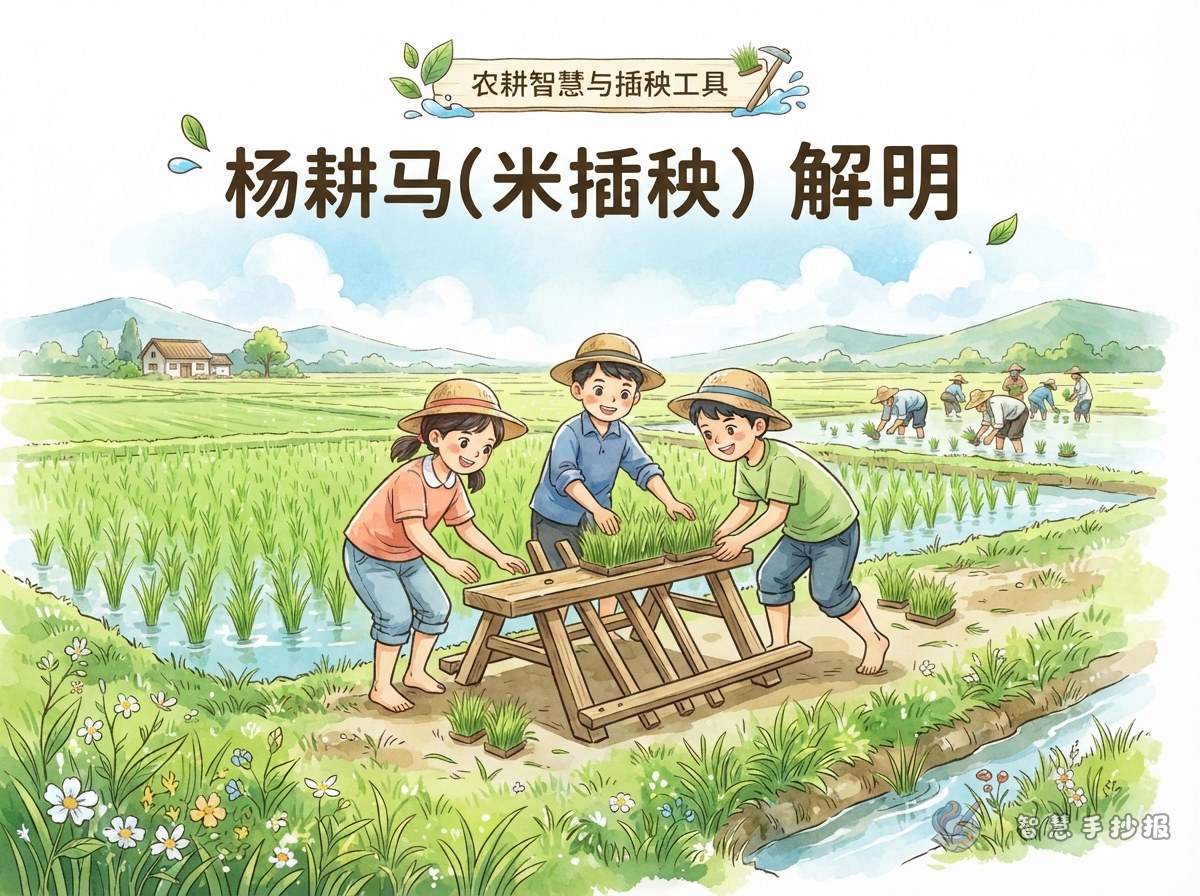
Begin the poster with a simple rice-growing scene. In the past, farmers often had to bend, squat, or kneel for long periods while handling seedlings in muddy paddies. A yangma was a small traditional tool shaped somewhat like a low seat or narrow sled. It could move over the mud and assist with pulling, carrying, or transplanting rice seedlings.
Place a farmer using a yangma near the center, then connect raising seedlings, pulling seedlings, carrying bundles, and transplanting with arrows. This shows where the tool belonged in the farming process.
Why Did It Work in Mud?
Turn the tool's design into three easy observation points:
- A broad base: It spread pressure across the muddy surface and reduced sinking.
- An upturned front: It made the tool easier to pull through shallow water and soft soil.
- A low seat: It kept the worker close to the seedlings and reduced repeated deep bending.
Draw a simple labeled sketch and point to the base, seat, and raised front. Keep each label short so the illustration remains easy to scan.
Ready-to-Use Writing Material
A Short Introduction
The yangma was a practical tool used in traditional rice farming. It moved across wet paddy soil and helped farmers handle seedlings during pulling, transport, or transplanting.
Wisdom in a Simple Shape
Although its structure was simple, the yangma reflected careful observation of the paddy environment. Its broad base, low height, and movable form matched the needs of work performed close to the muddy ground.
Tools Then and Now
Modern rice transplanters can complete fieldwork more efficiently in many places. Comparing them with the yangma helps students see how farm tools change as materials, technology, and production needs develop.
Lay Out the Page Like a Paddy Field
- Use the upper quarter for the title and decorate it with rice ears, seedlings, and gentle water lines.
- Draw the main farming scene in the center and place a labeled tool sketch beside it.
- Add small sections for the fieldwork sequence, design wisdom, and a then-and-now comparison.
- Use seedling green, clear blue, earthy brown, and plenty of white space to keep the page bright and readable.
Finish with Clear Details
Show the farmer pulling, sorting, or transplanting seedlings so the tool's purpose is clear. Do not draw the yangma as an animal simply because its Chinese name contains the character for horse. Draft text lightly in pencil, keep paragraphs short, and highlight only key terms. After preparing the content, students and parents can use the Zhihui Shouchaobao WeChat Mini Program to choose a template, arrange the sections, and continue making the poster.