Start with the Question: How Did Water Reach the Fields?
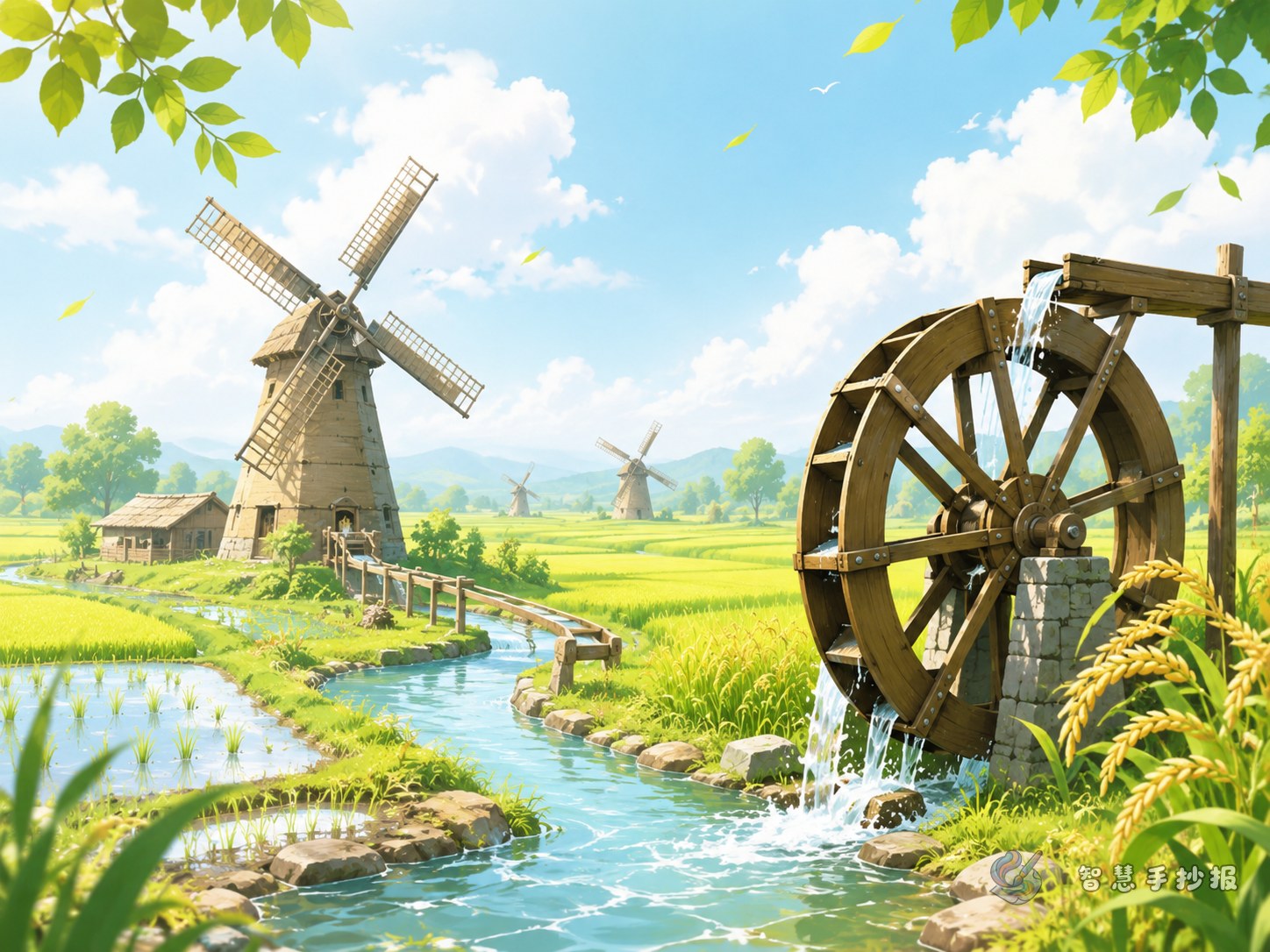
For a handwritten newspaper about windmills, waterwheels, and irrigation, the topic does not need to become a difficult science lesson. Begin with a simple question: before modern pumps were widely used, how did farmers move water from rivers or streams into their fields? A waterwheel could turn with flowing water or human effort and lift water into channels. A farm windmill could use wind power to help draw or drain water. Both show the wisdom of using nature to make farm work easier.
Possible titles include “The Turning Helpers in the Fields”, “How a Waterwheel Sends Water to Crops”, or “Farming Wisdom in Wind and Water”.
Short Text You Can Copy into the Poster
About the Waterwheel
A waterwheel is a traditional tool for lifting and moving water. It often has a wheel, an axle, and containers or wooden troughs. As it turns, it carries water from a lower place to a higher channel, allowing water to flow into farmland. It helped farmers save effort and water their crops more efficiently.
About the Farm Windmill
In farming, a windmill can use wind power to turn and help lift or drain water. When the wind is steady, the windmill works more smoothly. It shows how people observed nature and turned invisible wind into useful power for production.
A Theme Sentence
Traditional farm tools may look simple, but they hold the wisdom of working with nature: following the water, using the wind, and making hard work lighter.
Column Ideas That Make the Page Richer
- Tool Cards: introduce the names, uses, and features of waterwheels and windmills.
- Irrigation Route: explain the process with “water source—turning wheel—lifting water—channel—rice field”.
- Wisdom Notes: use key phrases such as “using natural power”, “turning motion”, and “saving labor”.
- Then and Now: compare traditional waterwheels with modern pumps in a simple way.
- Protect and Learn: suggest visiting farming museums, learning about local tools, and valuing food.
Page Design: Make Wind and Water Feel Alive
Try a flowing layout. Draw a windmill in the upper left, a field in the lower right, and a curved water channel connecting them. This creates a clear visual path: wind moves, water flows, and crops benefit. Use blue for water, green for fields, and brown for wooden tools to keep the page bright and clean.
Borders can look like bamboo tubes, water waves, or rice ears. Place a large turning waterwheel beside the main title. Column boxes can be shaped like wooden signs, field plots, or small channels. Leave enough blank space so the page does not look crowded.
Small Details That Improve the Work
- Sketch the large wheel or windmill first, then add text boxes around it.
- Highlight key labels such as “wind power”, “water power”, and “saving labor”.
- Use arrows to show the direction of water flow.
- Add a final sentence such as “Cherish every grain of food” to connect the topic with labor education.
If you want to finish the layout more easily, you can open the Zhihui Handwritten Newspaper WeChat mini program and continue creating a printable or traceable farming-tools themed page.