Turn the Threshing Ground into a Grain Journey
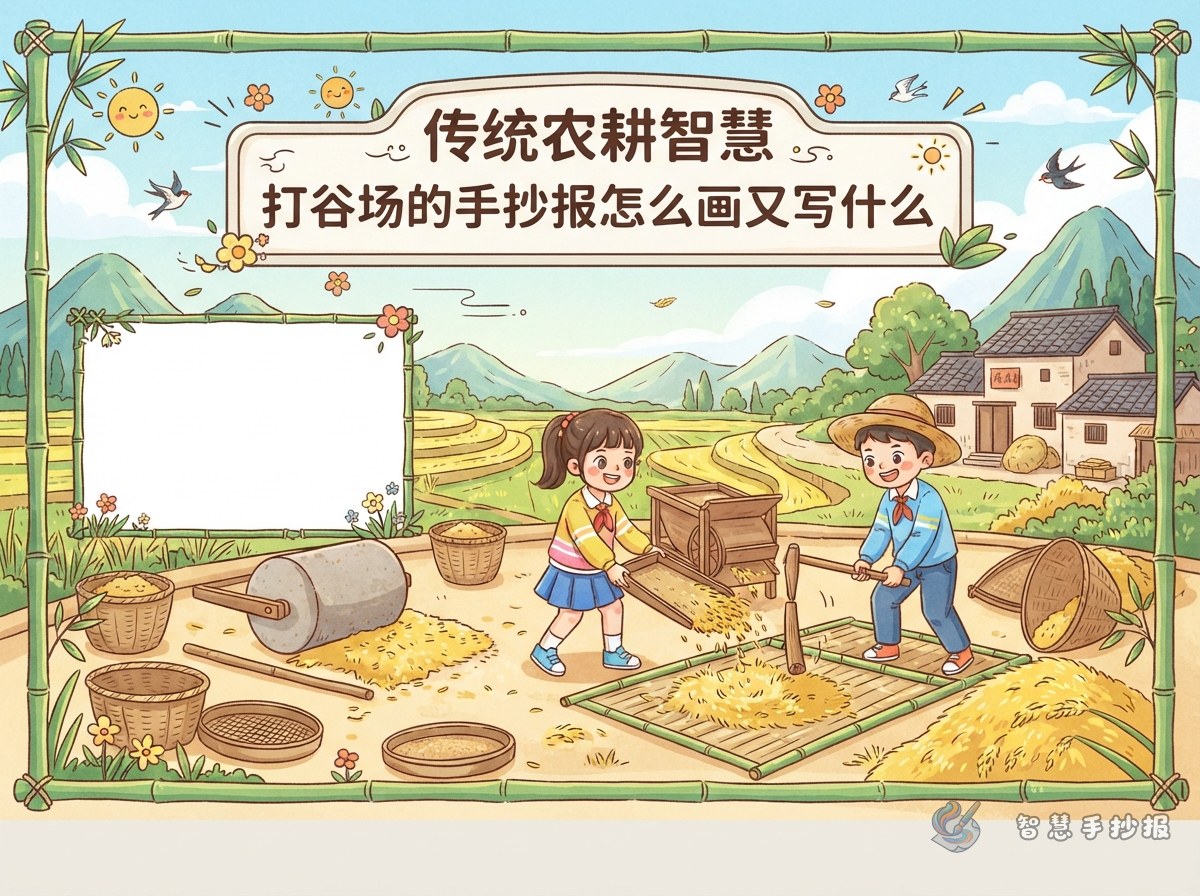
Build the poster around one clear question: How did harvested crops become clean grain? Draw a sunlit threshing ground in the center and use arrows to connect drying, threshing, winnowing, and storage. Place a flail, wooden fork, winnowing basket, and hand-operated winnowing machine beside the stage where each tool was used.
Make Small Profile Cards for the Tools
The flail and rhythmic motion
A traditional flail usually has a long handle joined to a swinging beater. Repeated swings help separate grain from stalks and seed heads. A simple action sequence labeled “lift, swing, strike, return” makes the drawing easy to understand.
The winnowing basket and careful sorting
A winnowing basket can hold grain and help remove light husks, leaves, and other debris. A short science note can explain that grain is generally heavier than chaff, so controlled tossing and moving air help separate them. Names and methods varied by region, so present this as a common practice rather than a universal rule.
The winnowing machine and moving air
A hand-operated winnowing machine creates airflow to separate lighter chaff from heavier kernels. It shows how farmers applied observations about air, weight, and motion to everyday work. Add a simplified cutaway drawing with arrows for the grain inlet, airflow, and grain outlet.
Give the Poster Four Story-Based Sections
- A Day on the Threshing Ground: Write three short passages about morning drying, daytime threshing, and evening cleaning.
- If Tools Could Speak: Let a flail, basket, or winnowing machine introduce its job in the first person.
- Science in Farm Work: Explain how swinging motion, airflow, and differences in weight make the work easier.
- Value Every Grain: Connect the many stages of processing with respect for labor and avoiding food waste.
Ready-to-Use Poster Text
Opening paragraph: Harvest did not end when crops were cut. Grain still had to be dried, threshed, cleaned, and stored. Flails used swinging motion to loosen kernels, while baskets and winnowing machines helped remove light debris. These simple tools preserve generations of practical knowledge and remind us that every grain required patient work.
Closing message: Each tool served a stage, and each stage required skill and effort. Learning about the threshing ground is one way to discover the practical wisdom of farming communities.
Arrange the Page with Open Space and Clear Movement
- Place the title at the top and decorate it with rice heads, wheat ears, or scattered kernels.
- Use roughly one-third of the page for a central threshing-ground scene.
- Put tool profiles and process cards on both sides. Shape the text boxes like baskets, grain sacks, or wooden signs.
- Choose grain yellow, earth brown, and leaf green as the main colors. Use a little blue for airflow arrows.
- Sketch every section in pencil before copying the final text. To refine the title, columns, and layout, scan the code and continue in the Zhihui Shouchaobao WeChat Mini Program.