Turn a Finished Book into a Shared Conversation
A parent-child reading sharing handwritten newspaper does not need to retell an entire book. It works better when it shows what the child noticed, what the parent heard, and what they would like to do together next. Choose a book the child has actually read, then find one central idea such as courage, friendship, persistence, or understanding. This gives the page both reading content and the warmth of family time.
- A discovery from the story: Write about a favorite character, memorable event, or small detail.
- My feeling: Explain in one or two sentences why the story made the child happy, surprised, touched, or curious.
- A parent’s response: Record one question, encouraging sentence, or life connection from the parent.
- Our next activity: Suggest a small action to do together, such as observing plants, acting out a scene, or writing a new ending.
Design the Page as a Growth Map
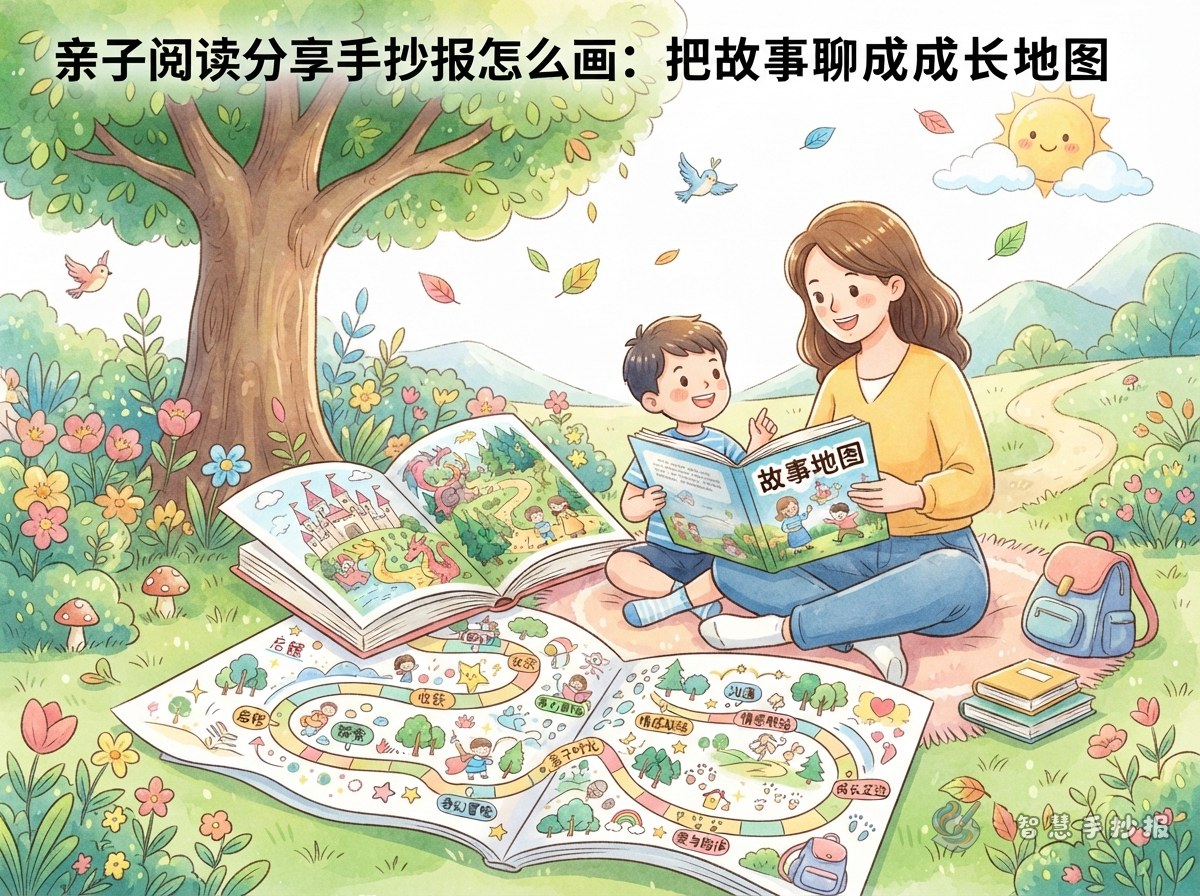
Draw an open book in the center of the handwritten newspaper as the starting point. From the pages, extend a colorful path to four stops: “A Story Discovery,” “What I Thought,” “Our Conversation,” and “Our Next Step.” Footprints, signposts, leaves, and stars can follow the path to suggest discovery and growth. Place the main title at the top and decorate it with speech bubbles or bookmark shapes so the theme is clear at a glance.
Avoid filling every corner with writing. Let the central illustration take about one third of the page and arrange the four sections around it. Use neat writing lines or note cards for longer text, and place short thoughts inside speech bubbles to create the feeling of reading and talking together.
Four Sections That Give Children Something to Say
A Small Discovery from the Story
Instead of copying the plot, write something specific: “I noticed that the main character was afraid but still moved forward,” or “The quiet forest was full of hidden clues.” A concrete observation feels more lively than simply saying that the book was meaningful.
What Would We Do?
Turn parent-child communication into a question-and-answer section. Try questions such as, “What would you do if you were the little fox?” or “How would you like others to help when you face a problem?” Place the child’s answer beside a parent’s response to show a real exchange.
One Reading Lesson
Put a short sentence on a bright note card, such as “Being brave does not mean having no fear; it means being willing to try.” Children can rewrite the idea in their own words. Clear and sincere language is better than complicated expressions.
Something to Do After Reading
Connect the reading experience with daily life by suggesting an activity: organize the bookshelf, tell the story to a family member, draw a new ending, or make a small observation related to the theme. This section moves the page from “what we read” to “how we grow together.”
Add the Warmth of Companionship with Speech Bubbles
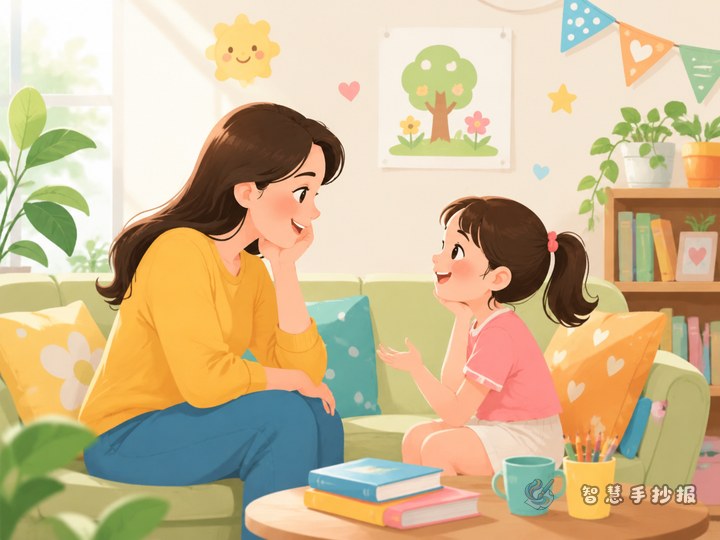
Place two small figures facing each other, two paper cups, or a large book and a small book so the words can alternate like a conversation. Use a brighter color for the child’s words and a softer color for the parent’s response. For example: “Child: I like that the character did not give up. Parent: I have wanted to give up before too. Let’s think of a way forward together.”
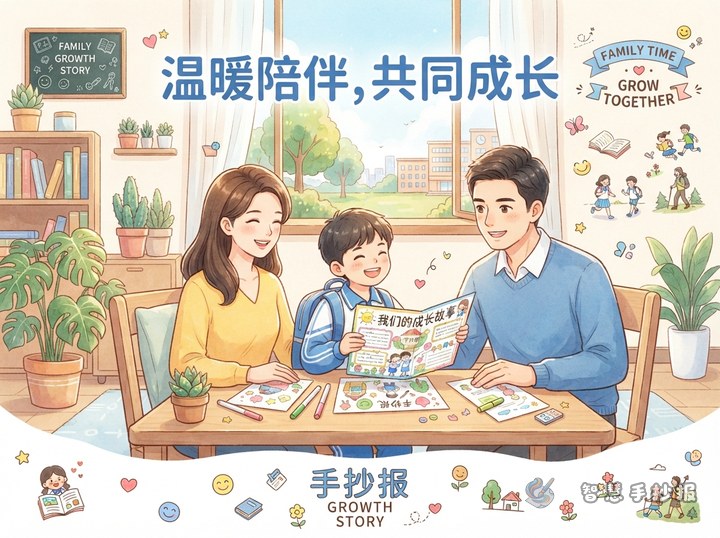
The decorations do not have to be limited to books. A dining table, window, bookmark, teacup, or holding hands can show that reading happens as part of everyday family life. To organize the sections and layout more quickly, you can begin with a suitable topic in the Wisdom Handwritten Newspaper WeChat Mini Program, then adjust the wording and colors to match the child’s real reading experience.
A Practical Order for Making the Final Page
- Choose the book and one growth idea worth sharing.
- Sketch the open book in the center and four paths for the content.
- Write the text before decorating, then adjust each section according to the amount of writing.
- Use a pencil for the title, figures, and speech bubbles before outlining them in black.
- Choose two or three main colors, then add small icons, borders, and balanced blank space.
When the page is finished, ask a parent to read the conversation aloud and see whether the child’s reading experience comes through clearly. The result will be more than a neat handwritten newspaper: it will also be a small record of family conversation and growing together.