Why a Role-Swap Day Works as a Handwritten Newspaper Theme
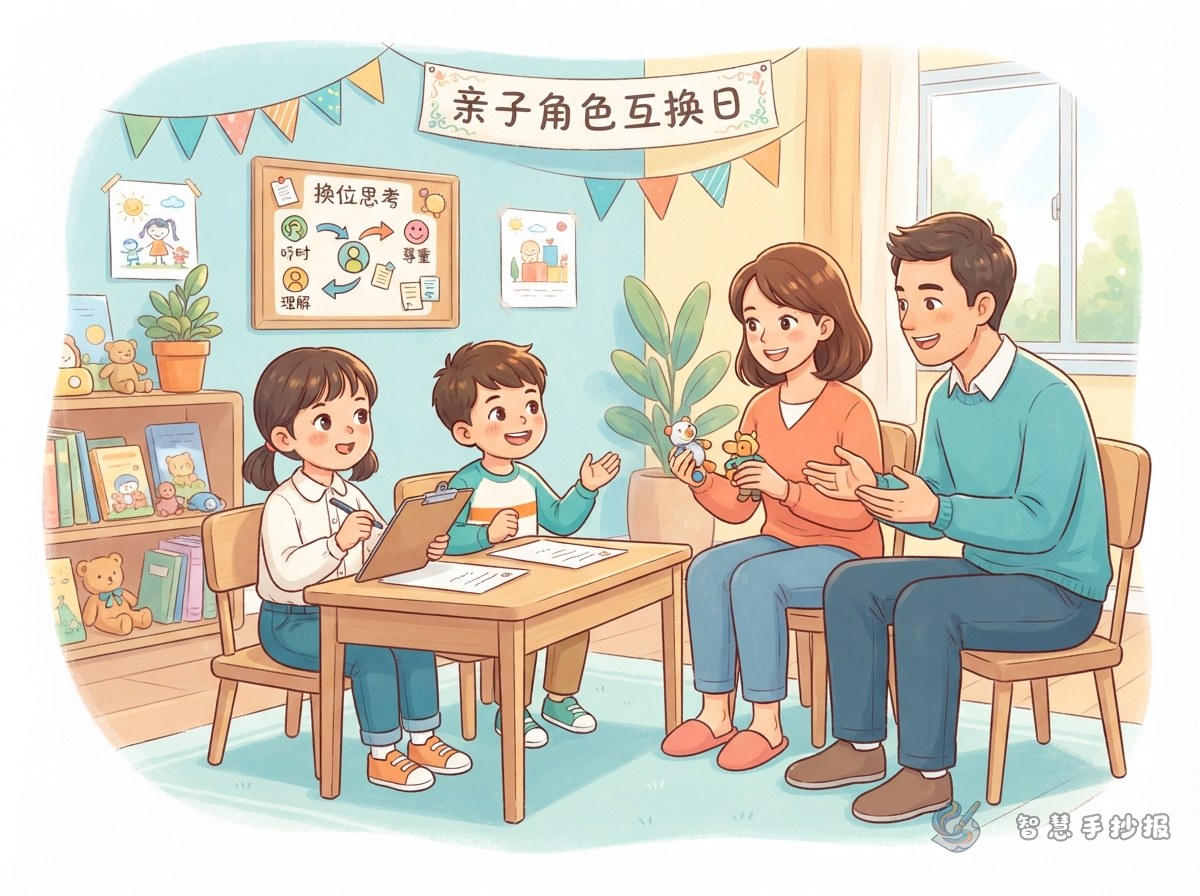
A parent-child role-swap day lets children and parents trade places for half a day. The child can try planning chores or reminding the family about time, while the parent tries a small task from the child's daily routine. A handwritten newspaper does not need long lectures. It can simply capture one funny or surprising moment from the swap and turn it into a visual story about empathy.
Keep the whole page focused on one question: If I were you, how would I think and speak? Every section can grow from that question, so the layout and writing stay connected.
Five Sections to Include on the Page
- Swap task cards: List three things the child will do as 'Mom' or 'Dad,' such as waking someone up, preparing fruit, or checking the school bag.
- Role-swap mini theater: Compare what was said before and after the swap. For example, 'Hurry up and do your homework' becomes 'I worry you will not sleep enough. What would you like to do first?'
- Mood weather report: Use sunny, cloudy, or rainy icons to show feelings during the swap, with one short reason next to each icon.
- Kind phrase collection: Copy or rewrite three phrases that feel good to hear, such as 'I need your help,' 'I heard you say...,' or 'We can find a way together.'
- Family communication agreement: Write three simple rules, like 'Do not interrupt,' 'Take a deep breath when angry,' or 'Say one thing you are thankful for each day.'
Writing Prompts That Make the Content Specific
Many students write general sentences like 'We should understand our parents.' Try using a real scene and a real feeling instead.
- Describe the event: when, where, and why the role swap happened.
- Describe the discovery: what did you see, hear, and feel after switching roles?
- Describe the action: what sentence or action can you try next time?
For example: 'Today I was Dad and had to hurry the child out the door. I called three times, but he was still looking for his shoes. I learned that being rushed feels stressful, and rushing someone else feels stressful too. Next time we can put our shoes by the door the night before.' This kind of paragraph fits perfectly in the role-swap mini theater section.
Layout Idea: Two Columns and Speech Bubbles
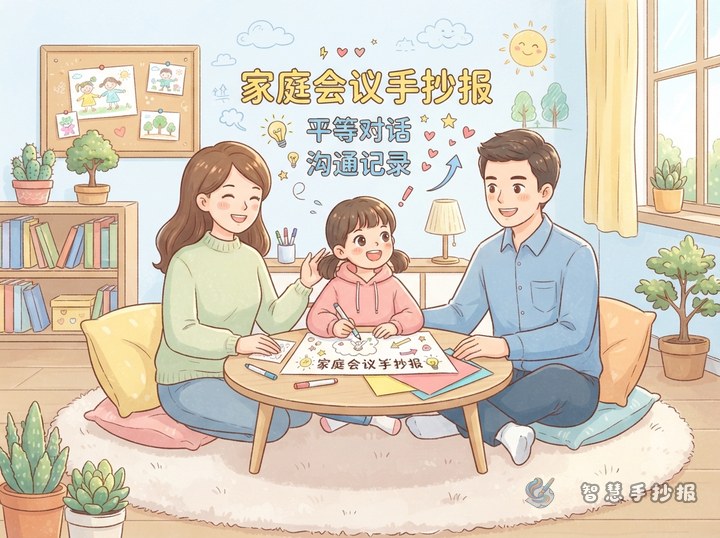
A role-swap newspaper works best with a left-right two-column layout. Put 'Me as Parent' on the left and 'Parent as Child' on the right, then connect them with a curved arrow or a string of speech bubbles. The title can be large, such as 'One Day Swapped, One Step Closer,' with a line underneath for the student's class and name.
For a livelier page, use a four-panel comic. Panel one shows the scene, panel two shows the original words, panel three shows the role swap, and panel four shows a new way to say it. The drawings can be simple stick figures with expressions. Use cloud, footprint, heart-phone, or small-house shapes for borders, and choose light blue, light green, and warm yellow instead of very dark colors.
Steps and Gentle Reminders
- Choose a real but private-safe scene, such as morning routines, desk cleaning, or weekend shopping.
- Sketch the sections lightly in pencil: title, two columns, small boxes, and illustration spots.
- Write the main title and section names first, then fill in the content, and finally outline with colored pens.
- Check for spelling mistakes, comfortable white space, and enough room between sections.
Reminder: Do not include real names, home addresses, or uncomfortable family conflicts. Use 'Dad,' 'Mom,' or 'I' instead. Focus on what the child learned and what can be said next time. This keeps the page positive and suitable for a growth-and-companionship theme.
Save Time with a Ready Template in the WeChat Mini Program
If you only need a layout reference, open WeChat and search for the 智慧手抄报 mini program. Choose a family communication or parent-child companionship template, replace the text with your own role-swap story, and then print or copy it by hand. The most important part is still the child's own observation and expression; a template simply helps set up the page.