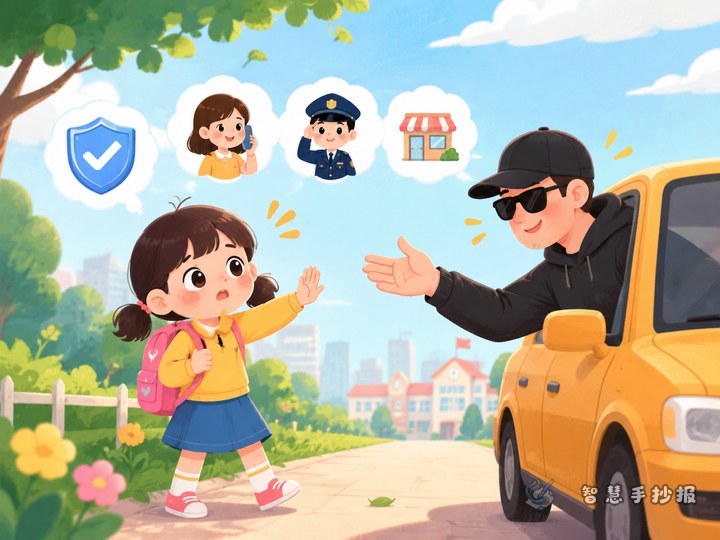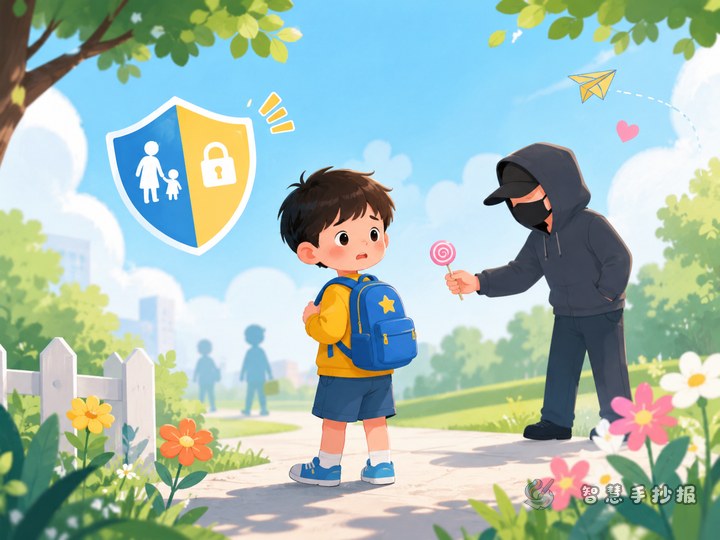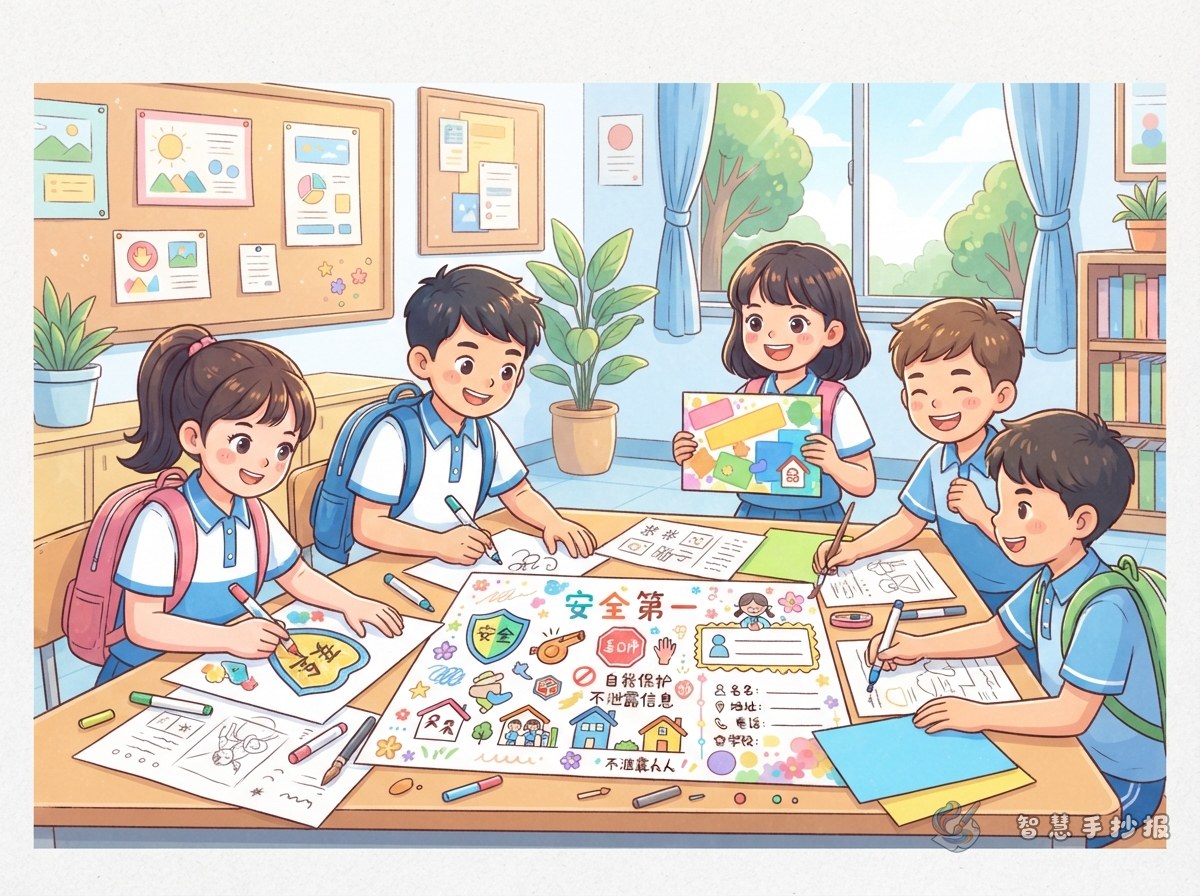
Choose a clear message: protecting information protects you
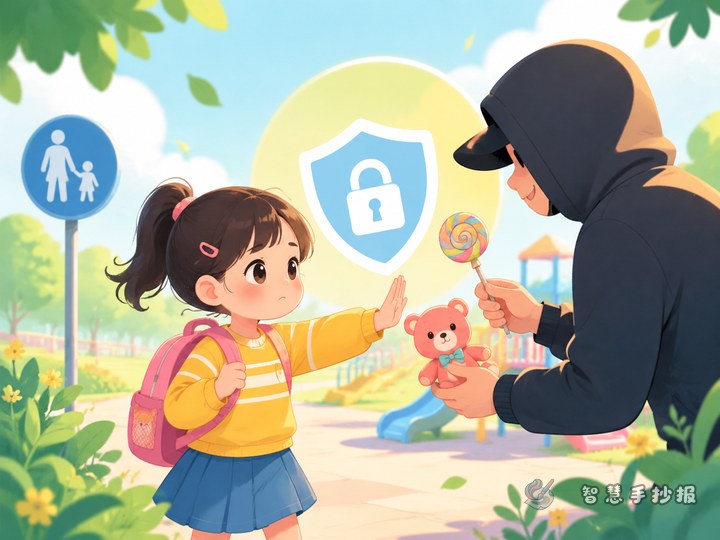
This handwritten newspaper can focus on the message “Keep personal information private and remember your safety boundaries.” Instead of only discussing strangers, remind children to protect their full name, home address, school, class, and parents’ phone numbers. Draw a locked “information chest” in the center, with a child saying, “I will ask my parents first.”
Safety points to include
- Keep personal information private: Do not casually share your full name, home address, school, class, or a parent’s contact information.
- Pause before answering: If someone asks about your family, route home, or parents, do not answer immediately. Check with a parent or teacher first.
- Be careful with photos: Do not post photos that reveal a school uniform, student badge, house number, or travel plans.
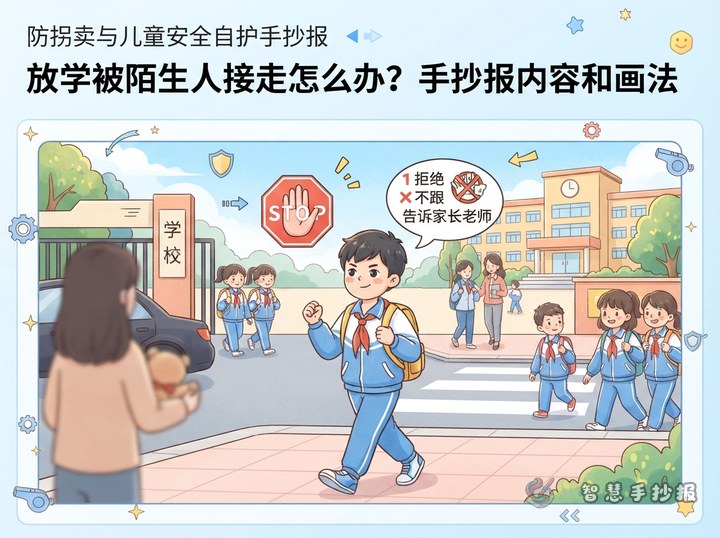
- Do not carry messages for strangers: If someone claims to know your family and asks you to keep a secret or go with them, refuse and find a trusted adult.
- Report anything unusual: Tell a parent, teacher, security guard, or police officer instead of handling the situation alone.
Turn the lesson into an information traffic light
Create an “information traffic light” section to make the message easier to remember. Green can show information that is generally safe to share, such as a nickname or favorite activity. Yellow can show information that requires a parent’s approval, such as a school event time or route home. Red can show information that should not be shared casually, such as a home address, a parent’s phone number, or being home alone. This classification is easier for younger children to understand than a long list of slogans.
What to say when a question feels unsafe
Three self-protection phrases
- “That is my personal information, and I cannot share it with you.”
- “Please talk to my parent or teacher if you need help.”
- “I am going to find a trusted adult now.”
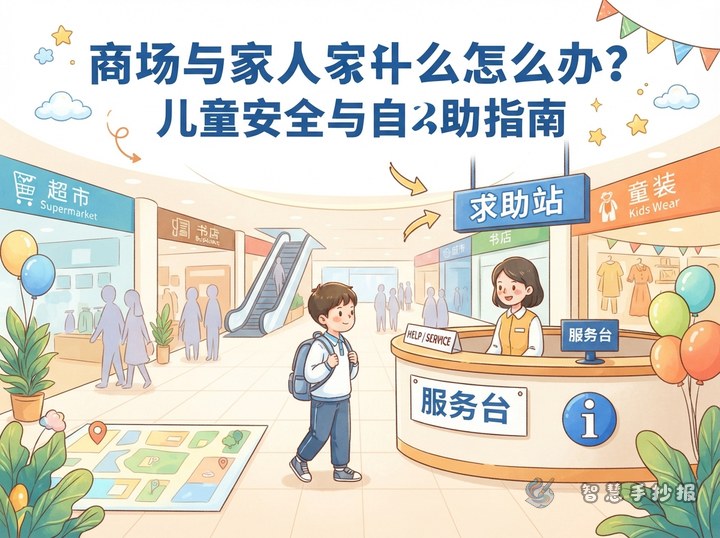
Place these phrases in a bold dialogue box near the bottom of the page. After speaking, children should move away and go to a parent, teacher, school security guard, store employee, or police officer. They should not change their decision because someone rushes them, threatens them, or promises them a gift.
Layout idea: connect the page with a “castle of protected information”
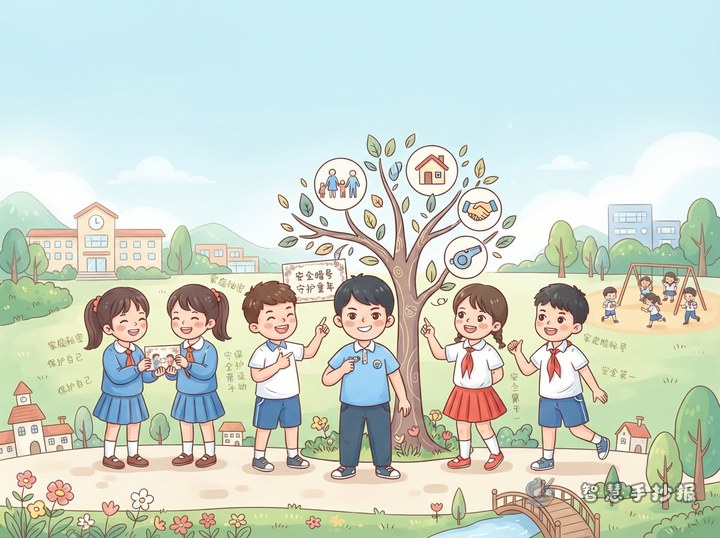
Try a horizontal layout with three sections. On the left, draw the locked information chest. In the middle, place the information traffic light and the three self-protection phrases. On the right, add a “Who can help me?” section. Use bright blue or green for the title and a small amount of red for warnings. Locks, shields, phones, and question marks work well as small decorations, but leave enough space for the text to remain easy to read.
Closing slogan and making tip
You can end with the slogan “Think before sharing every piece of information, and bravely protect your safety.” Another useful reminder is: “People who truly care about you respect your refusal and will not ask you to hide important things from your parents.” After planning the text, open the WeChat mini program “智慧手抄报” to choose a layout, organize the sections, and continue making the finished handwritten newspaper.