Choose a Clear Focus: Our Family Safety Code
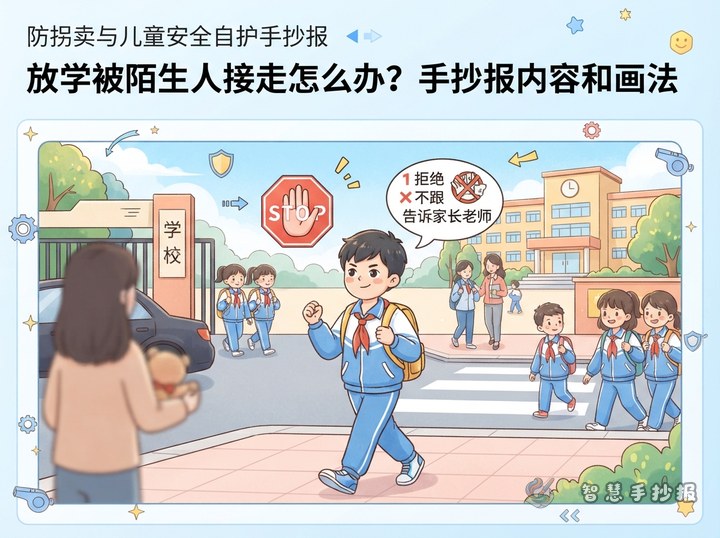
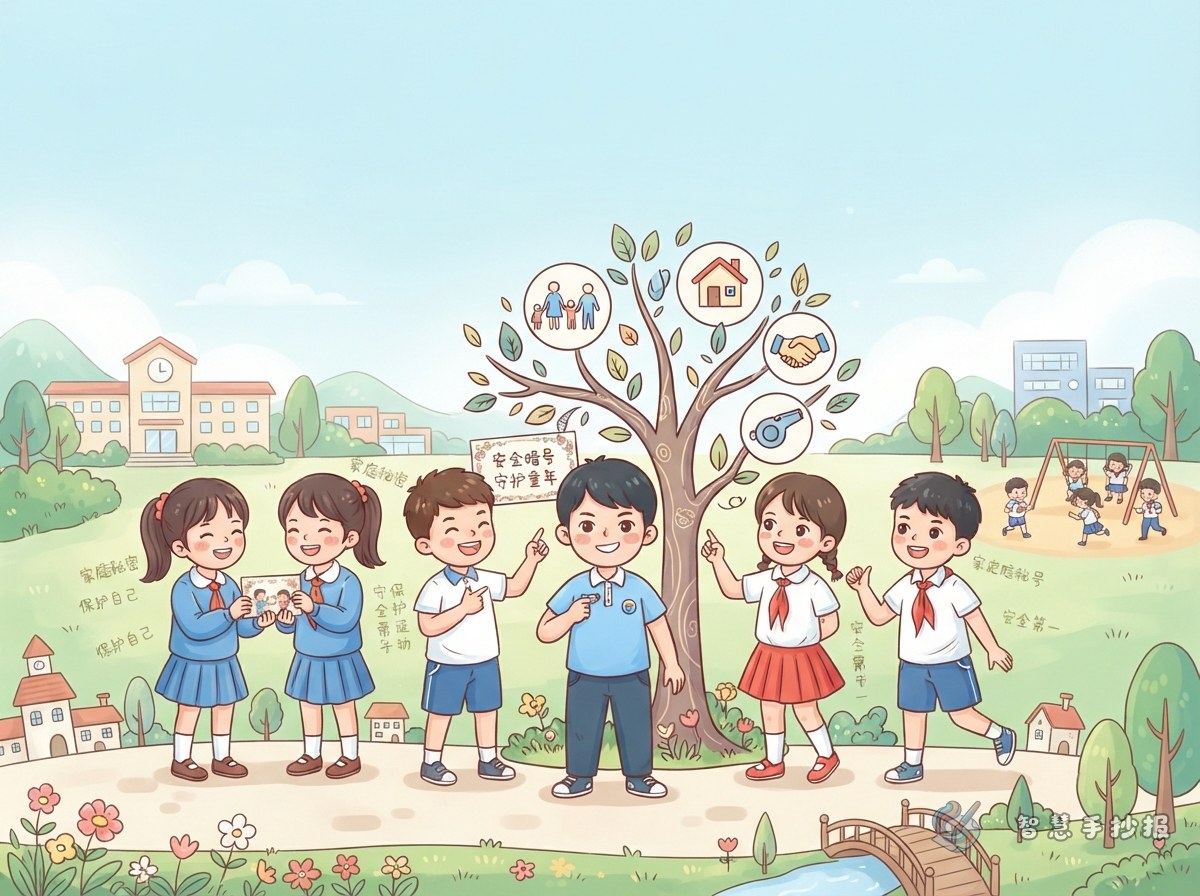
Instead of presenting general advice about strangers, build the handwritten newspaper around afamily safety code. A child and the family can agree on a word or short phrase known only to trusted family members and approved caregivers. If someone comes to pick up the child unexpectedly, the child should ask for the code and confirm the situation with a parent or teacher. Never write the real code on a public poster or share it casually.
How to Choose the Code
- Pick a short phrase that the family can remember but an outsider is unlikely to guess. Do not use a birthday, name, or phone number.
- Tell only the child, parents, and regular caregivers, and update it when the pickup arrangement changes.
- Treat the code as one identity check, not a replacement for a phone call, school procedure, or adult supervision.
Turn Self-Protection into a Three-Step Action Card
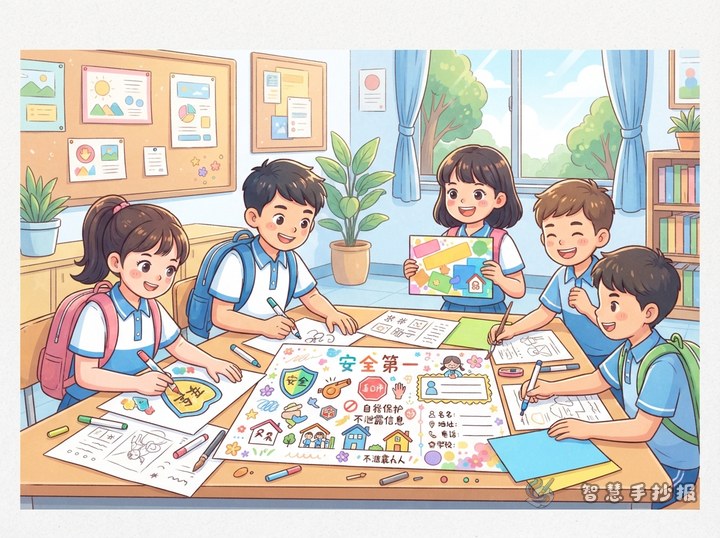
Place a large action card in the center of the page so children can quickly remember what to do when a pickup feels uncertain. Keep each instruction short and add simple drawings instead of long explanations.
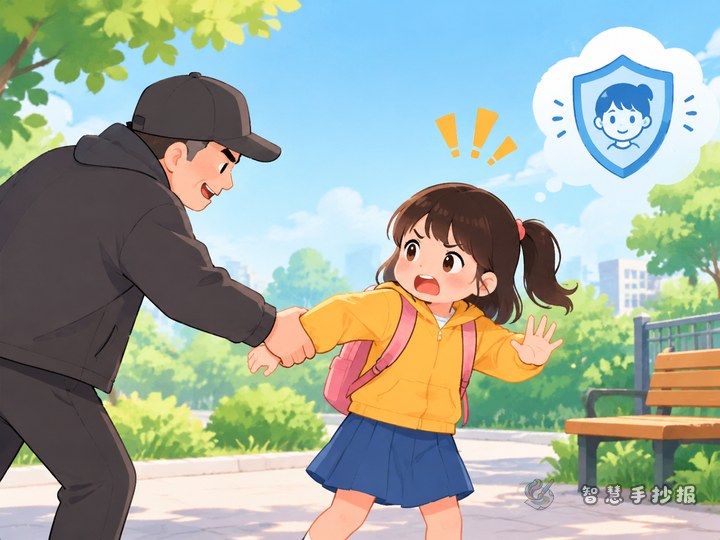
- Stop first: Do not leave school, the neighborhood, or another familiar public place with the person, and never get into a stranger’s vehicle.
- Check next: Ask whether the person knows the family safety code, then confirm the situation through a parent’s familiar phone number or a teacher.
- Ask for help: Go to a teacher, security guard, police officer, store worker, or another parent with a child and say clearly, “I do not know this person. Please help me.”
If a child becomes separated from family, staying near the last safe location and asking staff for help is safer than running away alone. In an emergency, ask a trustworthy adult to call the local emergency number, such as 110 in mainland China.
Short Text Children Can Copy
Main slogan: Check before you go; safety comes first.
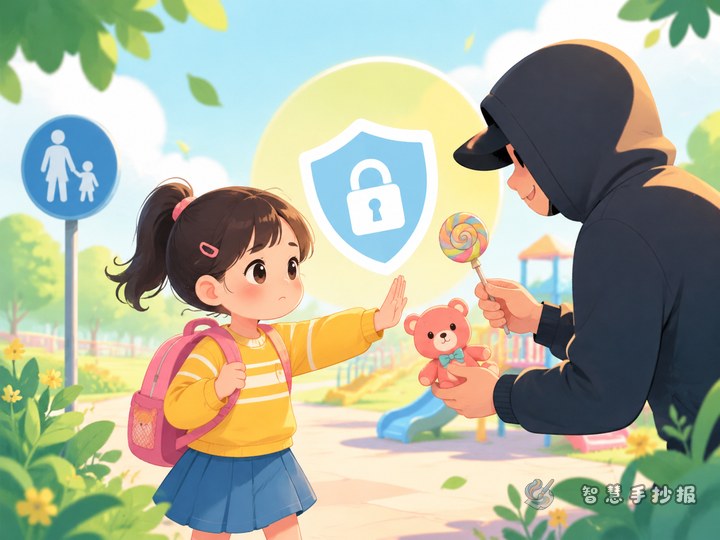
Safety reminders: Do not keep secrets for strangers. Do not accept gifts from people you do not know. Do not go to a place chosen by a stranger. Remember a parent’s name and a reliable phone number. Tell a teacher or parent immediately when something feels wrong.
Question-and-answer box: “What if the person says they are a friend of my parents but does not know the code?” The answer can say: Do not go with them. Keep your distance and ask a teacher, security guard, or another trusted adult to verify the pickup. Show only a made-up example on the handwritten newspaper; never reveal the real family code.
Make the Page Look Like a Safety Card
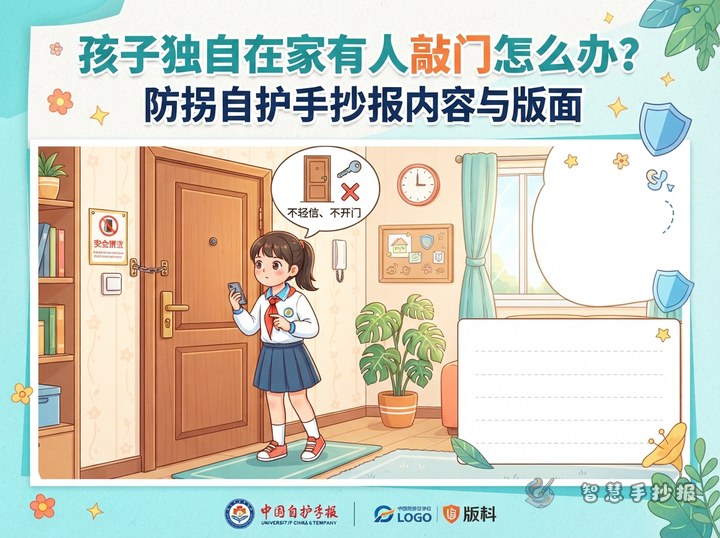
- Put a bold title at the top with a shield, key, or family-holding-hands drawing to highlight identity checks.
- Use the left side for “Why Families Use a Safety Code,” explaining temporary pickups and identity confirmation in short sentences.
- Use three boxes or arrows in the center to show “Stop—Check—Ask for Help,” with one simple action picture for each step.
- Add an “I Will…” section on the right with promises such as not following strangers, not getting into unknown cars, and finding a trusted adult.
- Place a reminder box at the bottom saying that the real code must remain private and emergencies require immediate help.
Four Final Checks
Make sure the title is easy to see, the wording is suitable for primary school children, and the three actions can be understood at a glance. Use bright blue, yellow, and orange to emphasize key points, but do not let decorations cover the text. After preparing the wording and sketch, you can continue arranging the page in the WeChat Mini Program “智慧手抄报”.