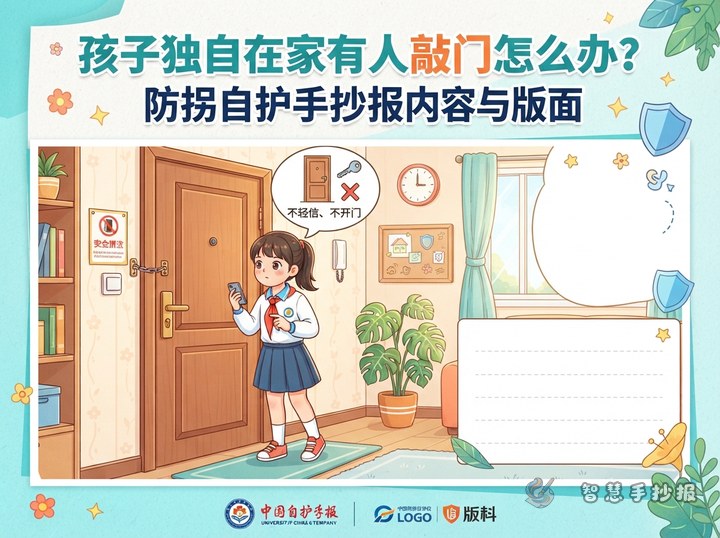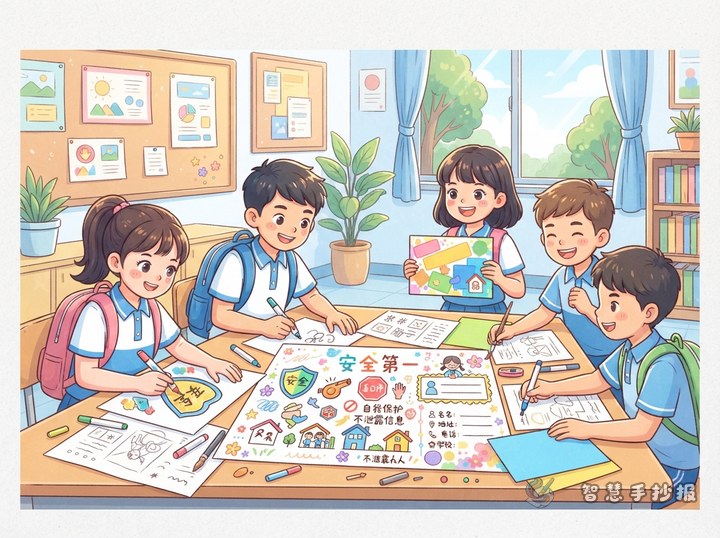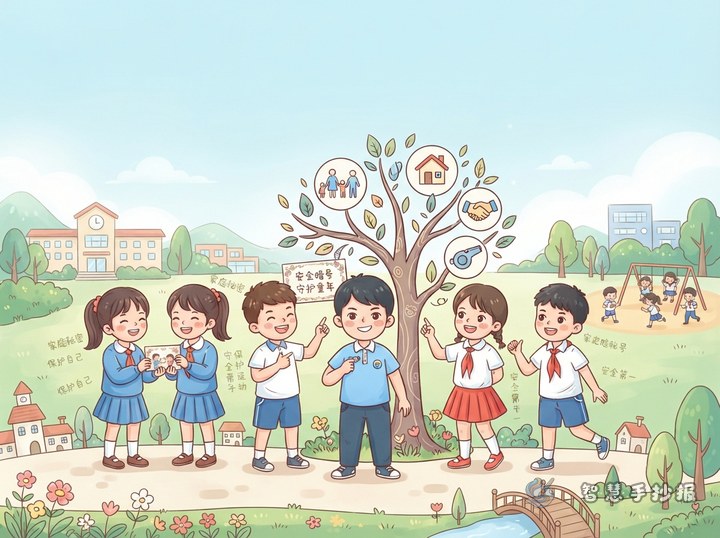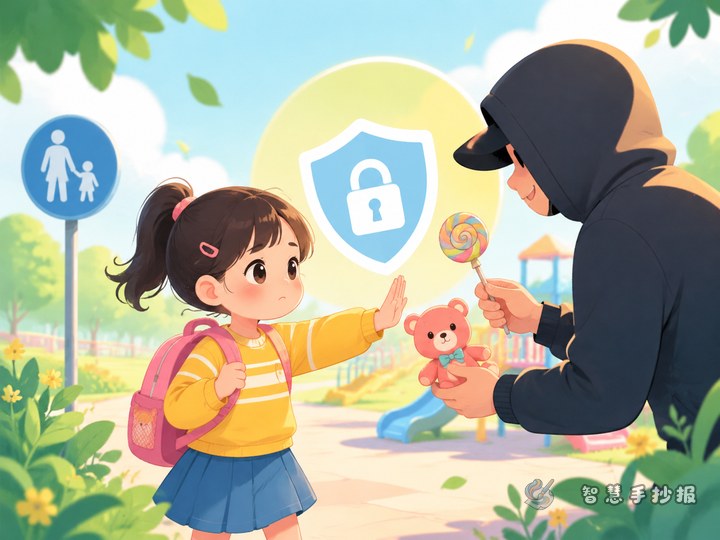
Make the theme about getting help after being separated
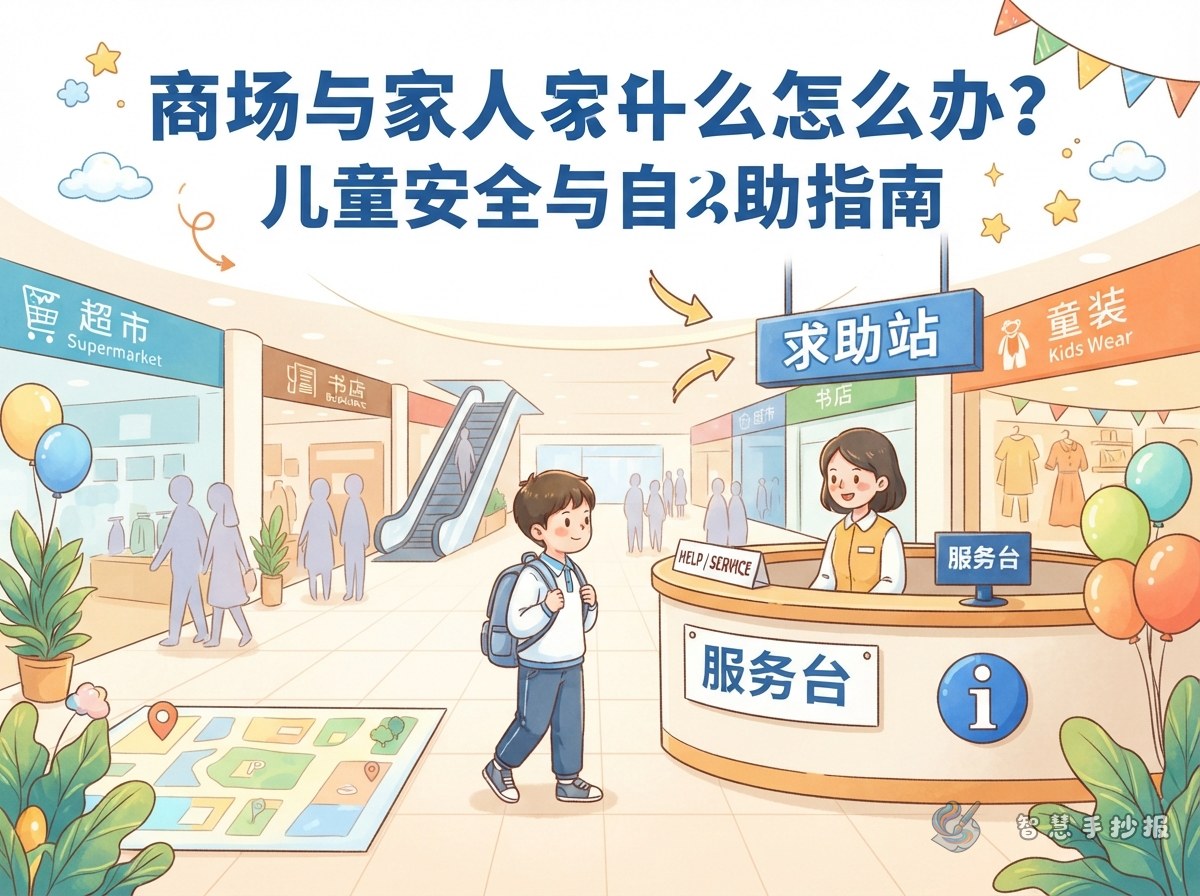
This handwritten newspaper can focus on what a child should do after becoming separated from family members in a shopping mall, station, or amusement park. Instead of drawing only a crying child, place a child beside an information desk in the center and connect four keywords with arrows: “Stop,” “Find help,” “Explain,” and “Wait.”
Theme slogan: Do not run when separated; ask for help the safe way.
Turn the safety steps into four small sections
- Stop: Stay where you are or move to a visible, safe service area. Do not run toward an exit, parking lot, or quiet corner.
- Find help: Look for a uniformed staff member, security guard, police officer, ticket clerk, or information desk. Do not follow an unknown person to another place.
- Explain: Practice saying your name, your parent’s name, a contact number, and where you last saw your family.
- Wait: Wait with a staff member while your family is contacted. Do not search alone. In an emergency, ask the staff to contact the police.
Each section can have a simple icon, such as footprints, an information desk, a speech bubble, or a clock. Keep the sentences short so that primary school students can copy and remember them.
Useful wording for the handwritten newspaper
A short safety rhyme
When separated, stop and stay; find a helper right away. Speak clearly, tell what you know; with a trusted adult, wait and go.
A sample help-seeking dialogue
“Excuse me, I cannot find my family. My name is Lily, and my mother’s name is Wang. We were near the children’s area. Could you stay with me and take me to the information desk?”
You can add a “What I can say” speech bubble. Do not print real names, phone numbers, home addresses, or school details on a publicly displayed project. Use a made-up name or an ellipsis instead.
Design idea: draw a safe help-seeking map
Try a circular layout with a central character and an information desk. Put the title at the top, then divide the lower area into “Do not” and “You can” columns. The first column can say “Do not run around,” “Do not go to the parking lot,” “Do not leave with an unknown person,” and “Do not hide.” The second can say “Find a uniformed helper,” “Explain the situation,” “Stay in a safe place,” and “Wait for contact.”
Blue, green, and yellow can suggest calmness, trust, and a gentle reminder. Make the words Stop, Find, Explain, Wait large or outlined so that the main message is easy to see. Keep the drawings clear and leave enough space between sections.
Check these points before finishing
- Does the page clearly say that a child should stop instead of continuing to search alone?
- Are the helpers specific, such as staff members or police officers?
- Does the page remind children to protect personal information and wait in a safe area?
After preparing the wording and sections, you can open the WeChat mini-program “智慧手抄报” to continue creating the project, choose a safety-education layout, and adjust the title, illustrations, and text to fit the paper.