Start with animals children really see at school
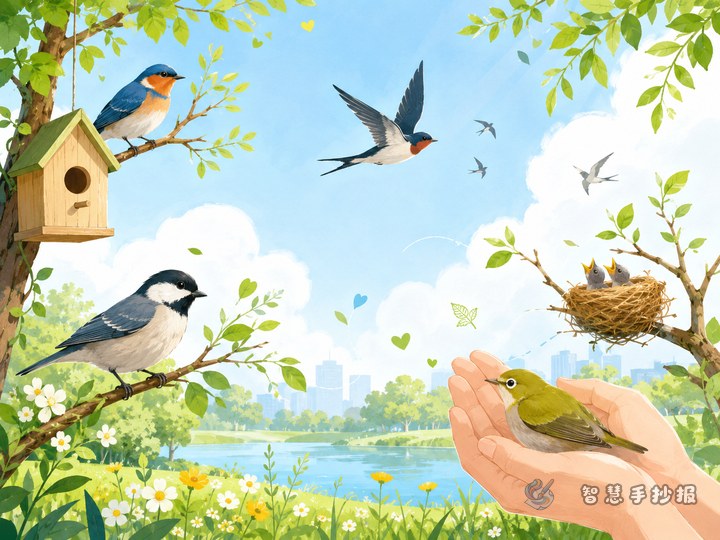
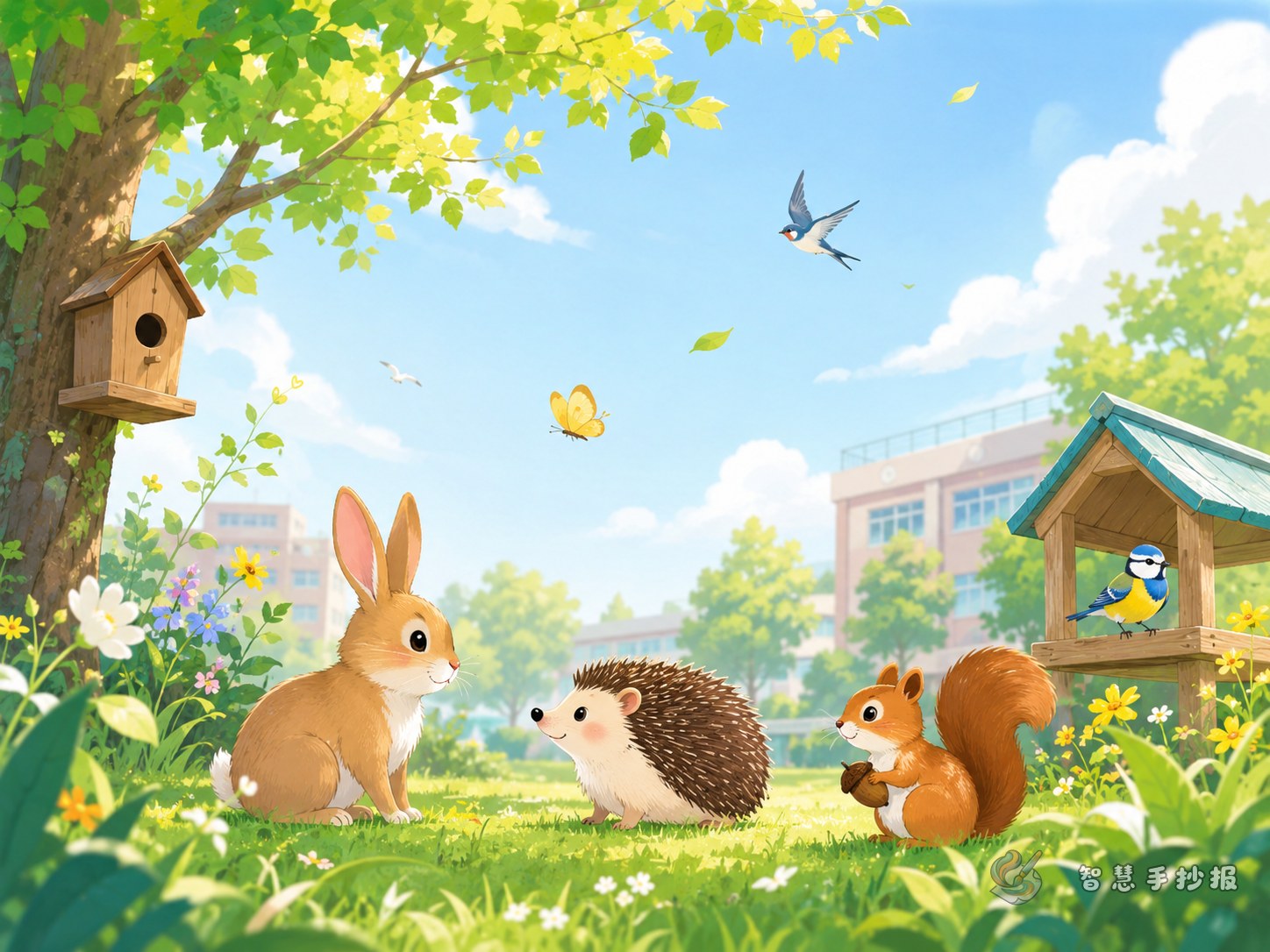
This topic works best when it stays close to everyday campus life. Instead of discussing all wildlife in a broad way, focus on small animals students may notice around trees, flower beds, playground edges, or school walls, such as sparrows, swallows, butterflies, bees, and dragonflies.
A title like Protect Small Animals on Campus or Let School Be Friendly to Every Little Life makes the message clear and practical. It also connects naturally to the idea of biodiversity.
Useful sections to include on the page
Section 1: Animals living around the campus
- Birds can help spread seeds and eat some insects.
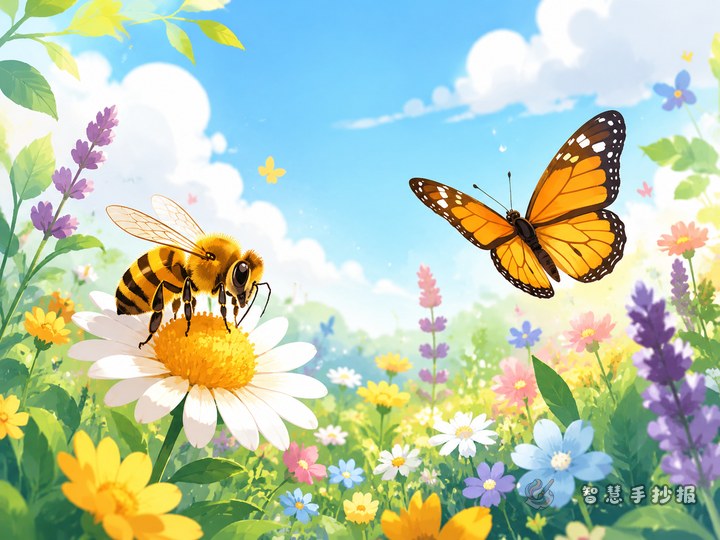
- Butterflies and bees are important pollinators for flowers and plants.
- Many small insects are part of a healthy natural environment.
- Even tiny creatures help make the school ecosystem richer and more balanced.
Section 2: What students should do
- Do not chase, throw at, or scare small animals.
- Do not take nests or catch insects just for fun.
- If an animal is hurt, tell a teacher or parent first.
- Protect trees, flowers, and grass because they are animal habitats.
- Do not litter, and sort waste properly to reduce harm to wildlife.
Section 3: My protection pledge
You can add a short pledge such as: I will observe nature quietly, respect every life, and protect the school environment from small actions every day. This gives the newspaper a warm and personal ending.
Short lines that make the page lively
If the page feels too plain, add slogans or reminder lines. For example: See with care, do not disturb. Love nature, do not harm it. You can also create a small note box called My Campus Nature Discovery and write what you noticed, such as bird sounds in the morning or insects near flowers after rain.
Layout ideas that work well
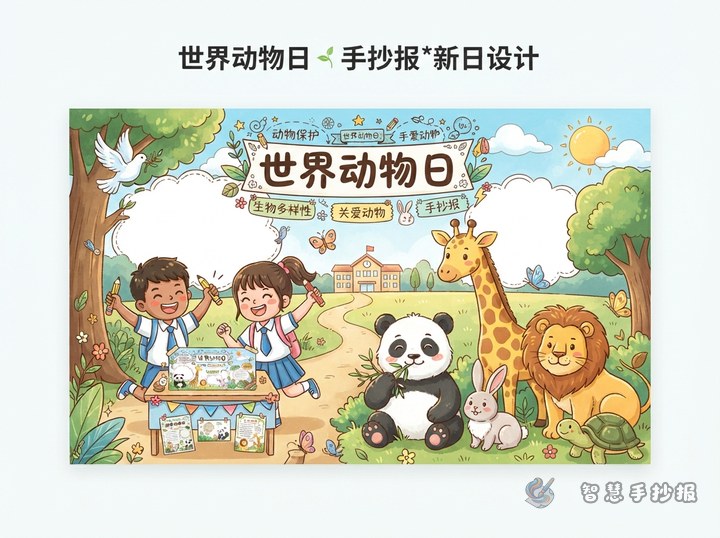
This topic looks good in a center-title layout with four surrounding sections, or a clean two-column design. Use leaf shapes, flowers, feathers, or footprints as borders. Soft green, blue, and light yellow can give the page a fresh school-friendly feeling.
If you want a stronger educational effect, include a small contrast box showing wrong and right behavior, such as chasing birds versus watching quietly, or stepping on grass versus protecting habitats.
Final tips for making the newspaper
- Keep the text short and easy to read.
- Highlight key phrases in bold.
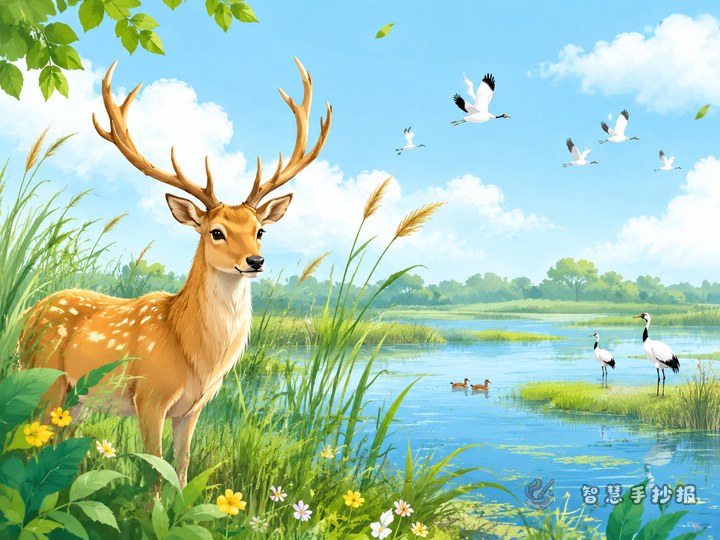
- Use more than one kind of animal to show biodiversity.
- Stay specific and connected to school life rather than writing in a very general way.
If you already have your theme and sections, you can continue refining the layout, colors, and title ideas in the Zhihui Shouchaobao WeChat mini program to make your handwritten newspaper more complete and attractive.