Start with a clear focus: tell the growth story of garlic shoots
A garlic shoot observation poster works best when it feels like a simple home experiment. The key is not using difficult scientific words, but clearly showing materials, daily changes, discoveries, and personal reflections. A title such as “How Garlic Shoots Grow,” “Water-Grown Garlic Observation,” or “My Garlic Planting Record” makes the poster practical and easy for children to complete.
Useful sections to include on the poster
- What I prepared: garlic cloves, a shallow tray, water or soil, and a ruler for recording growth.
- Observation diary: write notes for Day 1, Day 3, Day 5, and Day 7, including height, color, and shape.
- Garlic facts: garlic usually grows roots first, then green shoots, and sunlight and water affect its growth.
- What I discovered: garlic shoots placed in better light often grow straighter and greener.
- What I learned: observing plants teaches patience, care, and attention to detail.
How to make the writing sound real
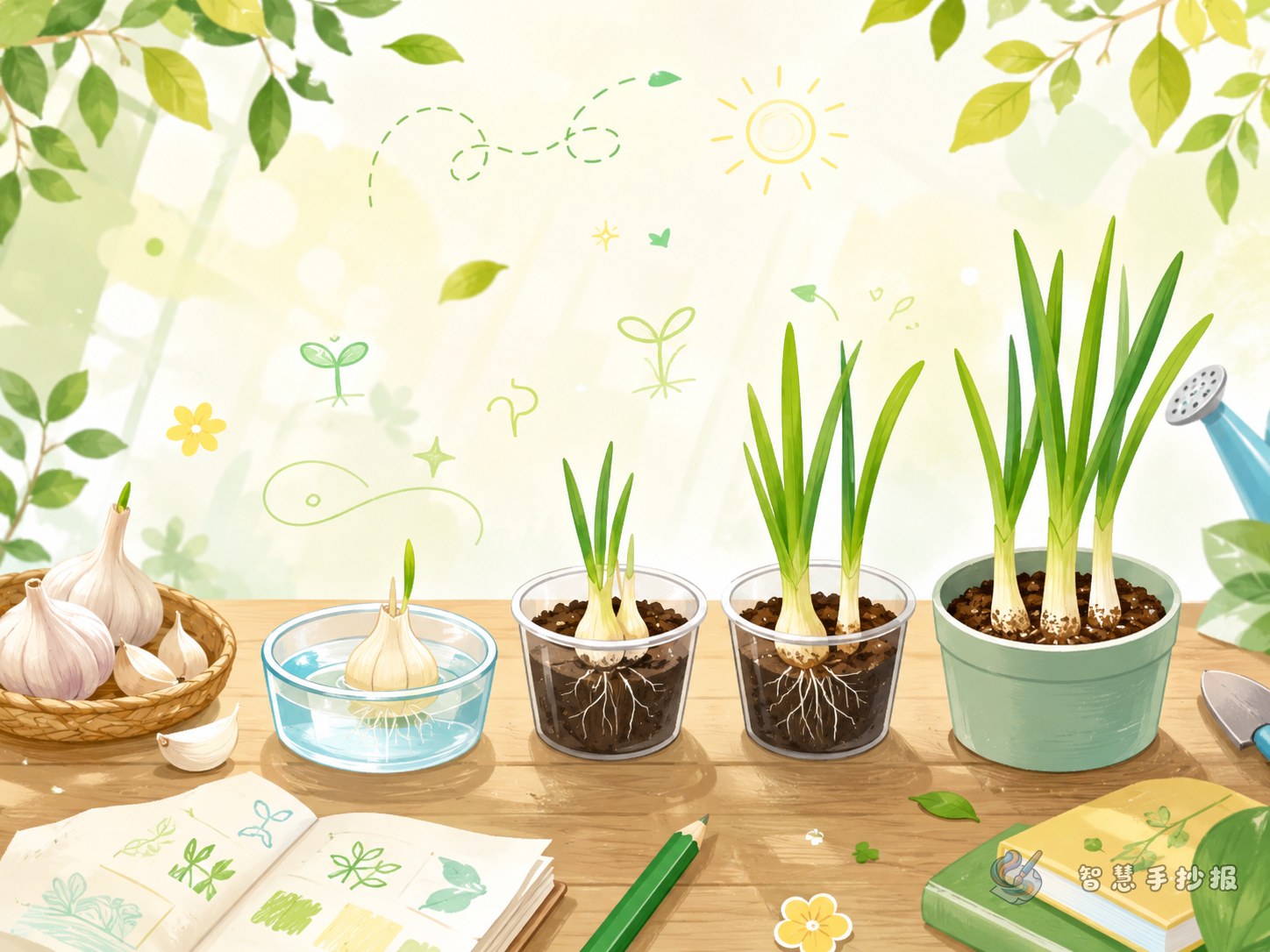
To make the poster feel personal, include small details from each day. For example, on the first day the garlic may look dry, but after absorbing water it becomes fuller. A few days later, white roots begin to appear at the bottom. Then green shoots push up from the center. After about a week, the shoots are clearly taller. Describing color, length, and shape helps the poster feel more vivid and authentic.
- First write what you did, such as placing the garlic in water or setting it by the window.
- Then write what you saw, such as roots growing longer or leaves turning greener.
- Finally write what you learned, such as plants need sunlight, water, and time to grow.
A layout idea that fits this topic
This kind of poster looks great as a timeline layout. Draw a pot or tray of garlic shoots in the center, then place time boxes around it labeled Day 1, Day 3, Day 5, and Day 7. Decorations can include leaves, garlic cloves, and water drops. Soft green, pale yellow, and white work well for a fresh, child-friendly style.
If there is more space, add a “growth ruler” on one side and mark the height recorded on different days. This makes the poster not only pretty but also organized and informative.
Short sentences children can use
- Garlic shoots may be small, but they show me how life grows little by little.
- With water and sunlight, a garlic clove can grow bright green leaves.
- Observing plant growth is a good way to practice patience and careful thinking.
- I found that garlic grows roots first, then leaves, and becomes greener each day.
How to finish the poster naturally
The ending does not need to be long. A simple reflection is enough. For example: Through observing garlic growth, I learned that plants need the right environment and that careful daily records are important. If you want to improve the layout, change colors, or organize your sections more neatly, you can continue designing in the Zhihui Shouchaobao WeChat mini program.