Start with one old wooden door
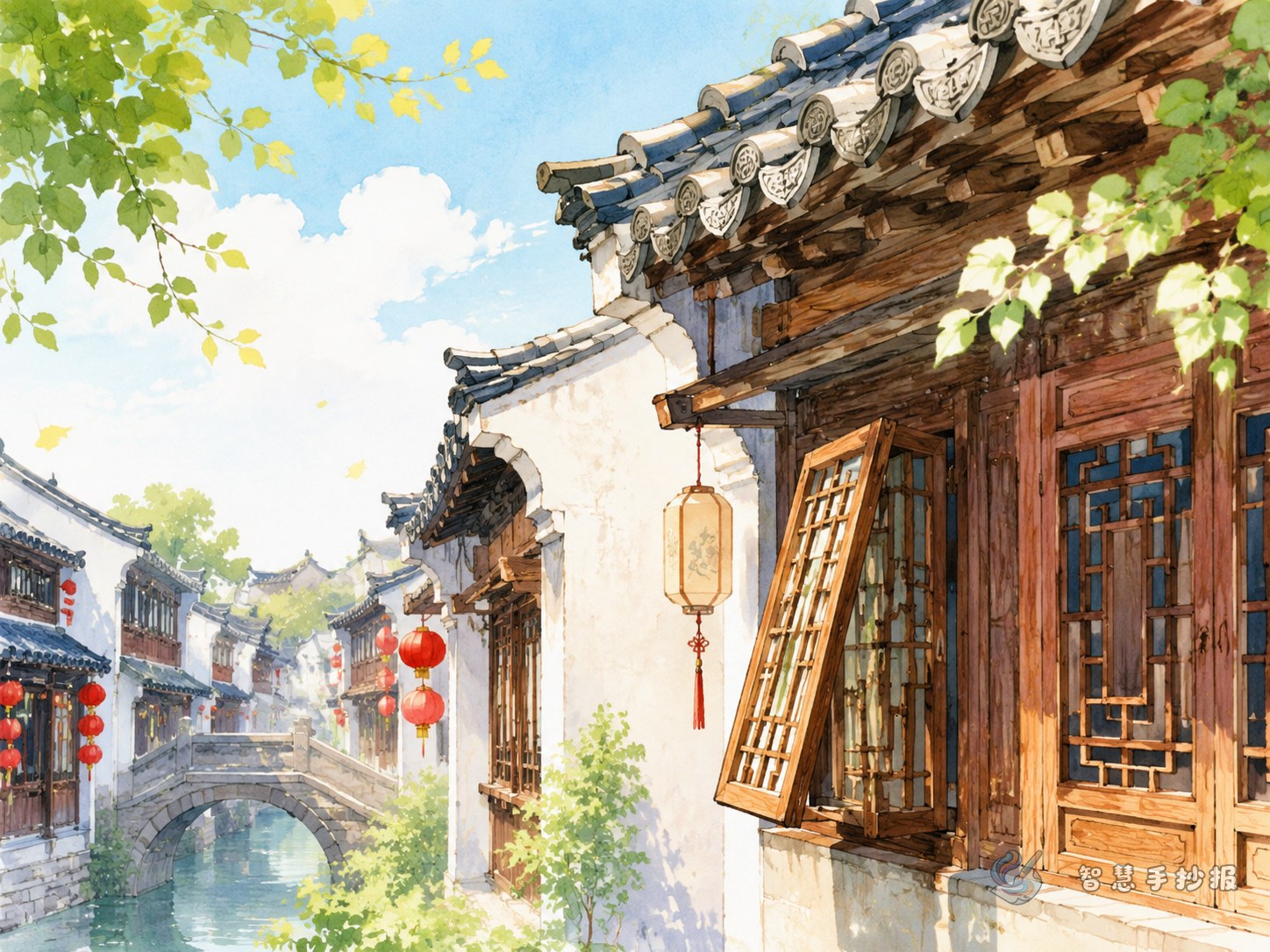
An ancient town poster does not have to show a whole street. A small detail such as a wooden door, lattice window, or gray tiled eave can make the theme more vivid. Possible titles include “Memories Under the Eaves,” “Windows of the Old Lane,” or “What I Found in an Ancient Town Alley.”
For the main picture, draw a small house facing a narrow lane. Add white walls, a brown wooden door, a patterned window, gray roof tiles, a little grass near the wall, and perhaps a student walking through the lane with a notebook.
Short writing materials for the poster
A small note about old houses
Traditional houses in ancient towns often have wooden doors, lattice windows, gray tiled roofs, and simple white walls. They look quiet and plain, but they show practical wisdom. Eaves keep away rain and sunlight, windows bring in air and light, and wooden doors record the everyday life of families.
Patterns on windows
Lattice windows may have square, diamond, or flower-like patterns. These lines make the windows beautiful and create soft shadows when sunlight shines through. You can also use window patterns as borders for your poster.
A reminder to protect old streets
Old houses are an important part of street and lane culture. When visiting an ancient town, do not scratch walls, climb on doors and windows, or damage roof tiles. A poster can help us notice beauty and remember to protect it.
Arrange the sections like a lane tour
- Stop 1: The old wooden door Write about wood grain, door knockers, and thresholds.
- Stop 2: The lattice window Write about patterns, light, and shadows.
- Stop 3: The gray tiled eave Write about roof tiles, shelter from rain, and the feeling of a rainy old town.
- Stop 4: Be a thoughtful visitor Write simple actions for protecting old buildings and clean lanes.
This structure guides readers through the poster like a walk in an old alley, making the content clear and connected.
Use calm colors for a rustic feeling
Choose gray, cream, and warm brown as the main colors. Gray is for roof tiles, cream is for walls, and brown is for wooden doors and windows. Add a little red for a lantern or a little green for vines to keep the page lively.
Borders can look like rows of roof tiles, wood strips, or window grids. Instead of using ordinary boxes, shape your text areas like a doorplate, a window, or a notice on a wall.
A simple making order
- Plan the title area, main picture area, and writing areas lightly with pencil.
- Draw the big shapes first: roof, wall, door, and window. Then add tiles, wood grain, and small details.
- Keep each writing section short, with three to five sentences for easy reading.
- Add light background colors and use darker outlines to make the doors, windows, and eaves stand out.
If you want to continue designing your page, you can use the WeChat mini program of 智慧手抄报 to choose a suitable layout and enrich the poster with more ancient-town elements.