Let the post road become the main story
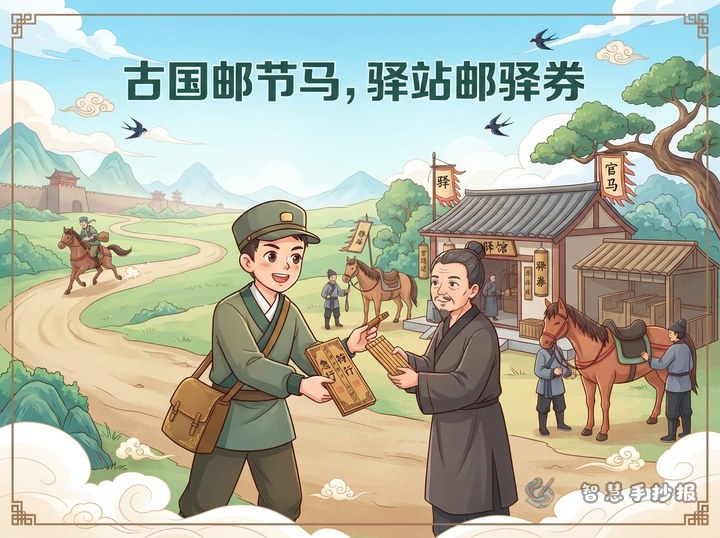
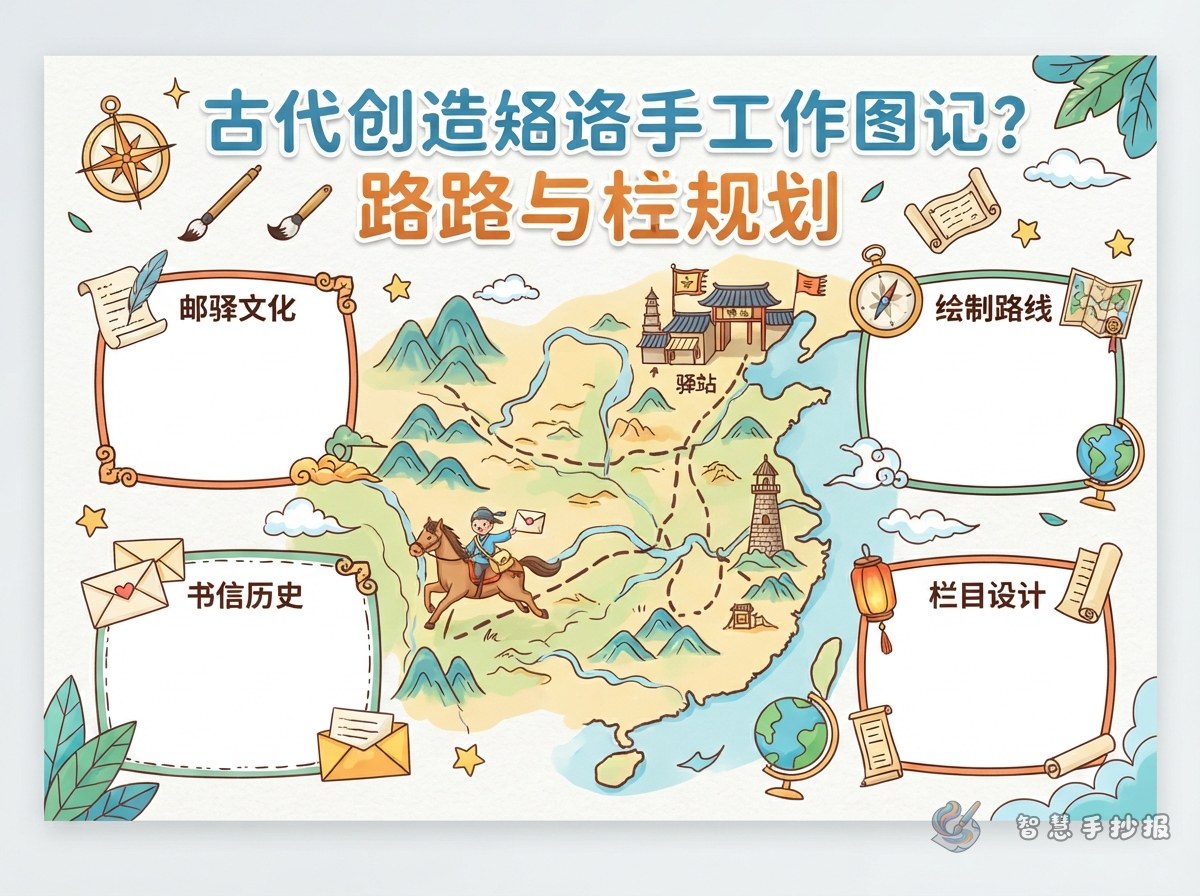
This handwritten newspaper does not need to copy a complicated historical map. Instead, use the idea of “learning about ancient communication along one post road.” Place a winding road in the center, mark the capital, local towns, post stations, and frontier areas with dots or small flags, and use arrows to show the direction of delivery. The route will make the topic clear and guide readers through the page.
Four useful symbols for the central map
- City gate: shows where a message or document begins its journey.
- Road line: connects different places and can be labeled with short phrases such as “relay delivery” or “travel along the road.”
- Post station: use a small building, lantern, or signpost to show a place that supported rest, relay work, and transportation.
- Destination: draw a frontier gate, local government office, or receiving place to show where the message arrives.
Add a map legend to keep the knowledge organized
Set up a small “post road legend” beside the map, just like the key on a real map. Four or five short explanations are enough to gather the main facts without making the page crowded.
- Postal relay system: an ancient arrangement for delivering documents and connecting different regions.
- Post road: a route that linked places and supported the movement of people and documents.
- Courier: a person who carried out delivery tasks and traveled from one point to another.
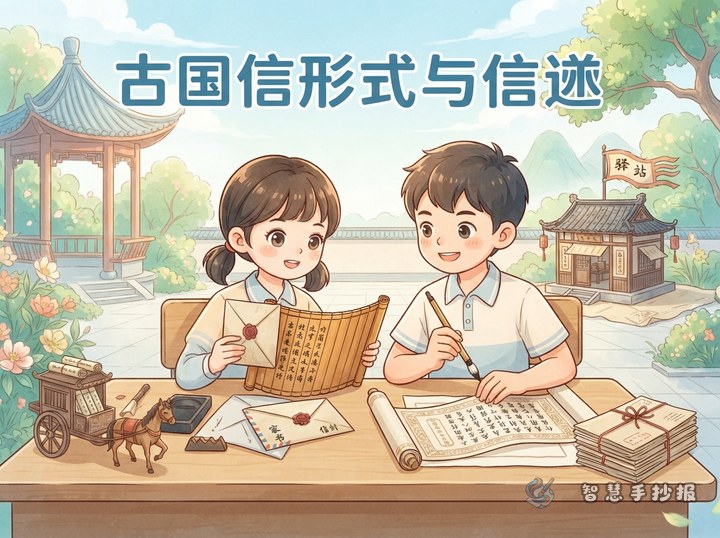
- Document: written material used to convey an order, message, or matter in ancient times.
- Relay: a way for a message to continue forward through planned arrangements along the route.
Write these explanations on the right or below the map, and decorate them with scroll-shaped borders. When mentioning a particular dynasty, it is safer to note that different periods had different systems instead of assigning one fixed set of names to every post road.
Three text sections that give the map meaning
Section One: What did the postal relay system do?
You may write: “In ancient times, mountains and long roads made communication difficult. Messages could not travel as quickly as they do today. The postal relay system used roads, stations, and delivery workers to carry documents and important news to different places. It connected cities with frontier regions and showed how people organized transportation and communication.”
Section Two: People and objects along the road
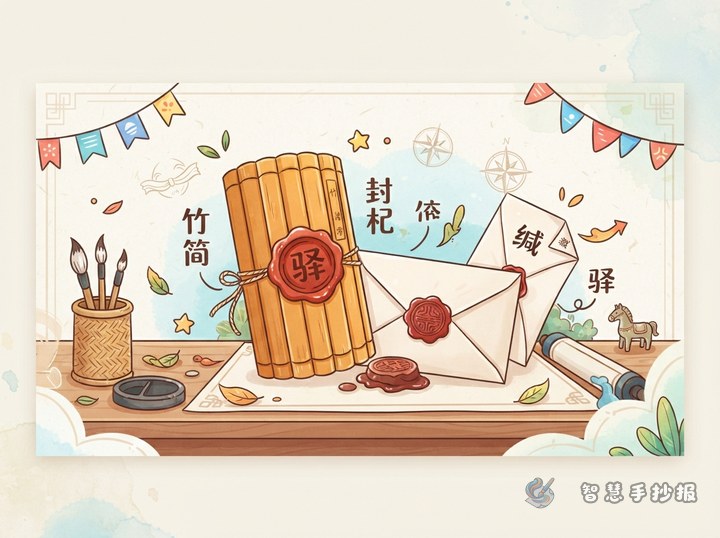
Divide this section into four short entries: the courier carried the message, the station provided support along the way, the document recorded what needed to be delivered, and horses and roads helped the task continue. Keep each entry to one or two sentences and add small drawings of footprints, signposts, scrolls, or hoofprints.
Section Three: Cultural connections through one road
You may write: “The post road was not only a route for messages. It was also a channel through which people and information from different places came into contact. The movement along these roads made regional connections closer.” Place this section near the destination as the concluding idea of the page.
Arrange the page like a real map
- Write the main title at the top and add a subtitle such as “Discovering the wisdom of ancient communication along the post road.”
- Draw a road from the lower left toward the upper right so that it becomes the visual focus.
- Place “the role of the postal relay system” near the starting point, “the map legend” on the right, and “cultural connections” near the destination.
- Reserve the bottom for a short reflection about valuing time, delivering information carefully, and respecting the work of others.
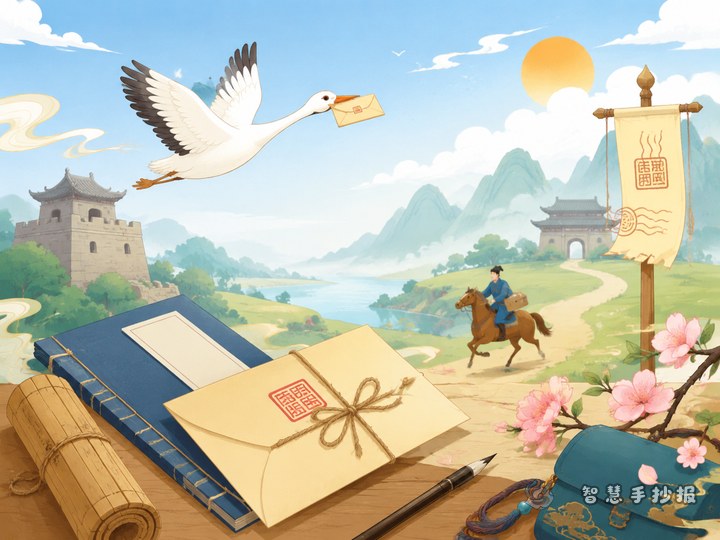
On a small sheet, turn the four locations into four round information stations. On a larger sheet, add hills, rivers, gates, and trees along the road, but keep decorations away from the text.
Three simple tips for color and drawing
- Color: use cream, brown, and ink blue for an antique feeling, then use vermilion to highlight the title, arrows, and key words.
- Lettering: the title can have a classical touch, but the body text should remain neat and easy to read.
- Process: plan the map and sections in pencil first, then outline, write the text, and add illustrations and borders. Drawing the route before coloring helps keep the layout balanced.
After finishing the draft, you can enter the “智慧手抄报” WeChat mini program to further organize the title, sections, and layout, making this post-road-map handwritten newspaper more complete.