Turn the Page Into a Letter From the Past
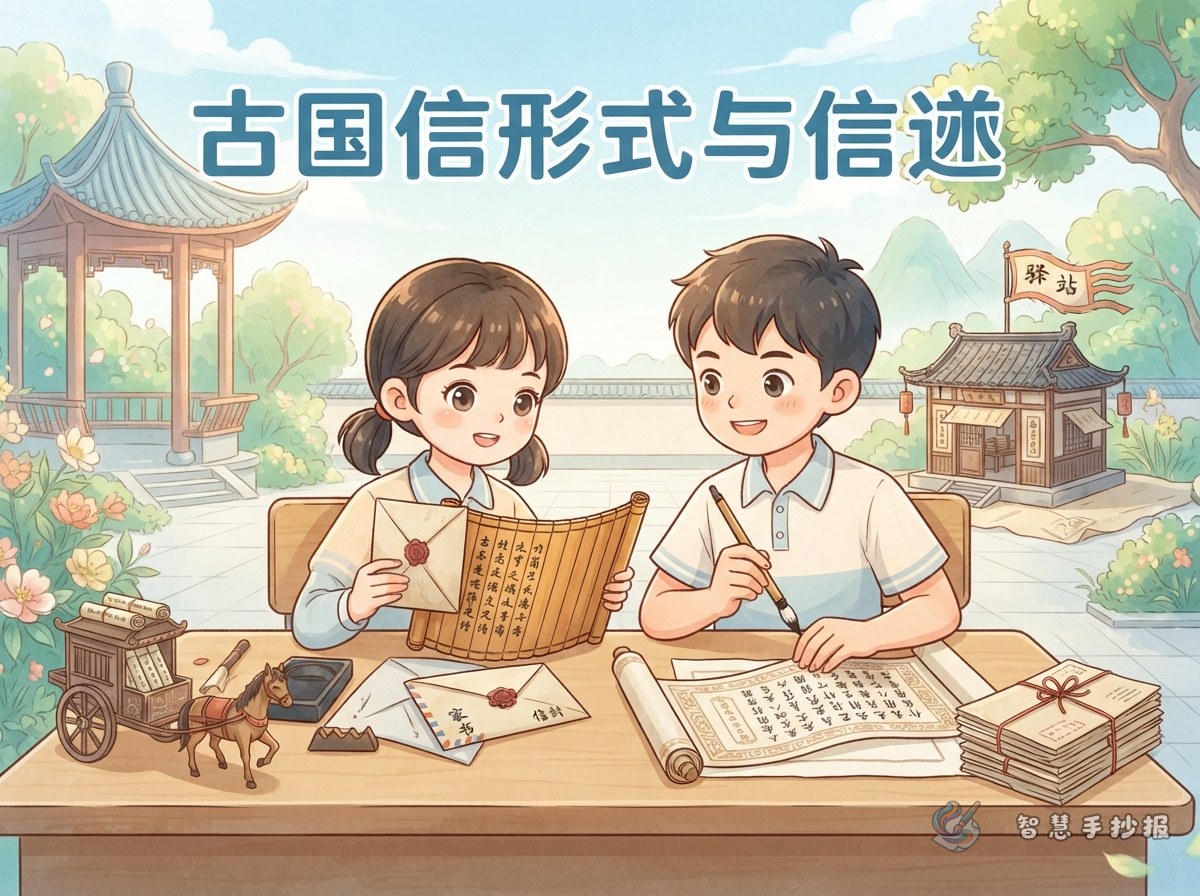
This topic does not have to focus only on post stations or delivery routes. It can show how people wrote letters, addressed others politely, and expressed care or longing. A clear title such as “Messages on Paper: Ancient Chinese Letter Formats” helps readers understand the theme at once.
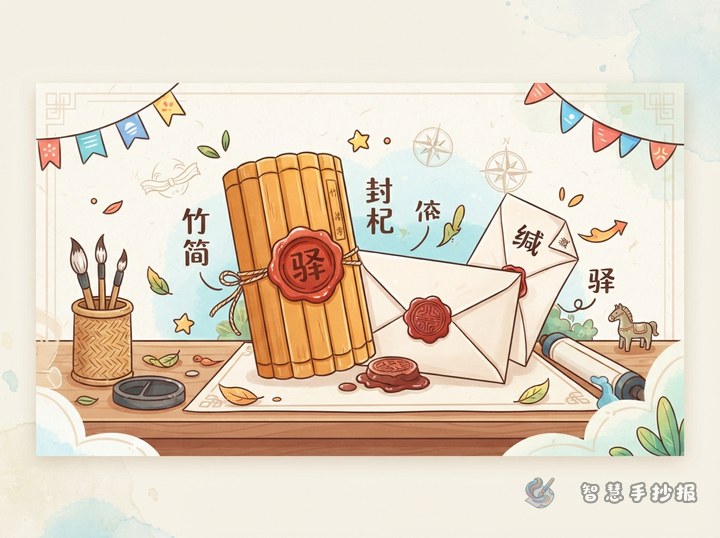
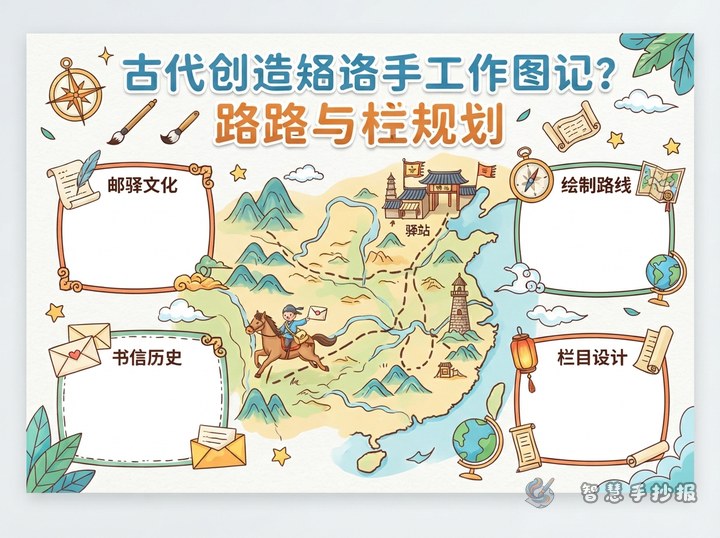
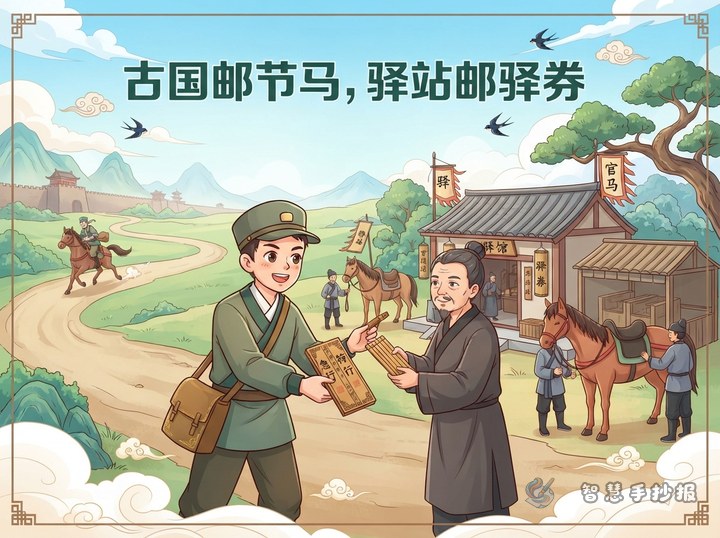
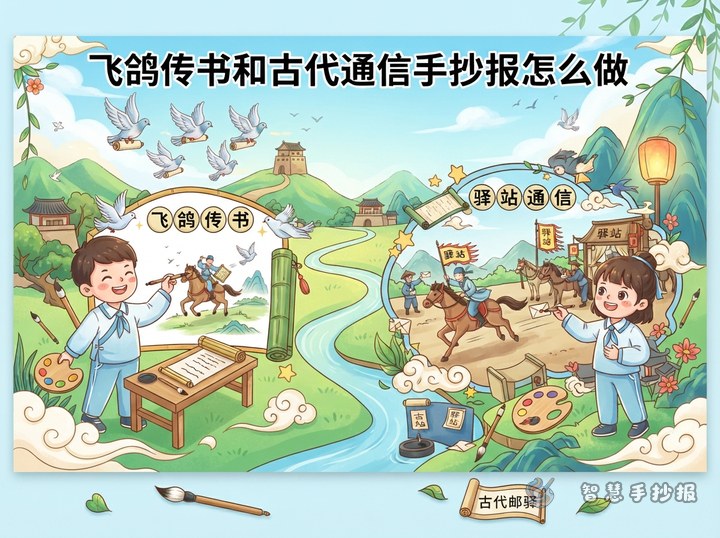
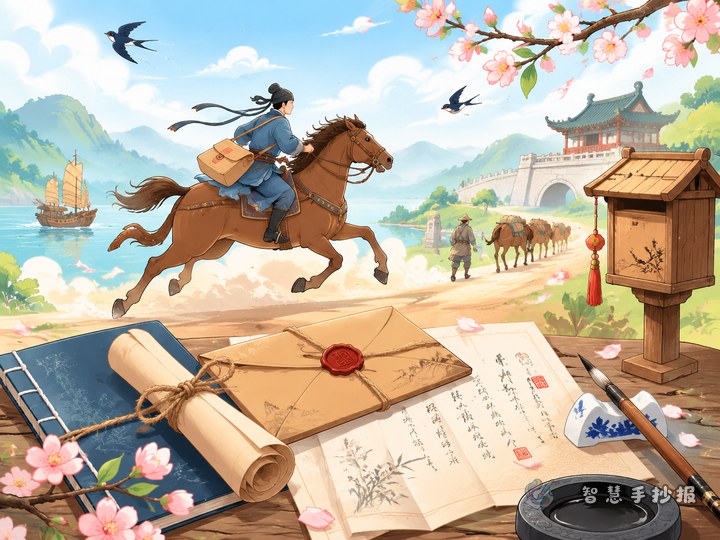
For the main layout, draw an opened sheet of letter paper in the center and write a short sample letter on it. Put format notes on one side and a mini address dictionary on the other. Add small borders with a brush, seal, bamboo slips, envelopes, or a post horse to connect the page with ancient communication culture.
The Six Parts of an Ancient-Style Letter
- Form of address:Begin with the person you are writing to, such as a respected parent, a friend, or a younger brother.
- Greeting:Ask about the person’s well-being in a polite way.
- Main message:Explain why you are writing, such as to report safety, share news, or express missing someone.
- Closing wish:End with kind wishes for health, peace, or good days ahead.
- Signature:Write the sender’s name or relationship to the receiver.
- Date:Add the time of writing so the receiver knows when the letter was sent.
Make a Mini Dictionary of Address Terms
A strong column idea is to organize respectful words and closing wishes into a small “letter language dictionary.” Choose simple terms that students can understand and explain briefly.
- For elders:Use respectful language and a serious tone.
- For friends:Use warm words that sound close and sincere.
- For greetings:Write short expressions asking whether the other person is well.
- For closing wishes:Use phrases that mean health, peace, and good fortune.
A Short Sample Letter for Students
Dear friend,It has been a long time since we last met, and I miss the days when we read and talked together. I am writing today to ask whether you are well. I hope we can meet again soon and share new stories. May you be peaceful and healthy. Written by your friend.
This sample does not need to be extremely classical. Its purpose is to show the basic order of an old-style letter: address, greeting, message, good wishes, and signature. Students can highlight the key parts with a red seal shape or small dots.
Layout Tips for a Classical but Clear Page
- Main picture:Draw a beige letter sheet in the center, with scroll or bamboo-slip patterns in the corners.
- Column plan:Use four areas: letter format, address terms, etiquette tips, and a sample letter.
- Color palette:Use beige for the background, brown for borders, red for seals, and a little dark green for leaf patterns.
- Writing style:Keep each column short, with three to five sentences, so the page stays neat and easy to read.
Before You Start Drawing
Decide the title and four main columns first, then add decoration. Do not fill the whole page with text; leave some open space to make the design comfortable. If you need more layout ideas, title styles, and column inspiration, you can continue creating in the Zhihui Handwritten Newspaper WeChat mini program.