Why "How Was the Letter Sealed?" Can Carry a Whole Poster
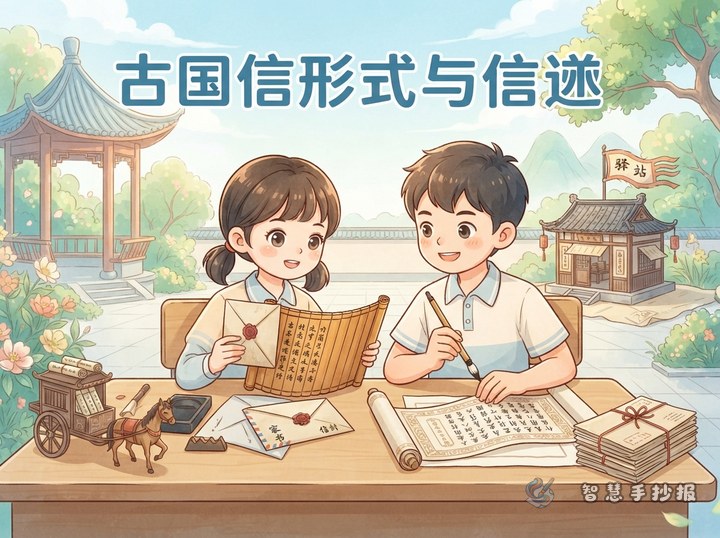
When students think of ancient letters, they usually copy format rules or the phrase "seeing the words is like seeing you". There is another angle: after a letter was written, how did people close it? Tying cord, pressing clay, stamping a mark, folding the page, adding wax - each step can become a drawing and a fact card on the page. It belongs to postal and letter culture, and it looks far more visual than copied rules.
Four Small Panels That Fill the Page
Panel 1: Where the Clay Seal Comes From
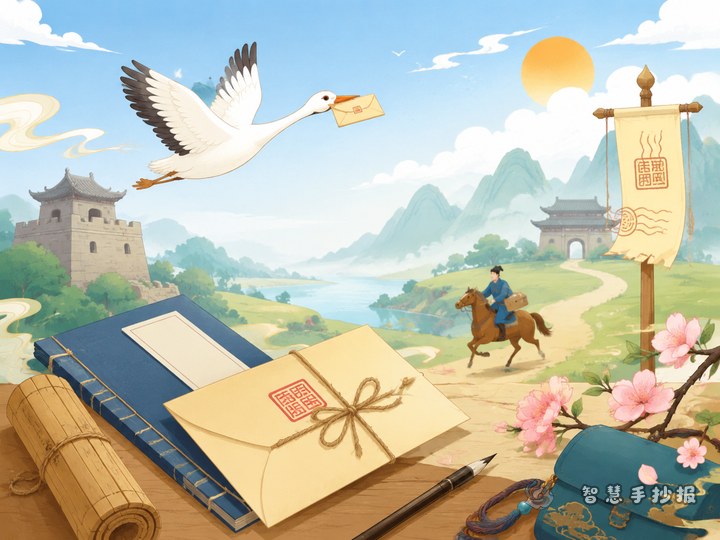
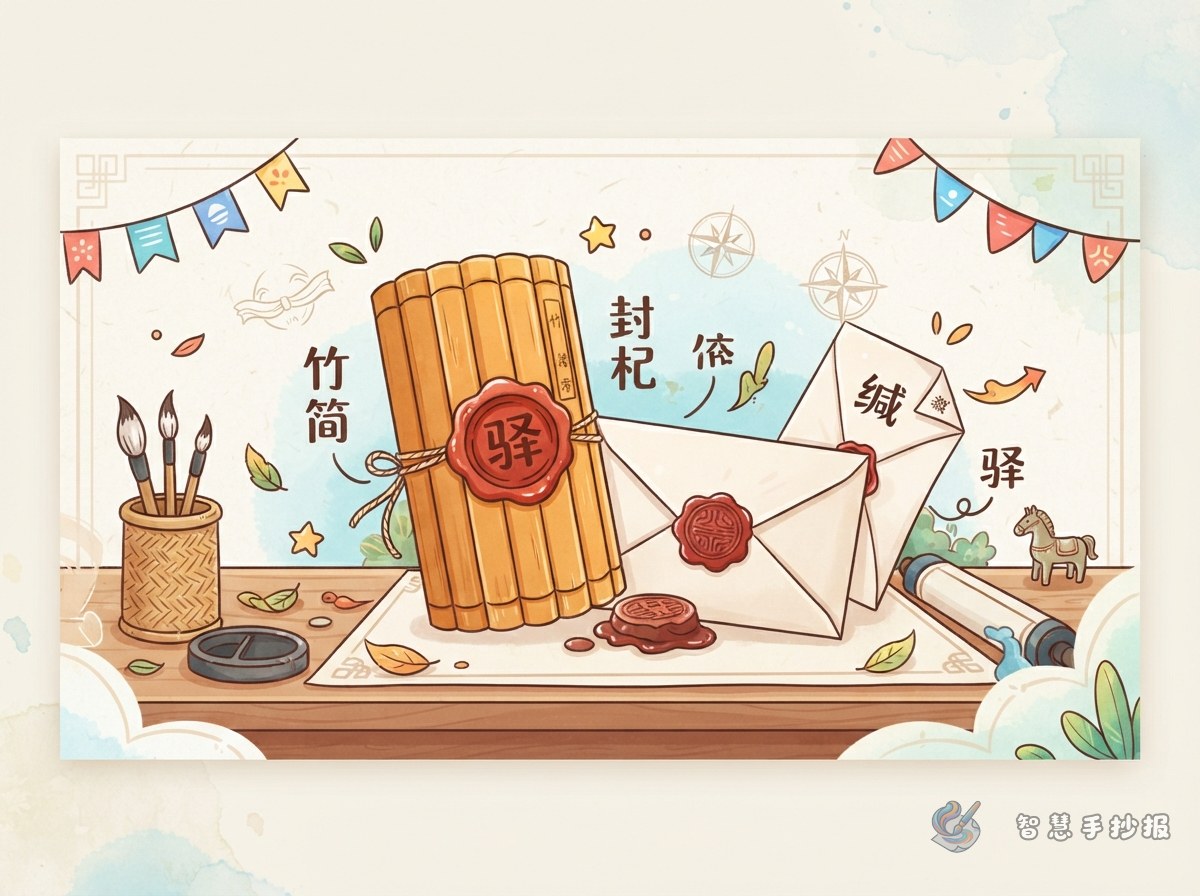
In the bamboo-slip era, letters and documents were tied with cord first. A lump of clay was pressed over the knot and a seal was stamped into the clay. That lump with a print is a clay seal. If the clay was intact, the reader could tell the letter had probably not been opened.
Panel 2: Why Sealing Is Called Jian
Jian means to bind or to seal, so people often wrote "sealed by so-and-so" on the envelope or at the end of a letter. A small word card explaining this is more useful than copying one more poem.
Panel 3: What Else Was Written Outside
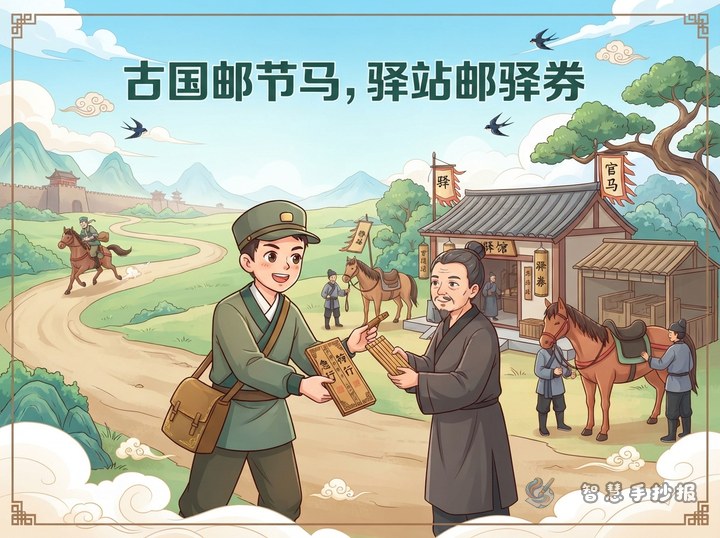
List the receiver's title, the sender's name and who carried the letter. Readers will understand what had to be sorted out before a letter could leave home.
Panel 4: How We Seal Things Today
Leave one box for modern envelope glue strips, sticker seals and wax seal stickers. A quick past-and-present comparison makes the page lively.
Lines and Facts You Can Copy Onto the Poster
- Jian: to tie or seal, as in "sealed by so-and-so".
- Han: a box for holding letters, much like today's envelope.
- Seal mark: the print pressed into clay or wax, both a sign and a guard against opening.
- "A guest came from afar and gave me a pair of carp. I called my child to cook them, and inside was a letter on silk." Classical poetry uses paired carp as an image for letters, a good match for a fish-shaped letter drawing.
- "Beacon fires burn for three months; a letter from home is worth ten thousand gold." Use it as a headline to show how much letters meant.
Lay the Page Out Like a Big Envelope
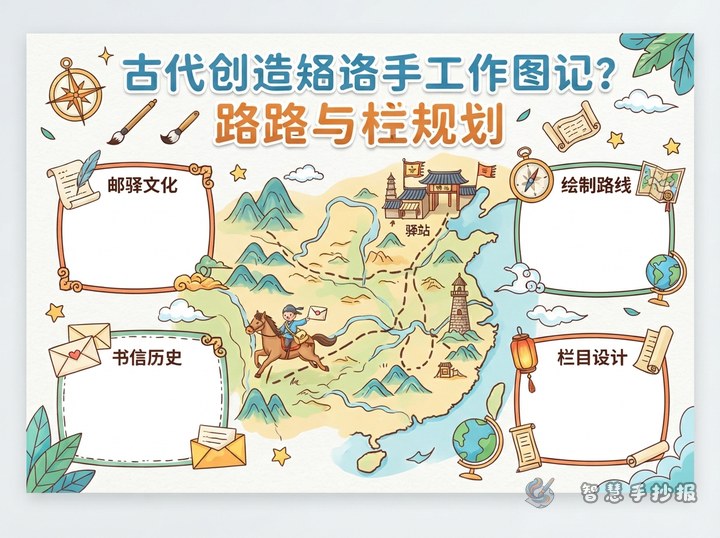
Forget the neat grid. Treat the whole sheet as one envelope: keep a rectangle in the middle for the main text and place four squares in the corners for clay seal, the character jian, delivery methods and a short message, like four stamps on an envelope.
- Write the main title across the top and draw a small cord-and-clay motif as a divider below it.
- Make the left column narrow for word cards and the right column wider for text and poems.
- Use earth yellow, ochre and cream as the base, with a little vermilion for the seal colour.
- Keep enough white space, and sketch light pencil guides before writing.
Three Easy Ways to Draw Seals and Sealing Wax
- Draw the stamp as a circle or square with a border and one character inside, such as yin, xin or you, with a slightly uneven edge for a handmade look.
- Add a wavy ring around the stamp for the clay edge, then two crossed short lines for the cord.
- Draw sealing wax as a small melted pool with a round print in the middle, and note beside it that wax was common on modern letters and invitations, not the same as an ancient clay seal.
A Quick Check Before You Start Writing
First, check the theme: does the whole poster stay on postal and letter culture rather than turning into a craft page? Second, check the content: is there at least one panel you looked up and wrote in your own words? Third, check the layout: is the title bold enough, and is there breathing room between panels? Once the draft is ready, you can open the WeChat mini program "Smart Handwriting Poster", pick a letter culture template, drop in the clay seal facts, the character jian and the poems, and then copy it neatly onto paper.