Open with a Question That Creates Curiosity
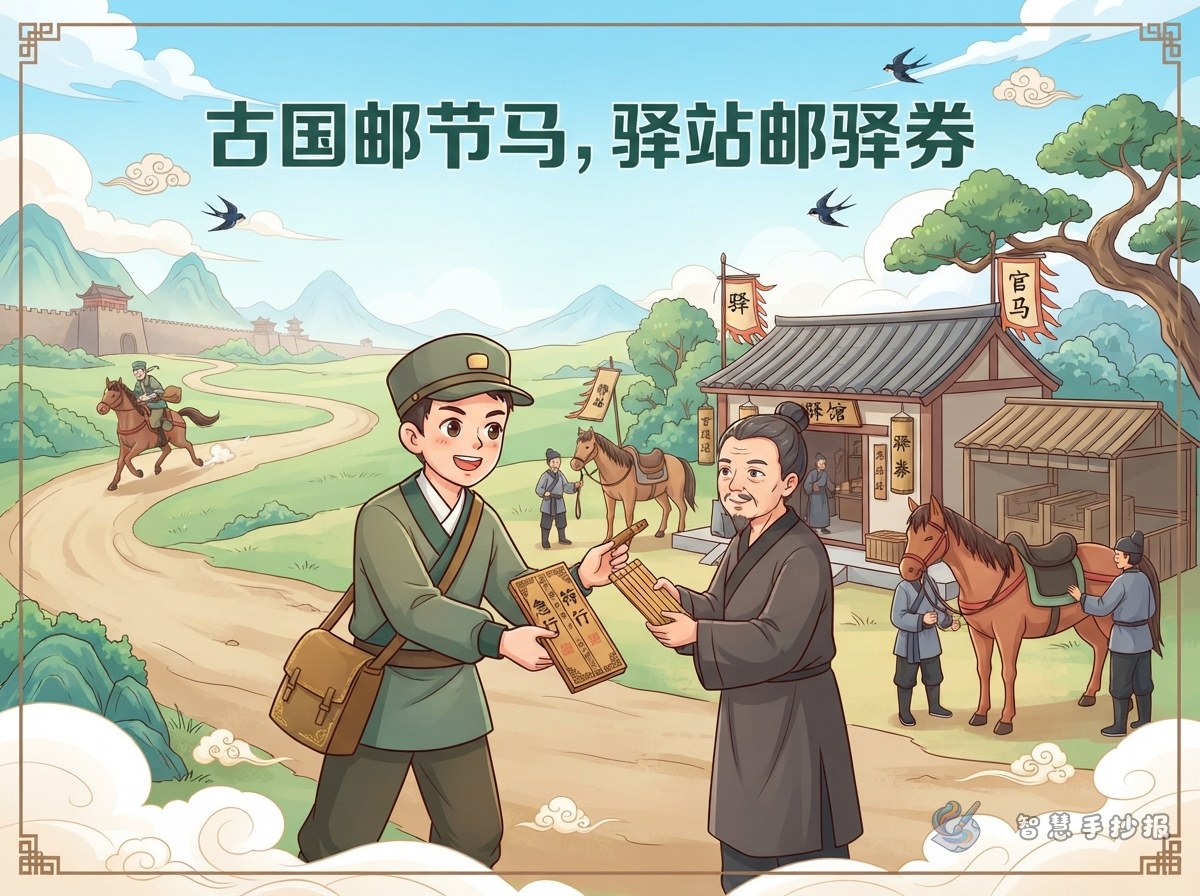
Could a courier arrive at a relay station, claim to have an urgent mission, and immediately take a fresh horse? Usually not. The official postal network followed rules, so station workers had to confirm the traveler's identity, assignment, and right to use government resources.
Different periods used credentials such as official tallies, authorization documents, and postal passes. Their exact names and designs changed over time, but they helped answer one important question: Was this person officially permitted to receive horses and supplies?
Create a Small Credential File
Official Tallies
Tallies and insignia could represent delegated authority or an official mission. They should not be described as ordinary tickets available to everyone. On the poster, draw a simple wooden or metal token and label it as an illustrative design rather than an exact copy of an artifact.
Travel Documents and Postal Passes
Authorized documents could show that a messenger was traveling on public business and qualified for specified assistance. The service was limited by regulations; carrying a credential did not mean unlimited access to horses, food, or lodging.
Writing, Seals, and Records
Words, seal marks, and recorded details could support verification. A student-designed pass might include boxes for the mission, destination, date, and station mark, making the display both informative and interactive.
Turn the Station Check into a Road Map
- Arrival: The courier reaches a relay station with an official message and credentials.
- Presentation: The courier presents proof of identity and assignment.
- Verification: Station workers check the information and make a record.
- Authorized support: Horses, lodging, food, or other supplies are provided according to the rules.
- Departure: The courier completes the handover or registration and continues to the next station.
Draw these steps along a winding road. A token, seal, register, horse, and gate can serve as easy visual symbols for the five stages.
Add a Myth-Checking Corner
- The imperial relay network mainly carried government orders, official documents, and military reports. It was not the same as a modern public delivery service.
- Credential names and designs varied by dynasty, so several historical terms should not be treated as exact synonyms.
- Couriers could not simply take any horse they wanted. Stations checked authority and kept records under official rules.
- Private family letters might travel with relatives, merchants, or hired messengers instead of entering the government relay network.
Shape the Page Like an Ancient Pass
Place a large tally or document shape in the middle as the visual focus. Put the credential file on the left and the station-check sequence on the right. Along the bottom, draw a road connecting a station, a horse, and a city gate. A small fact-check panel can fill the remaining corner.
Use warm beige and light brown for paper and wood, then add restrained red seal marks for contrast. Keep paragraph boxes short and leave enough open space around the drawings. After checking that the arrows and labels are easy to follow, students and parents can continue in the Smart Handwritten Poster WeChat Mini Program to choose a template and adjust the section layout.