Build the theme around three actions: notice, refuse, ask for help
For this kind of handwritten newspaper, it is more effective to use self-protection as the main line instead of filling the page with slogans. A clear title such as “Stay Away from Drugs and Scams, Learn to Protect Yourself” makes the topic easy to understand at first glance. The page can focus on three practical ideas: spotting danger, saying no, and seeking help in time.
If the work is for elementary school display or a class assignment, keep the wording short and easy to read. A useful method is to turn each section into “What should I do?” so the whole poster feels practical and student-friendly.
Four sections that are easy to use on the page
1. Danger signs to watch for
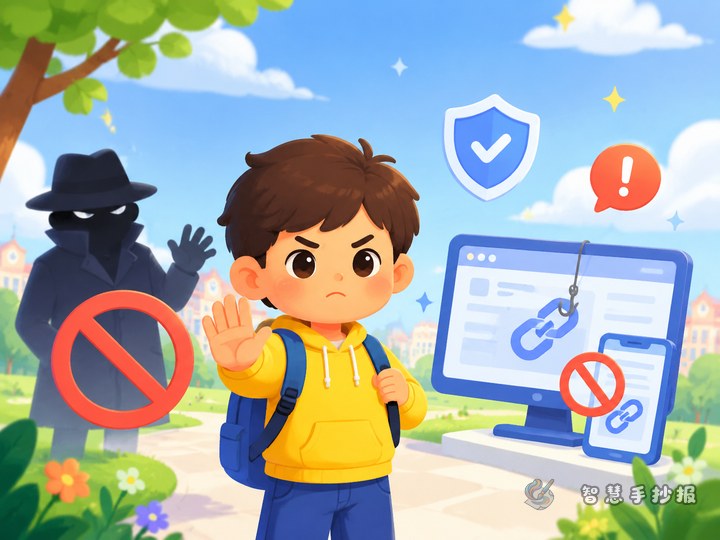
- Be careful if a stranger offers food, drinks, or gifts.
- Do not trust online messages about prizes, red packets, or game top-ups that ask for personal information.
- If someone encourages you to try suspicious items called “refreshing” or “stress-relieving,” refuse at once.
2. How I protect myself
- I do not accept items or invitations from strangers.
- I never share verification codes, passwords, home address, or bank information.
- If I am unsure, I ask my parents or teachers before making a decision.
3. Simple anti-drug facts
Use short lines such as: drugs can harm the body and brain, affect study and growth, and should never be tried out of curiosity. Stay away from suspicious places and unknown substances, and tell a trusted adult if something feels wrong.
4. Anti-scam reminder card
Use everyday examples like fake prize claims, people pretending to be friends borrowing money, QR code tricks, and game account deals. Add one safety response after each example to make the section complete and practical.
A layout idea that looks clear and memorable
This topic works well with a left-right split layout and a centered title. Put anti-drug reminders on the left, anti-scam tips on the right, and place a “three-step self-protection guide” in the middle: think first, refuse next, ask for help quickly. This structure is easy to read and visually balanced.
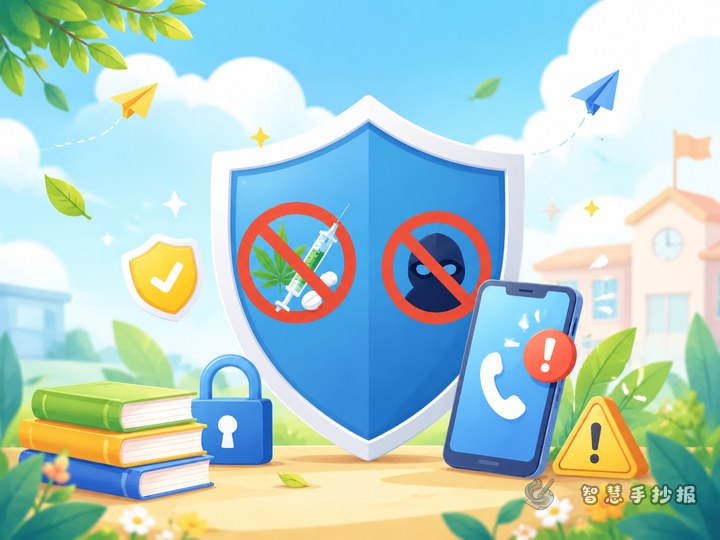
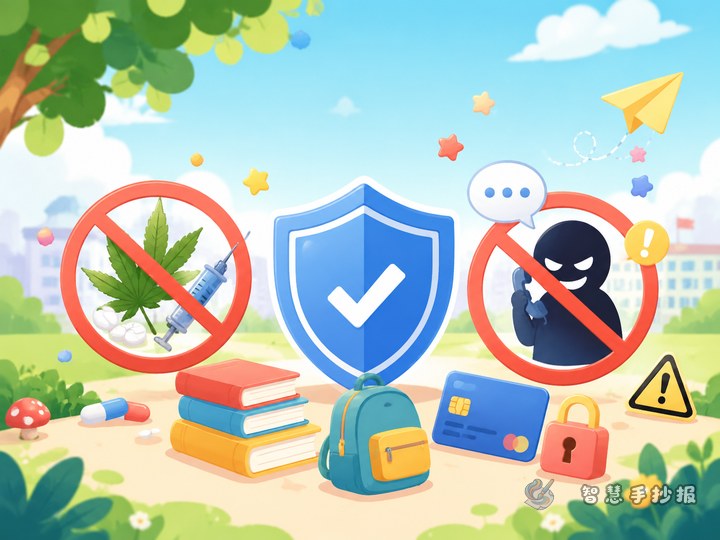
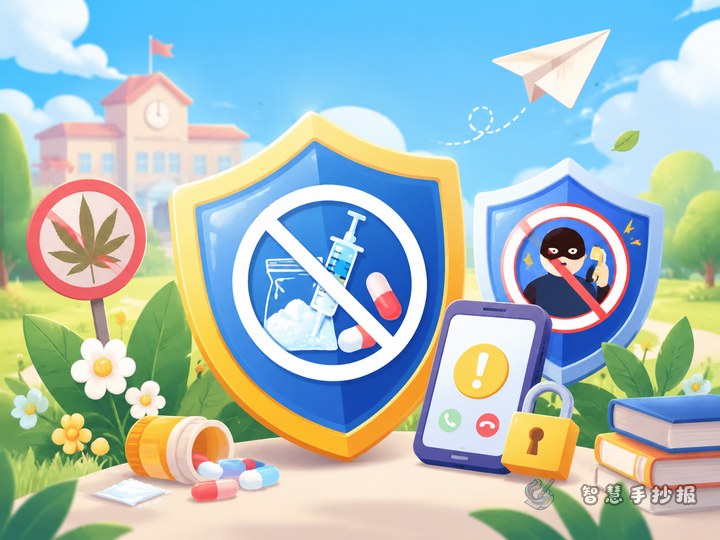
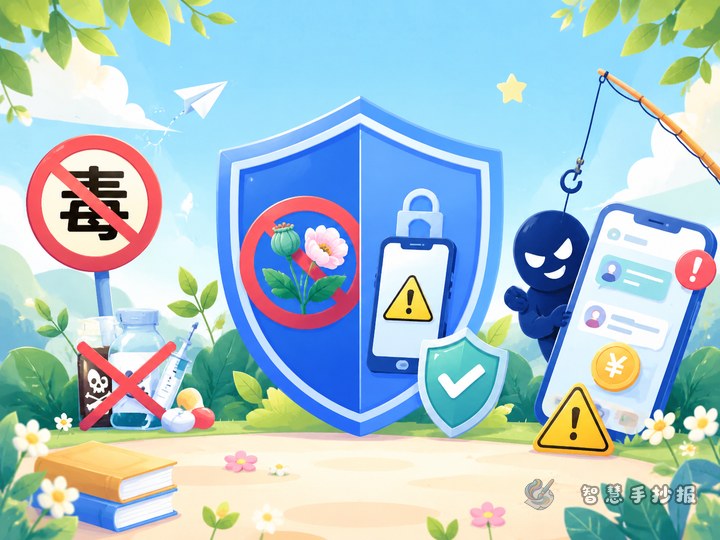
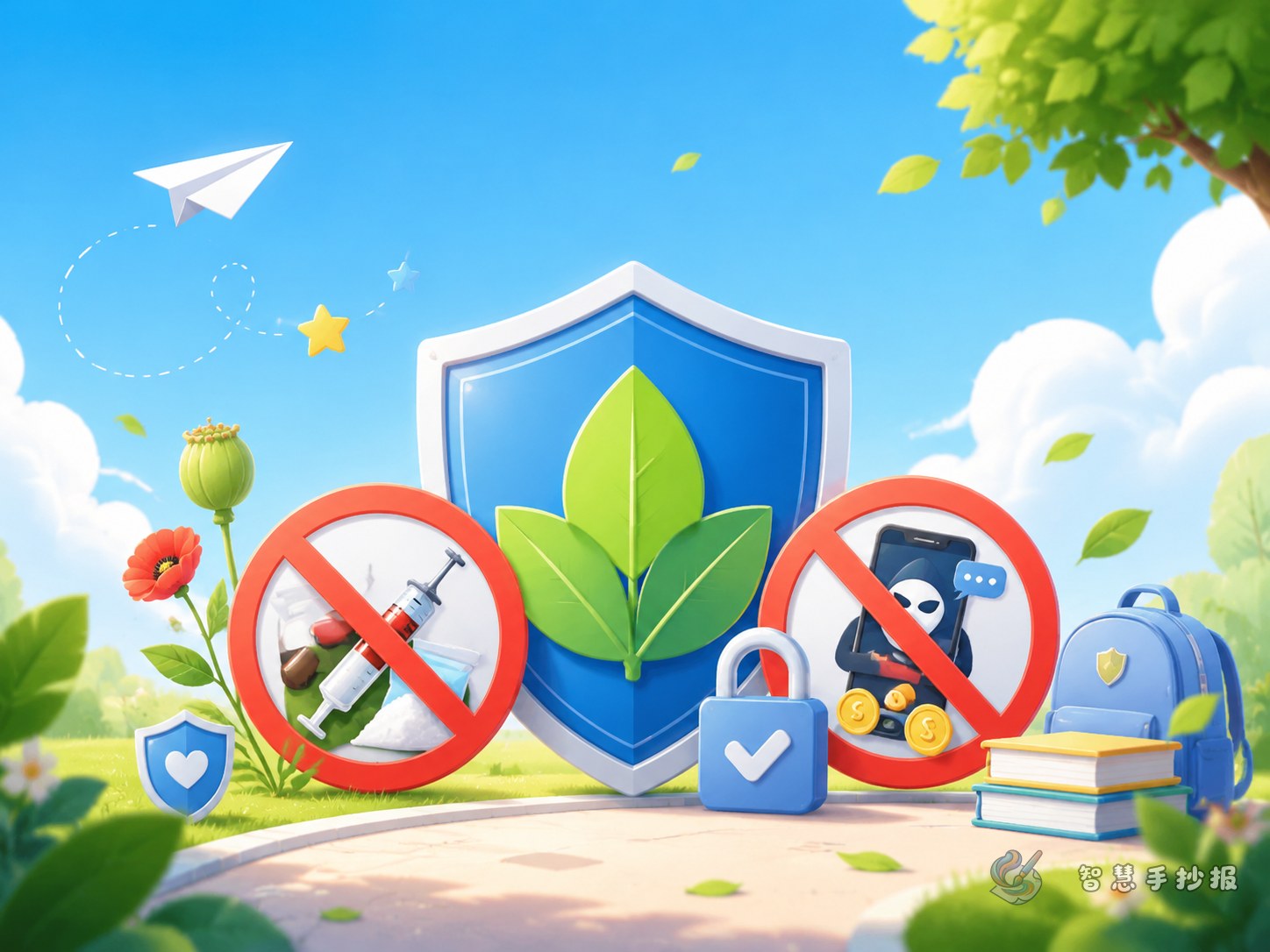
Color suggestions include blue, green, and orange for a bright but serious tone. Decorative elements can include shields, warning signs, locks, telephones, and hand symbols to show safety and protection. Do not overcrowd the page; clean spacing helps the key ideas stand out.
Short lines you can copy directly
- Value life and stay away from drugs, starting with saying no to curiosity.
- Check strange messages carefully and never share private information casually.
- Do not chase small benefits or believe easy rewards.
- If something feels suspicious, step away first and tell a parent or teacher.
- Learning to refuse is an important self-protection skill.
To make the work feel more thoughtful, you can add a small section called “My Promise,” such as: I will not trust blindly, I will not share private information, I will not try unknown items, and I will not follow strangers.
How to end the page naturally
Instead of writing only “I will be careful in the future,” use a short summary: self-protection is not about fear, but about learning how to tell right from wrong and make safe choices. When facing drug temptation or scam traps, we should stay alert and ask for help in time so safety can stay with us in study and daily life.
If you want to keep improving your layout, title lettering, or border decorations, you can also continue designing in the Zhihui Shouchaobao WeChat mini program.