Turn the Five Oxen into Five Distinct Characters
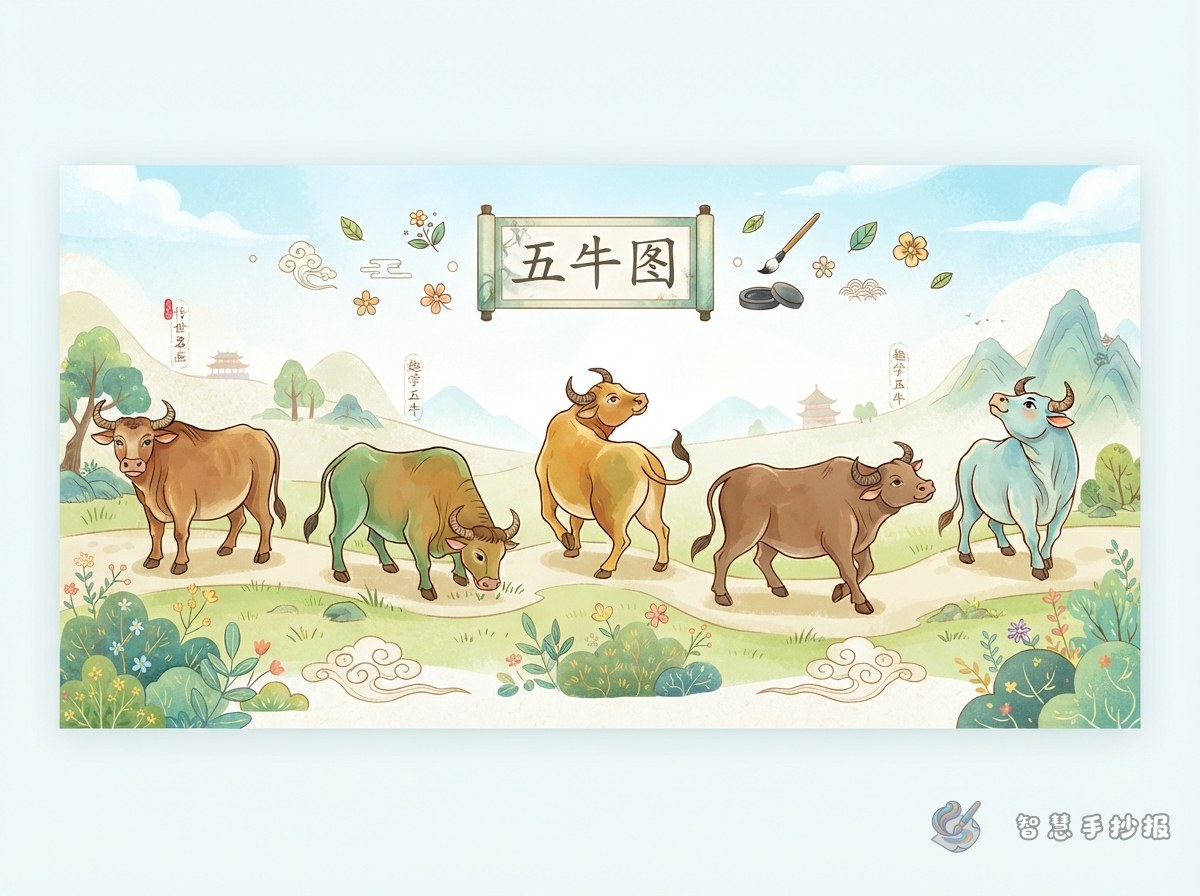
The strongest feature of a Five Oxen hand-copied poster is the variety of poses. Avoid drawing five identical animals in a straight row. Observe how each ox stands, walks, turns, or lowers its head, then simplify the body with clear outlines. Slightly emphasizing the horns, eyes, and tail direction will make each expression easier to recognize.
- First ox: Show a slow step forward to create a calm mood.
- Second ox: Use a raised head or sideways glance to suggest alertness.
- Center ox: Draw it slightly larger as the visual focus.
- Fourth ox: Let it turn back to connect both sides of the composition.
- Fifth ox: Add a lowered head or moving tail for visual rhythm.
Build Four Short Reading Sections
Instead of writing a long art-history essay, divide the information into brief, readable sections. Useful headings include “Painting Profile,” “Artist and Period,” “Observing the Five Oxen,” and “What I Notice in the Painting.” Keep each section to three to five sentences and decorate the headings with small horns, leaves, or seal-shaped frames.
Ready-to-Use Writing Ideas
Painting profile: Five Oxen is traditionally attributed to Han Huang of the Tang dynasty. Its five oxen differ in pose and appearance. Careful, varied lines describe their bodies, colors, and expressions, showing the artist's close observation of everyday life.
What makes it special: The painting has no elaborate setting, yet the animals create variety through their directions, movements, and expressions. Viewers can pay particular attention to the eyes, legs, and changing weight of the lines.
My response: An ordinary farm animal can become the subject of a treasured painting. This reminds us that artistic ideas often begin with daily life and careful observation.
Plan the Page Like a Horizontal Scroll
Place the paper horizontally and reserve a broad scroll-like area across the center. Arrange the five oxen at different heights and directions. Put the title at the top or upper left, then position the four text boxes around the animals without covering them. Scroll, fan, or open-space shapes can give the page a classical feeling without making it crowded.
- Sketch the title, picture, and writing areas lightly in pencil.
- Set the size and direction of each ox before adding details.
- Use tan, ochre, and gray-brown for a warm historical look.
- Finish with small leaves, seal motifs, and thin borders.
Keep the Traditional Palette Clear and Bright
Choose ivory or pale yellow for the background, with brown, ochre, and gray for the oxen. A small amount of vermilion can highlight the title or seal motifs. Avoid covering the entire page with dark colors or heavy antique patterns, because the writing must remain easy to read. After organizing the ideas, students and parents can continue in the Smart Hand-Copied Poster WeChat Mini Program to choose a layout, adjust sections, and complete the poster.