Read the Painting Through Its Figures
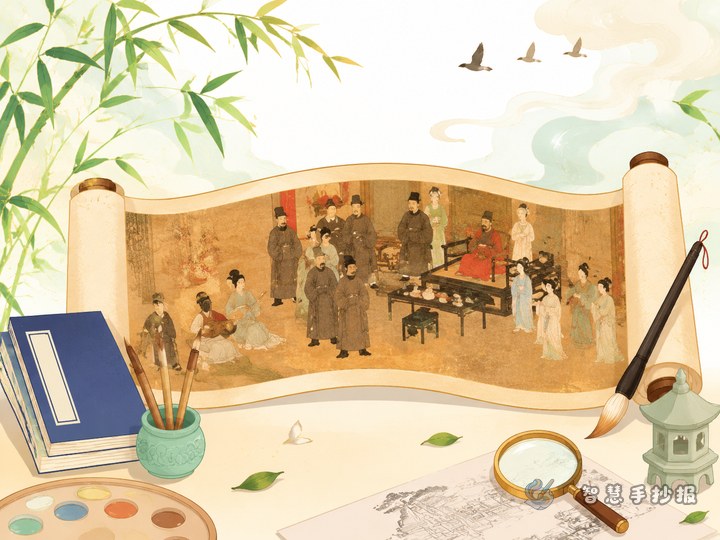
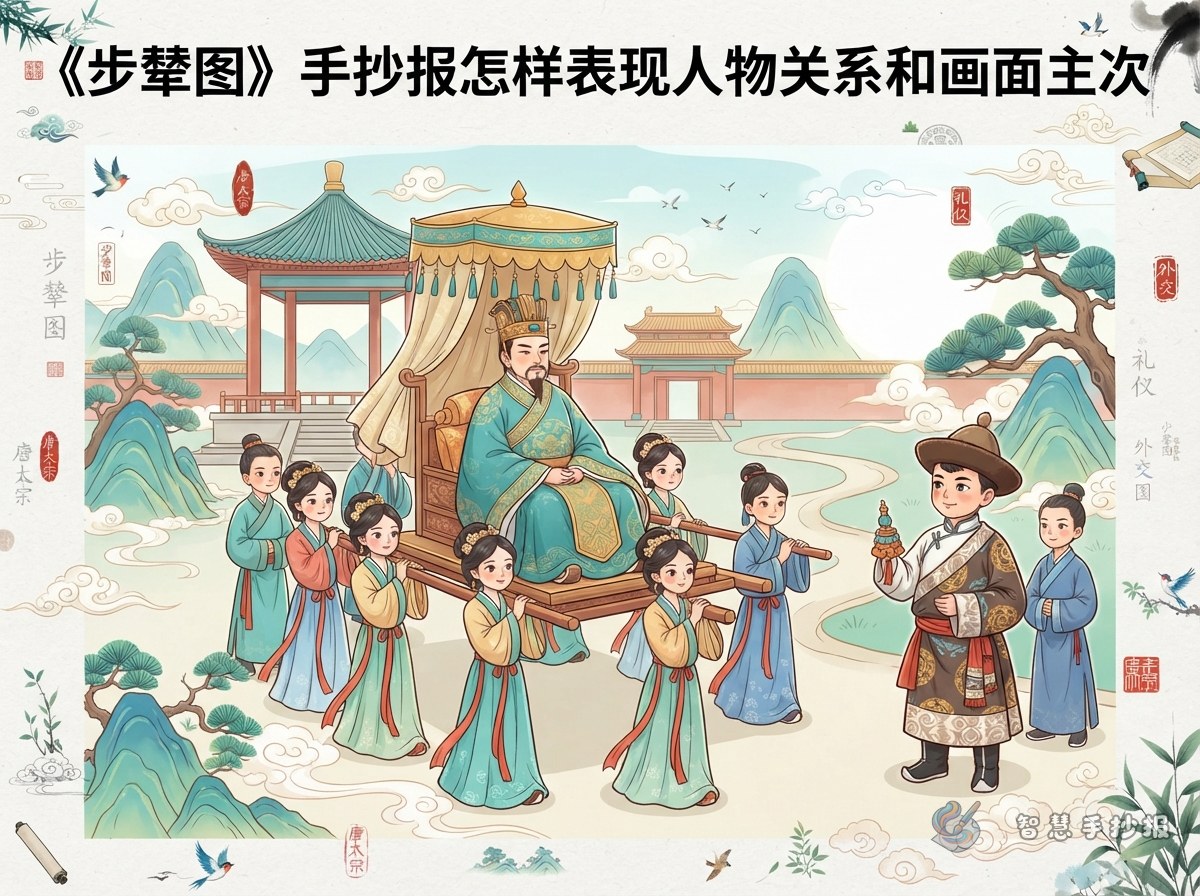
Emperor Taizong Receiving the Tibetan Envoy, commonly known as The Imperial Sedan Chair, is traditionally attributed to the Tang dynasty painter Yan Liben. It depicts Emperor Taizong receiving the Tibetan envoy Gar Tongtsen. For a school poster, students can focus on the figures' positions, clothing, gestures, and directions instead of copying every detail.
- On the right: Emperor Taizong sits on a sedan chair surrounded by court ladies.
- On the left: Three standing figures form the other side of the meeting.
- Visual focus: Differences in size, posture, number, and placement help establish rank and importance.
Turn the Page into a Meeting Scene
Place the title near the upper left and draw a simplified group scene across the center. Arrange the figures so they face inward, creating a sense of meeting and conversation. Small cloud, scroll, or Tang-inspired patterns can decorate the edges without competing with the main illustration.
Useful Content Panels
- Painting Profile: List the title, traditionally attributed artist, dynasty, and subject.
- Who Is in the Scene: Identify the emperor, the envoy, and the surrounding attendants.
- Status in the Details: Explain what clothing, posture, size, and placement reveal.
- My Observation: Name the first figure that catches your eye and explain why.
Short Text Students Can Adapt
About the work: The painting presents a formal meeting through carefully arranged figures and expressive details. It can be studied both as a historical scene and as an example of how traditional Chinese figure painting communicates identity and character.
Looking closely: The figures do not stand in a simple row. Their clothing, poses, and positions create a clear hierarchy. Small arrows or captions can point out these clues, but they should not cover the drawing.
Viewing reflection: Looking at an old painting means noticing not only what is shown but also how the artist organizes the scene. Direction, open space, and differences in scale all help tell the story.
Build the Layout with Clear Hierarchy
A landscape page works well because it echoes the horizontal format of a handscroll. Let the main drawing use about one third of the space, with two or three text areas around it. Vermilion, earthy brown, black, and small touches of golden yellow create a restrained palette, while a pale background keeps the page readable.
- Make the figures larger than the decorative patterns.
- Use thin borders or scroll-inspired edges for text areas.
- Keep each paragraph short and add clear subheadings.
- Plan the figures and columns in pencil before outlining and coloring.
Add a Close-Looking Challenge
Create a small “Look and Find” section that asks readers to spot differences in clothing, facing direction, or gesture. This turns the poster into an observation activity as well as an introduction to a famous painting. After choosing the sections, students and parents can continue arranging and making the poster in the Smart Handwritten Newspaper WeChat Mini Program.