Build the page around a clear growth journey
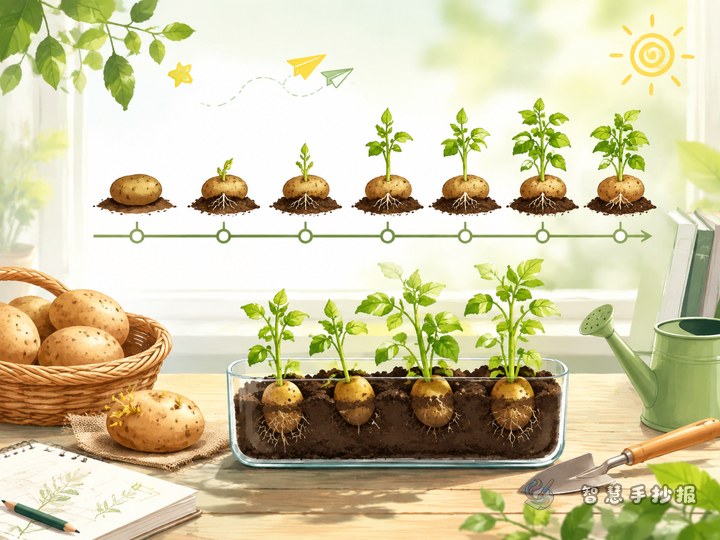
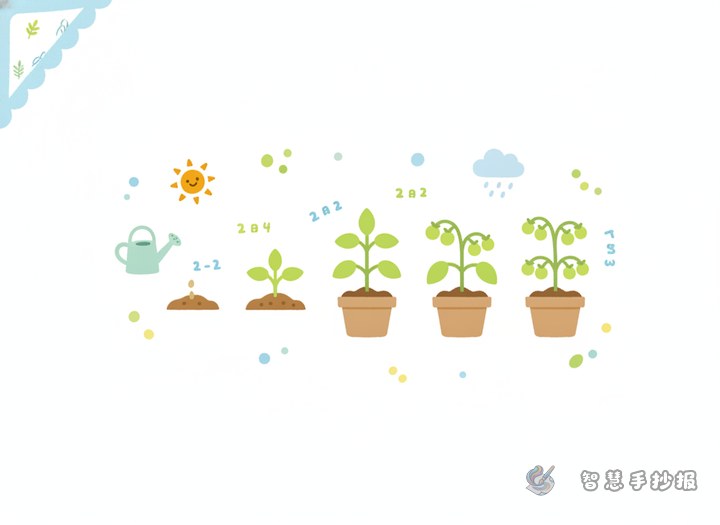
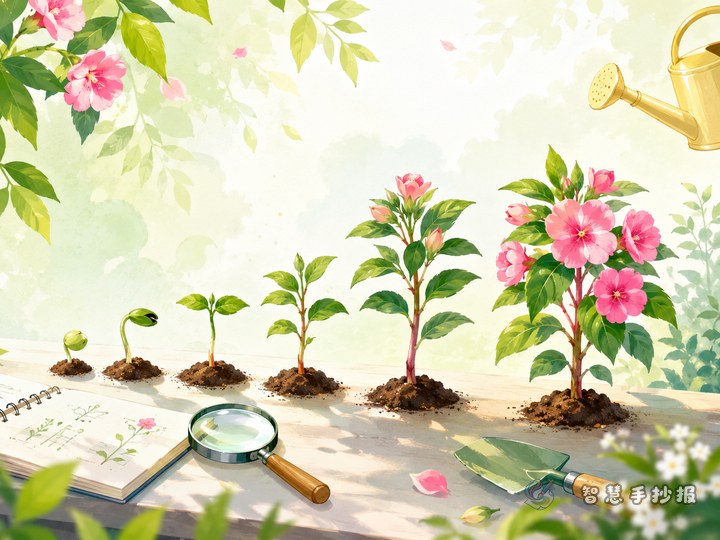
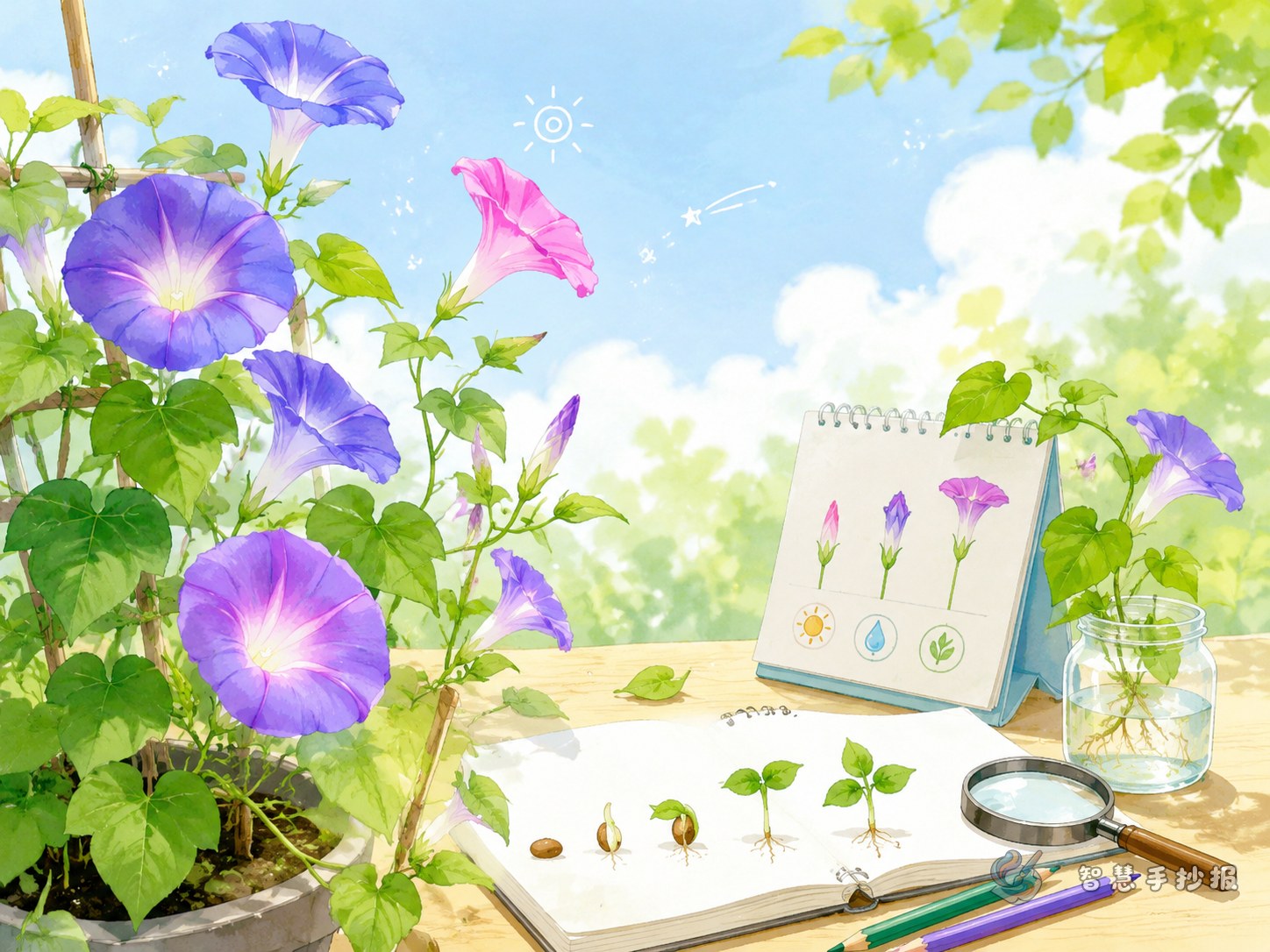
A morning glory observation poster is easiest to understand when it follows the plant’s growth journey. You can organize it as sowing, sprouting, seedling growth, vine climbing, and budding or blooming. This makes the poster feel like a real observation record rather than a general plant introduction.
For a landscape page, place the timeline across the middle. For a portrait page, set the timeline on one side and expand each section beside it.
Four sections are enough for a full poster
Observation calendar
Write short notes for important days, such as “Day 3: tiny sprout appeared,” “Day 8: first true leaves grew,” or “Day 18: vine began to climb.” These brief lines create a strong record-keeping effect.
Visible changes
This part should describe how the morning glory looks at each stage. For example, the seed becomes fuller after soaking, the stem is thin and upright after sprouting, the leaves become larger, and the vine grows longer before buds appear.
Simple care tips
- Place it where it gets enough sunlight
- Keep the soil slightly moist without overwatering
- Use a small stick or string for climbing support
- Check leaf color and plant condition every day
What I noticed
This section can include personal discoveries, such as “It looked stronger on sunny days” or “The vine searched for something to wrap around.” These sentences make the poster feel more natural and student-centered.
Ready-to-use writing lines
You can place these short lines into text boxes so the page does not look too crowded.
- Morning glory seeds have a hard outer coat, so soaking them can help germination.
- Morning glory is a climbing plant, and its stem grows upward along support.
- Its leaves become larger and greener as it grows.
- Before blooming, small buds appear first and later open like little trumpets.
- Daily observation helps me notice small changes in plant growth.
Let the layout feel like a climbing vine
You do not need to divide the whole page into plain boxes. You can connect sections with curved vine-like lines to match the plant’s character. Place the title near the top center, add flowers and leaves around it, and then arrange the main records below.
If drawing feels difficult, use one large section and two smaller ones. Put the timeline in the center and place care tips and personal notes on each side. This layout is simple and balanced.
Small details that make the poster look thoughtful
- Use time words such as “Day 5,” “one week later,” or “before blooming.”
- Write more about what changed and less about broad plant facts.
- Keep the title bigger and the body text in short sentences.
- Use vines, leaves, and buds as border decorations for a unified style.
If you already have your ideas and notes ready, you can also continue polishing the layout in the Zhihui Shouchao Bao WeChat mini program to make the final poster cleaner and more complete.