Start with the main focus instead of copying the whole story
When making a Jingwei Fills the Sea handwritten newspaper, many students only retell the myth. A better approach is to divide the page into two core ideas: what happened in the story and what spirit the story shows. The first part explains who Jingwei is, why she fills the sea, and how she keeps going. The second part highlights courage, determination, and persistence. This makes the work more meaningful and organized.
Section ideas that work well on the page
- Story card: write the title, main character, and that it comes from an ancient Chinese myth.
- What happened: summarize the story in three or four short sentences.
- The spirit of Jingwei: explain her bravery and refusal to give up.
- My thoughts: add one short personal reflection in child-friendly language.
- Good words and lines: collect a few short phrases to decorate the page.
Ready-to-use writing materials
Short story summary
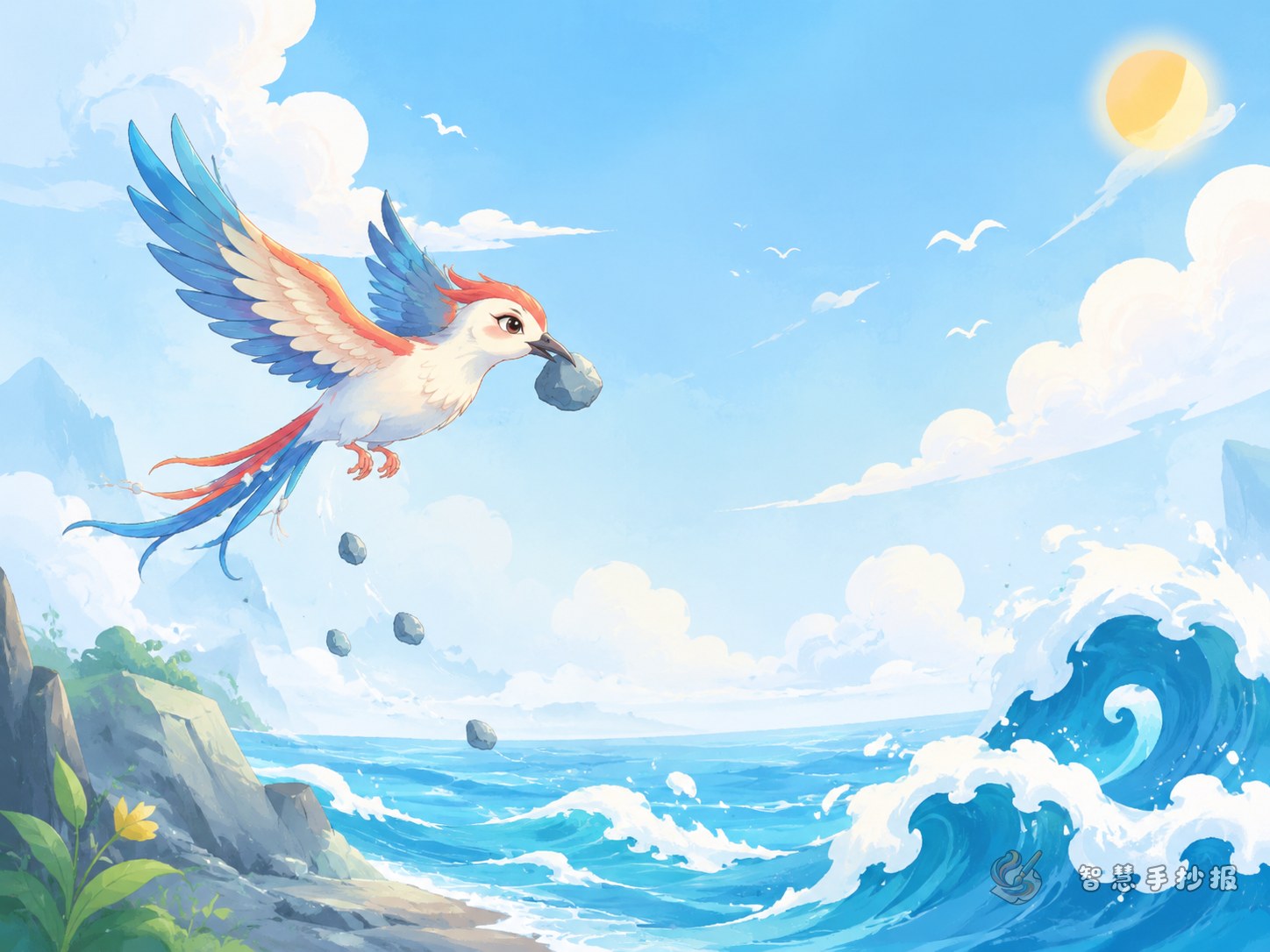
In the legend, the young daughter of Emperor Yan drowned while playing in the Eastern Sea. After her death, she became a small bird called Jingwei. She carried twigs and stones from the mountains and dropped them into the sea every day, hoping to fill it so that it would not hurt others again. Though the task seemed impossible, she never stopped.
Meaning of the story
Jingwei Fills the Sea is not only a myth. It also shows the power of persistence. Even when the goal seems impossible, Jingwei keeps acting instead of giving up. The story teaches children to face difficulty bravely and to keep trying step by step.
Short reflection lines
- A small bird can carry a great dream.
- Persistence may be slow, but it is never useless.
- Courage matters more than complaining.
- With a goal, we can keep moving forward.
Layout ideas that make the page feel like a story
This topic works well with a center picture plus side sections layout. Draw Jingwei carrying a twig in the middle, with waves and stones below. Place the text sections around the image. The title can use wave lines, cloud shapes, or mountain-and-sea elements. Blue, green, and light brown are good color choices because they match the sea and nature without making the page look messy.
- Put the main title at the top in larger letters.
- Write the story plot on one side and the lesson on the other.
- Use the bottom space for reflections or short quotes.
- Add simple decorations such as shells, waves, pebbles, and flying birds.
Practical tips for younger students
Do not make the page too crowded with text. Keep each section short and highlight only key lines with colored pens. Draft in pencil first, then copy neatly with a dark pen. Use different colors for the title and section headings. If you want more help with layout and section planning, you can continue exploring ideas in the Zhihui Shouchao Bao WeChat mini program.
Small details that improve the final result
One strong idea in this myth is the contrast between the huge sea and the tiny bird. That contrast makes Jingwei's persistence even more powerful. You can also end your page with a personal goal, such as learning to solve problems little by little. This gives the handwritten newspaper a warmer and more thoughtful finish.