Find the Rhythm Inside the Motif
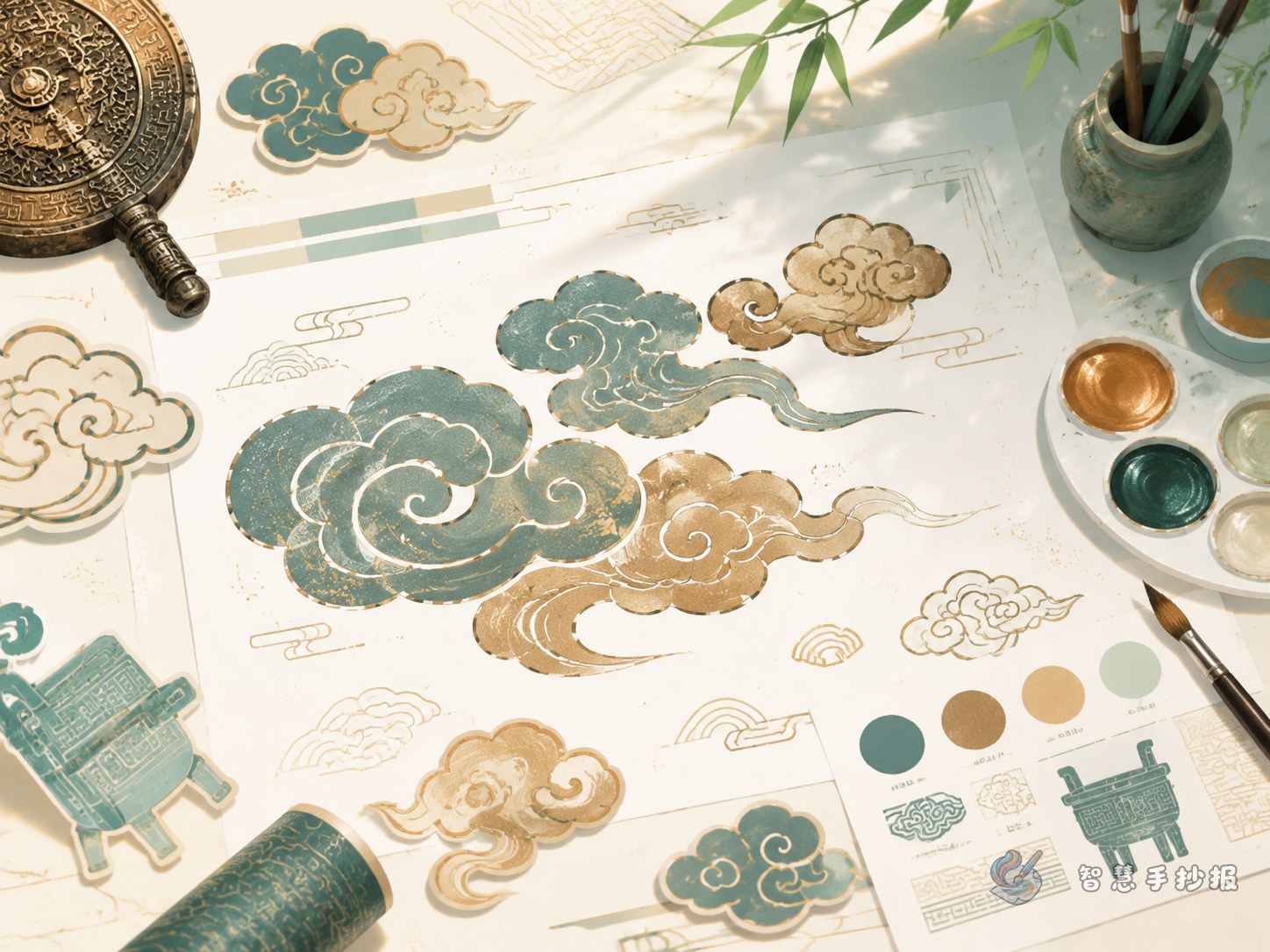
The cloud-and-thunder motif often appears in the decoration of ancient Chinese bronze objects. Its design is built from connected curling lines. Some versions have rounded turns that resemble drifting clouds, while others use firm square turns and a stronger geometric structure.
For a school poster, there is no need to copy an extremely detailed historical design. Focus on three visual features: repetition, connection and turning lines. These features make the pattern recognizable while keeping it easy to draw.
Create a Bronze-Inspired Color Story
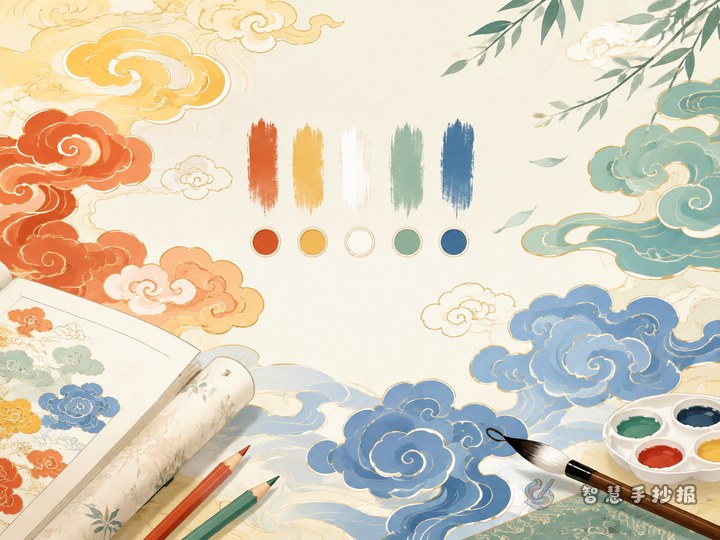
A warm white background keeps the writing clear. Ochre can be used for title panels and vessel silhouettes, while deep blue-black works well for the main outlines. Verdigris green suggests the aged surface associated with bronze objects today. Use vermilion only for small title marks or numbered labels.
- Main colors: ochre and deep blue-black for a calm, historical mood.
- Supporting colors: warm white and verdigris green to separate text from decoration.
- Accent color: a small amount of vermilion for headings and key words.
Turn One Small Unit into a Border
- Practice one simple square spiral on scrap paper and keep the gaps between its lines even.
- Draw two light guide lines along the edges of the poster and divide them into equal sections.
- Repeat the unit across the border, using a dot or small square to solve difficult corners.
- Trace the main lines in deep blue-black and add small areas of ochre or green.
If a full border feels crowded, decorate only the top and bottom edges. The open sides will leave more space for readable handwriting.
Build the Page Around Four Mini Features
A Pattern Profile
Explain that the motif uses continuous curling lines and is often associated with ancient bronze decoration. Rather than assigning one absolute meaning to it, discuss how it reflects observation of nature, orderly design and skilled craftsmanship.
A Color Observation Card
Write that the green seen on many bronze objects today can make viewers think about the passage of time. On the poster, green and ochre should be used selectively instead of covering the entire page with dark color.
Draw It in Three Steps
Show three small diagrams: draw the basic turning line, repeat and connect the unit, and add color. Place one short instruction next to each diagram so readers can understand the process quickly.
Patterns Around Me
Invite readers to look for repeating designs in window grilles, railings, floor tiles, book covers or decorative objects. They can then compare those designs with the way cloud-and-thunder units repeat.
Arrange the Poster Like an Unfolded Bronze Design
Place the title at the top center in bold, square lettering and surround it with a simplified bronze-vessel outline. Use the largest central box for the pattern profile, place the color card and drawing steps on opposite sides, and reserve the bottom area for personal observations.
Keep each paragraph to a few handwritten lines and use the motif only in borders, dividers and corner labels. After drafting the content, check the spacing before tracing and coloring. To explore more layouts, users can scan into the 智慧手抄报 WeChat Mini Program and continue creating a poster for this theme.