Build the theme around both history and culture
A useful way to plan this handwritten newspaper is to combine the Great Wall and the Forbidden City under one clear theme, such as “Discover the Great Wall and the Forbidden City”. Then divide the content into history, architecture, cultural meaning, and personal reflection. This keeps the page focused and suitable for students.
You can place a short lead sentence under the main title, for example: The Great Wall is majestic and the Forbidden City is solemn; together they show the beauty of Chinese history and architecture. This opening works well in the center of the page.
Short passages you can directly use
Great Wall paragraph
The Great Wall is a famous ancient defense project in China. Stretching across mountains like a giant dragon, it shows the wisdom and hard work of people in the past. It also represents strength, unity, and perseverance.
Forbidden City paragraph
The Forbidden City is in Beijing and is one of the best-known examples of ancient Chinese palace architecture. Its red walls, golden roofs, and orderly halls show both dignity and artistic beauty. It also carries rich historical and cultural meaning.
Comparison paragraph
The Great Wall stands among mountains and looks powerful, while the Forbidden City stands in the heart of the capital with a careful and balanced layout. One reflects military defense, and the other reflects palace culture, but both show the brilliance of Chinese civilization.
Reflection paragraph
Learning about the Great Wall and the Forbidden City helps us understand more than famous places. It helps us feel the depth of history, respect cultural heritage, and appreciate traditional Chinese culture.
Section ideas that keep the page tidy
If you are using an A3 page or a similar size, a good layout is a central title with sections around it. Four sections are usually enough.
- Famous Site Cards: a brief introduction to the Great Wall and the Forbidden City.
- Architecture Features: include walls and watchtowers for the Great Wall, and rooflines and axis layout for the Forbidden City.
- Cultural Facts: explain why they are important and why they should be protected.
- My Favorite Line: add your own sentence to make the page feel personal.
You can also design the page in two halves: the left side for the Great Wall and the right side for the Forbidden City, with the main title and a short conclusion in the middle.
What to draw for a better visual effect
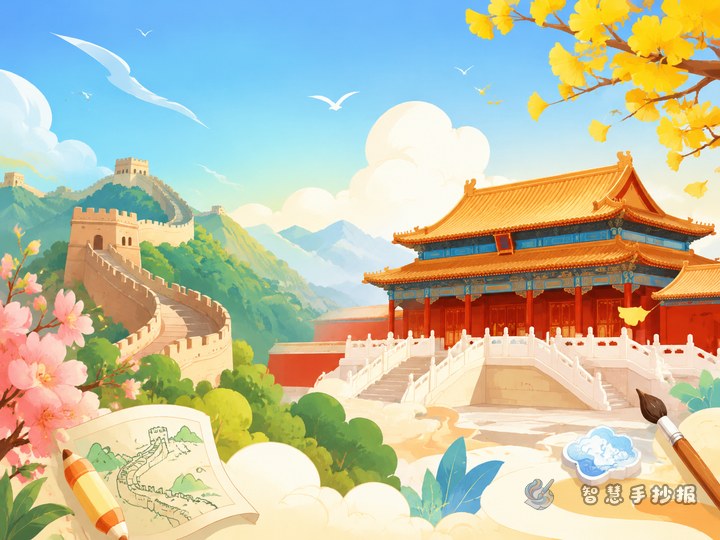
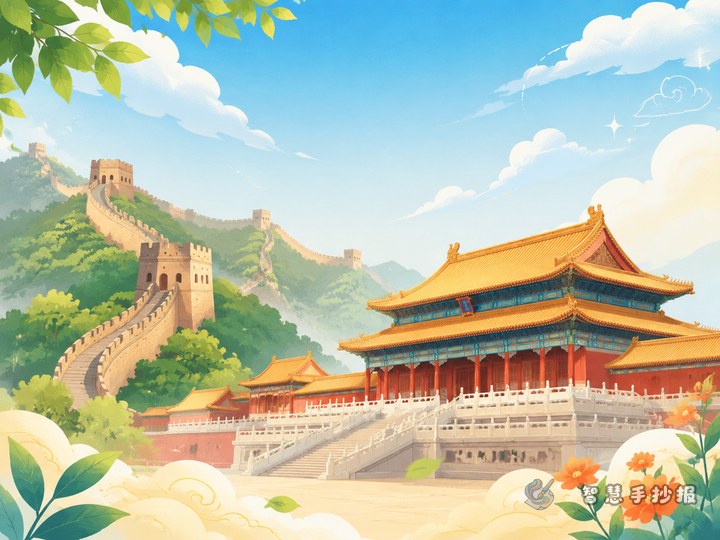
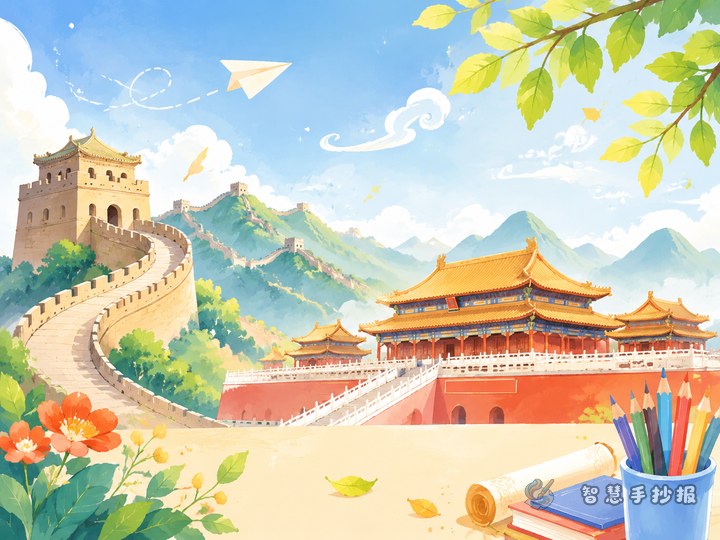
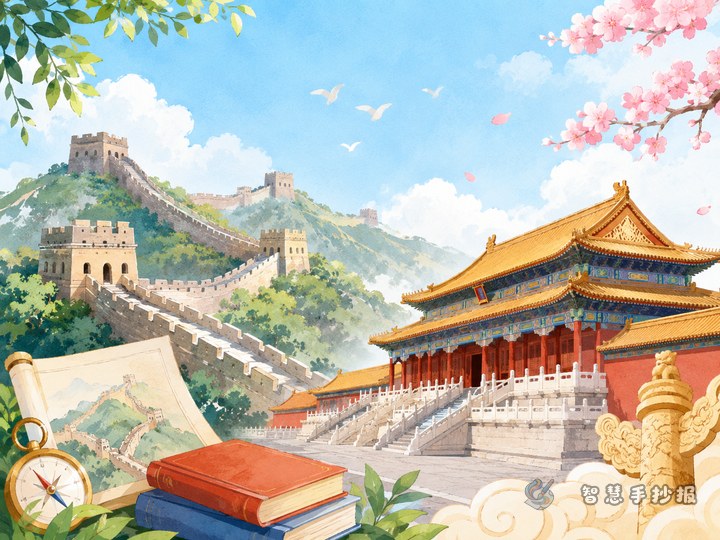
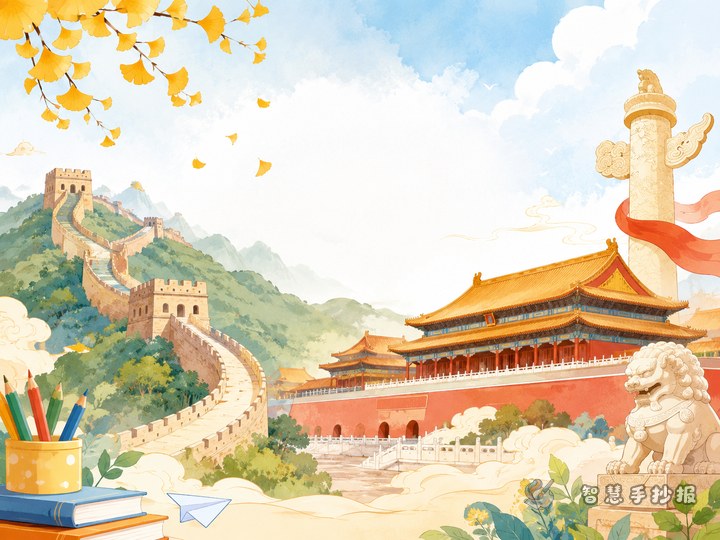
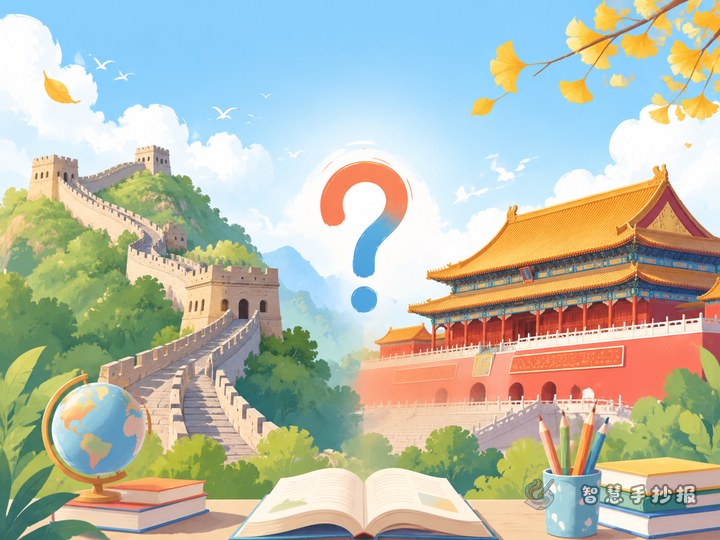
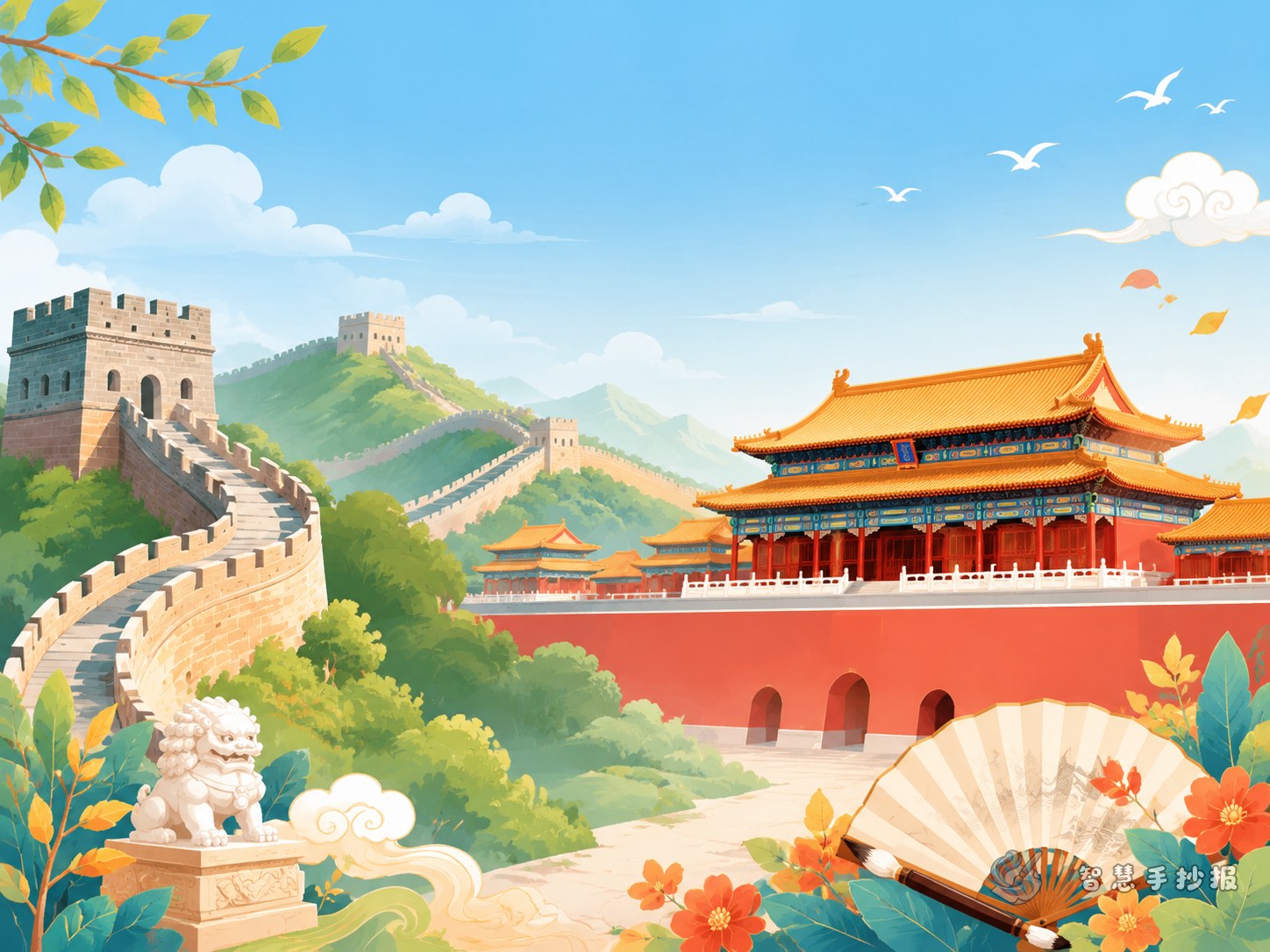
The drawings do not need to be complicated. The goal is to make the topic easy to recognize at a glance. For the Great Wall, draw mountains, stone walls, and watchtowers. For the Forbidden City, draw palace gates, roof eaves, lanterns, or cloud patterns. Small decorative elements such as scrolls or stone lions can add a traditional style.
A good color palette includes brick red, golden yellow, gray blue, and dark green. The Great Wall section can use earth and mountain tones, while the Forbidden City section can use brighter palace colors. This creates both contrast and unity.
How to make the handwriting look clean and polished
- Write the main title larger than the body text and keep a clear hierarchy.
- Limit each paragraph to 3 to 5 lines so the page does not feel crowded.
- Highlight key terms such as “defense project,” “palace architecture,” and “cultural heritage.”
- Leave small blank spaces between sections to keep the layout breathable.
- Do not make the border too heavy, or it will distract from the text.
If you are short on time, finish the title, section plan, and main colors first, then add the text and decorations. A clear structure usually leads to a neater final work.
A good closing sentence for the page
You may end with: The Great Wall and the Forbidden City record history and carry cultural beauty. Through this handwritten newspaper, we learn to understand the past and cherish Chinese heritage.
If you want to keep refining the title style, layout, or color matching, you can continue your design ideas in the Zhihui Handwritten Newspaper WeChat mini program.