Choose the main visual first
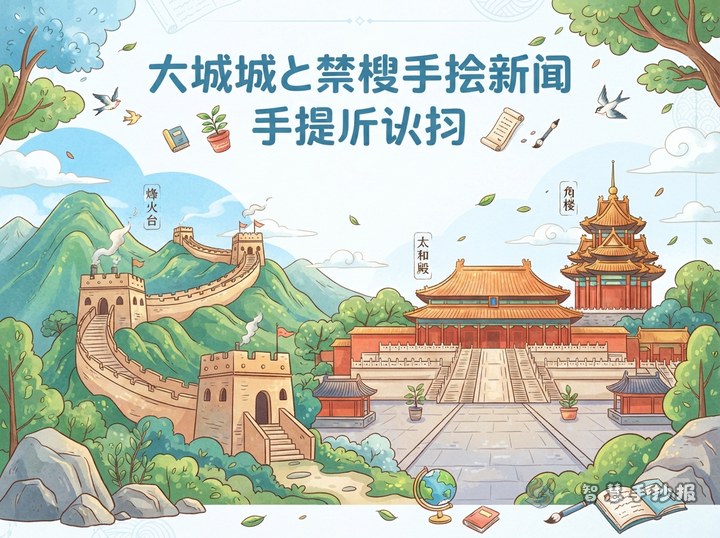
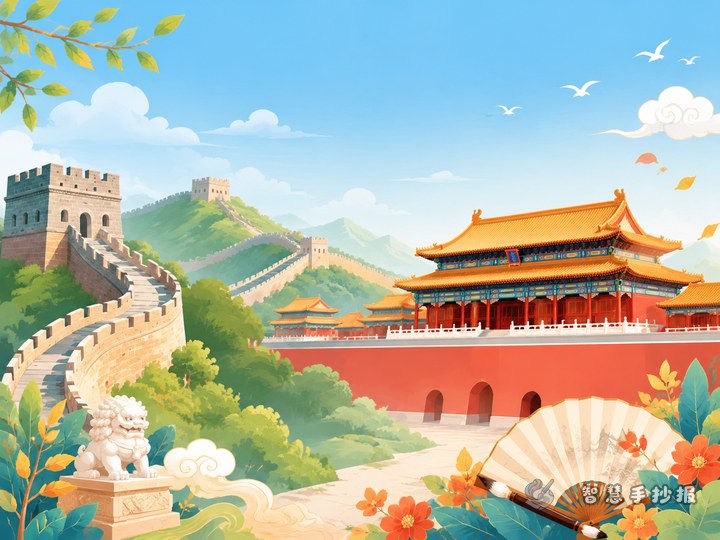
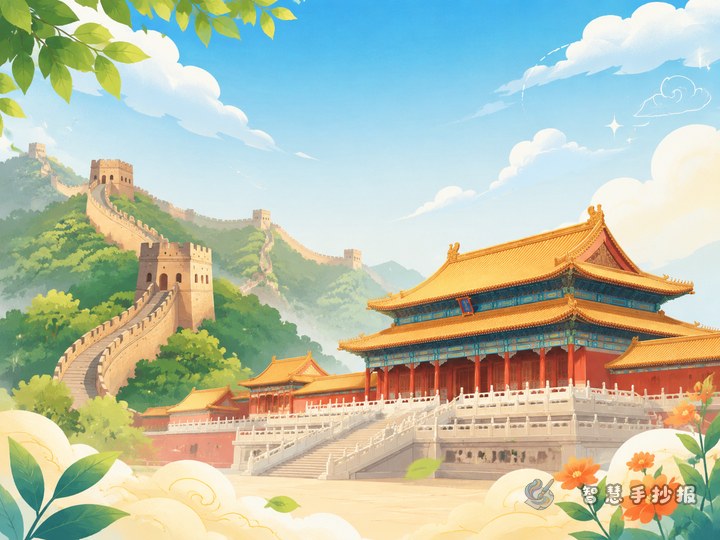
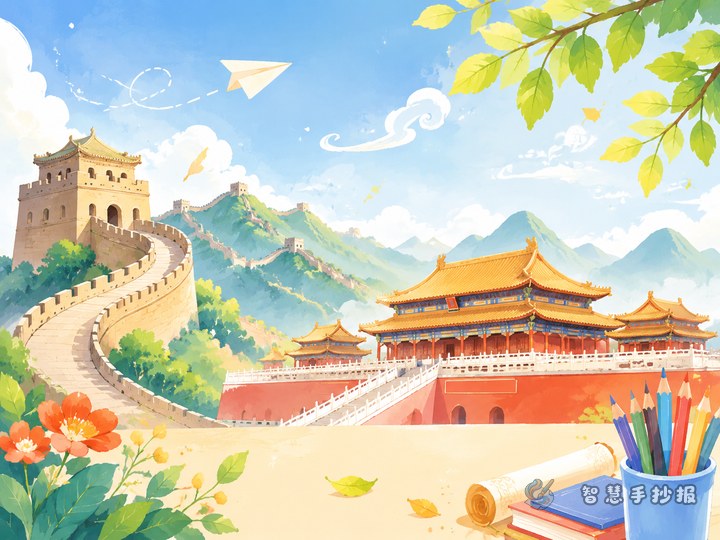
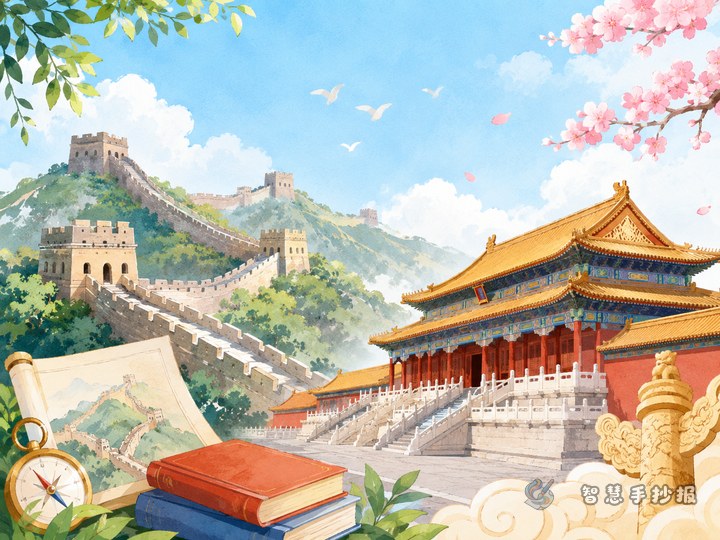
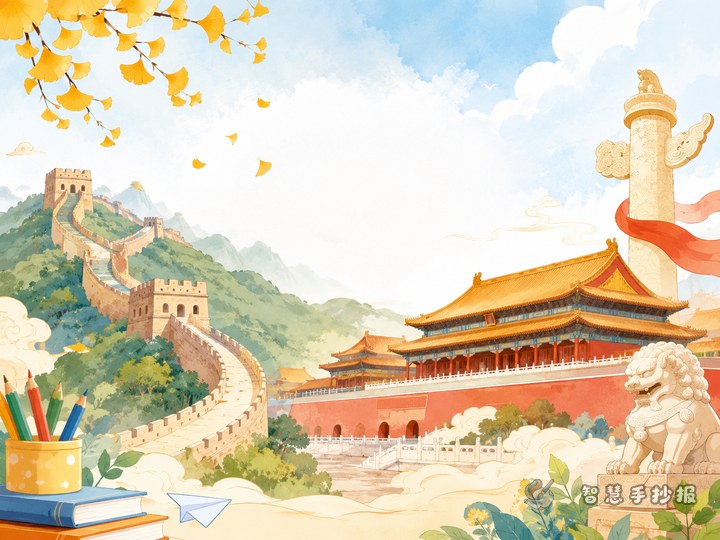
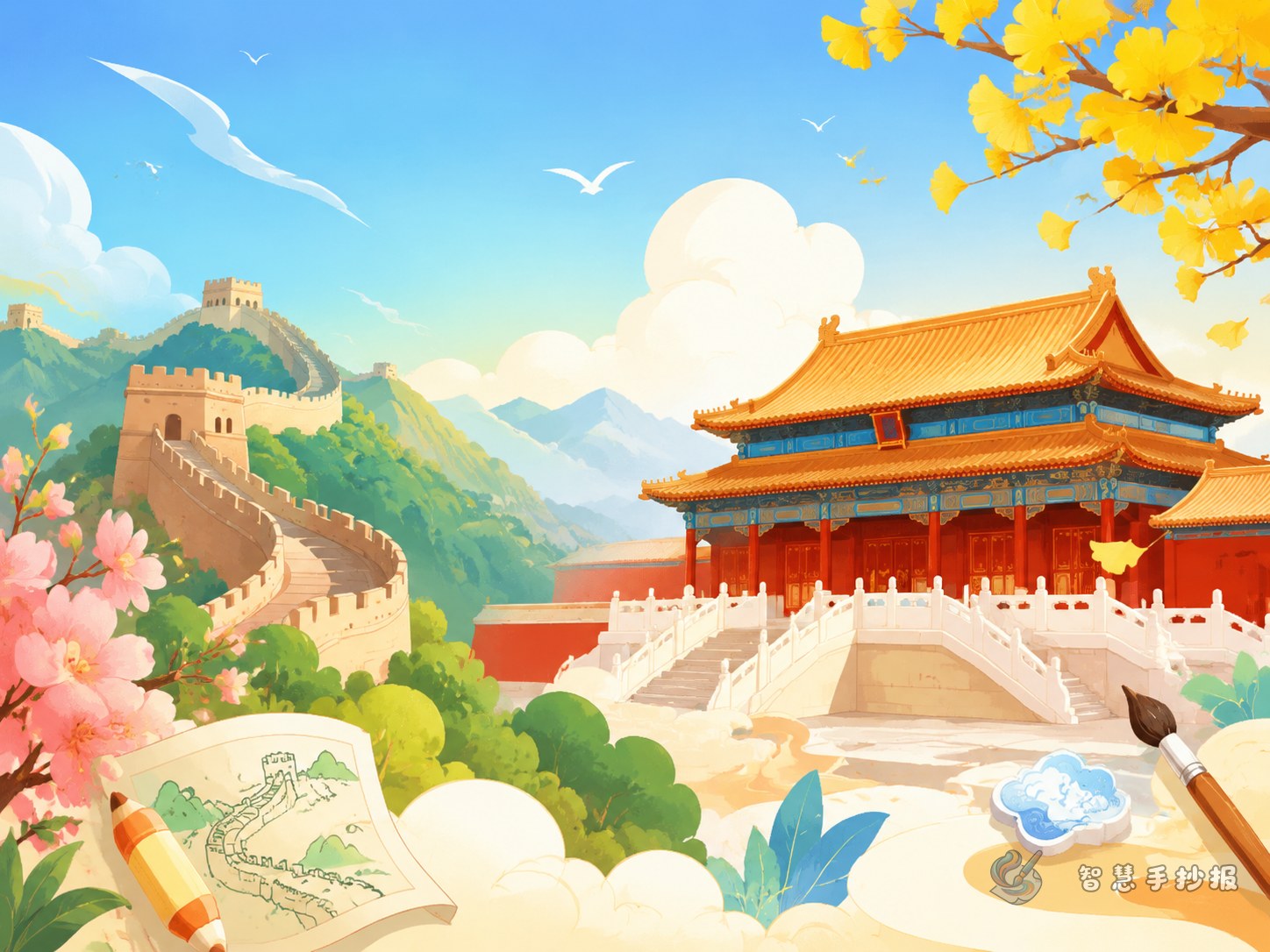
A Great Wall and Forbidden City handwritten newspaper becomes easier when you decide which landmark leads the page. If you want a strong and majestic feeling, let the Great Wall shape the border. If you want a classic and formal look, use Forbidden City roofs, gates, and lanterns as the main decoration. Once the main visual is set, the rest of the elements should support it rather than compete with it.
A practical arrangement is to place a palace roofline above the title and a winding Great Wall along the bottom. This shows both famous landmarks while keeping enough room for writing.
Easy border elements children can draw
- Brick-style border: Use small rectangles around the page to suggest the Great Wall.
- Watchtower corners: Small towers in the four corners can strengthen the theme.
- Roofline decoration: Repeated curved roof shapes work well around the title.
- Hanging palace lanterns: Good for both sides of the title area.
- Cloud patterns: Helpful for filling blank spaces softly.
- Stone lion or column icons: Small accent drawings rather than large pictures.
If the page starts to feel crowded, pick only two or three decorative elements and repeat them consistently.
Use illustrations to guide the reader
Illustrations should support the text, not block it. Three useful placements are:
- Put a palace gate or roof near the title to establish the topic.
- Add a small horizontal Great Wall drawing across the middle as a divider.
- Place tiny icons next to each section, such as a lantern, watchtower, or cloud motif.
For example, a watchtower can match a section about the Great Wall, while a palace lantern can match a section about the Forbidden City. This makes the page easier to read at a glance.
Simple section ideas to write
Section 1: Great Wall fact card
Write a few short lines about the Great Wall as a famous ancient structure stretching across mountains and symbolizing strength and wisdom.
Section 2: My impression of the Forbidden City
Describe its red walls, golden roofs, and grand ancient architecture in a few child-friendly sentences.
Section 3: What I feel about these historical sites
Add one or two personal thoughts, such as how these places show the beauty and history of China.
Section 4: How to protect cultural heritage
- Visit politely and do not draw on old buildings.
- Keep the area clean.
- Learn history and respect cultural heritage.
These sections make the handwritten newspaper complete without turning it into a long encyclopedia page.
Color choices that fit the theme
Do not use too many unrelated colors. For the Forbidden City, red, gold, yellow, and dark brown create a grand palace feeling. For the Great Wall, gray, earthy yellow, green, and light blue suggest stone, mountains, and sky. Keep the title bright and the writing background light so the words stay clear.
A good method is to use warmer colors in the upper part of the page and cooler natural tones in the lower part. This gives the page a natural visual structure.
Final checks before finishing
- Is the title easy to notice?
- Do the borders leave enough room for writing?
- Are the illustrations helpful instead of distracting?
- Does the page include both information and personal expression?
- Are the colors consistent?
If you already have the topic but still want to refine the composition, add text, or adjust the style more quickly, you can continue in the Zhihui Shouchao Bao WeChat mini program.