Start with real school life, not textbook language
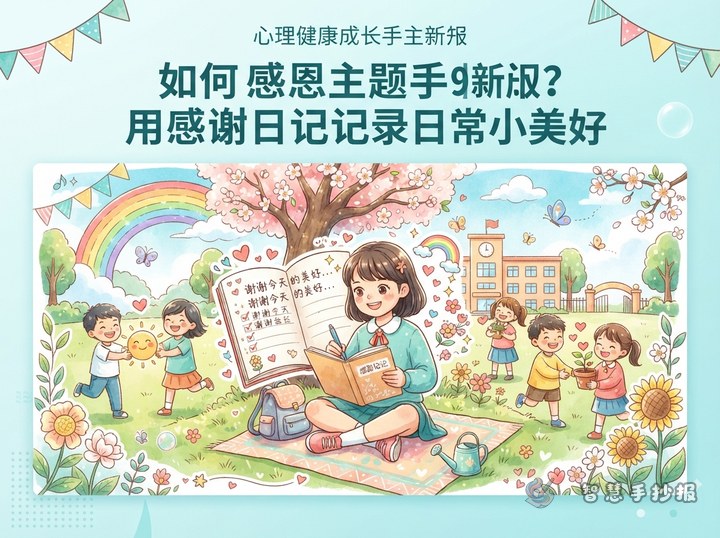
A strong mental health and personal growth poster should feel close to children's daily experiences. Instead of writing only definitions, students can focus on moments they truly know, such as feeling nervous in class, arguing with a friend, being sad after criticism, or lacking confidence before a competition.
The main title can highlight themes like happy growth, healthy mind, learning to manage emotions, or becoming a confident child. A short supportive subtitle can make the whole poster feel warmer and more inviting.
Sections that are easy to write and meaningful to read
Emotion corner
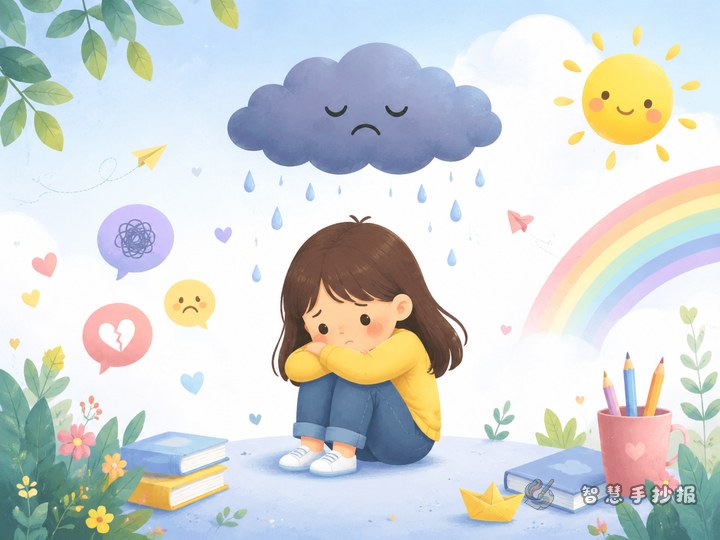
Students can explain that feeling happy, angry, worried, or sad is normal. A simple line such as “Knowing my feelings is the first step to managing them” works very well.
My calming methods
- Take a slow deep breath
- Talk to parents or teachers
- Go for a short walk
- Listen to gentle music
- Write down one happy thing today
Confidence section
Short lines like “Everyone has strengths,” “I can improve step by step,” and “One mistake does not mean I am not good” are suitable for this part and look great with stars or smiley faces.
Friendship tips
This section can include listening carefully, speaking politely, helping classmates, saying sorry when needed, and cheering others on. It fits school poster themes especially well.
Short text materials students can copy directly
- Feelings have sunny days and rainy days, and both are part of growing up.
- Talking about worries is a kind of courage.
- I can see my strengths and work on my weaknesses.
- A kind word can brighten someone's whole day.
- Asking for help is not weakness, but wisdom.
- Little progress every day helps me become stronger.
If more space is needed, students can add a short paragraph saying that mental health does not mean having no problems. It means learning how to adjust, communicate, and stay hopeful when difficulties appear.
Keep the layout open and comfortable
This topic looks best with a large title in the center and several clear sections around it. The middle can hold the theme title, while the sides include emotions, stress relief, friendship, and confidence messages.
- Use rounded and friendly lettering for the title.
- Keep each section short so the page stays neat.
- Add soft decorative elements such as clouds, rainbows, leaves, suns, or hearts.
- Leave some blank space so the poster feels light and readable.
Make the poster sound like the child, not just the assignment
The most memorable poster is not always the longest one. It is the one that feels personal and true. Students can add lines like “One thing I learned recently,” “My favorite way to relax,” or “A sentence I want to share with my classmates.”
If the family wants to continue polishing the layout, title style, or full poster content, they can also move into the Zhihui Shouchao Bao WeChat mini program for the next step of making the final piece.