Start with a memorable idea: a traditional color archive
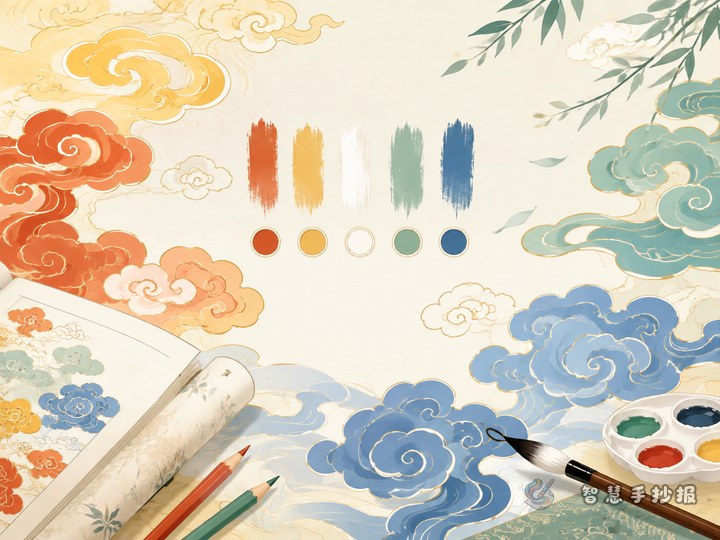
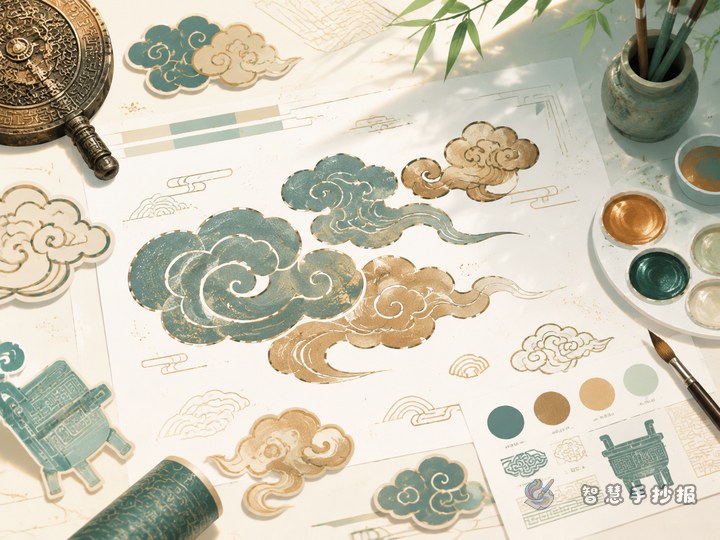
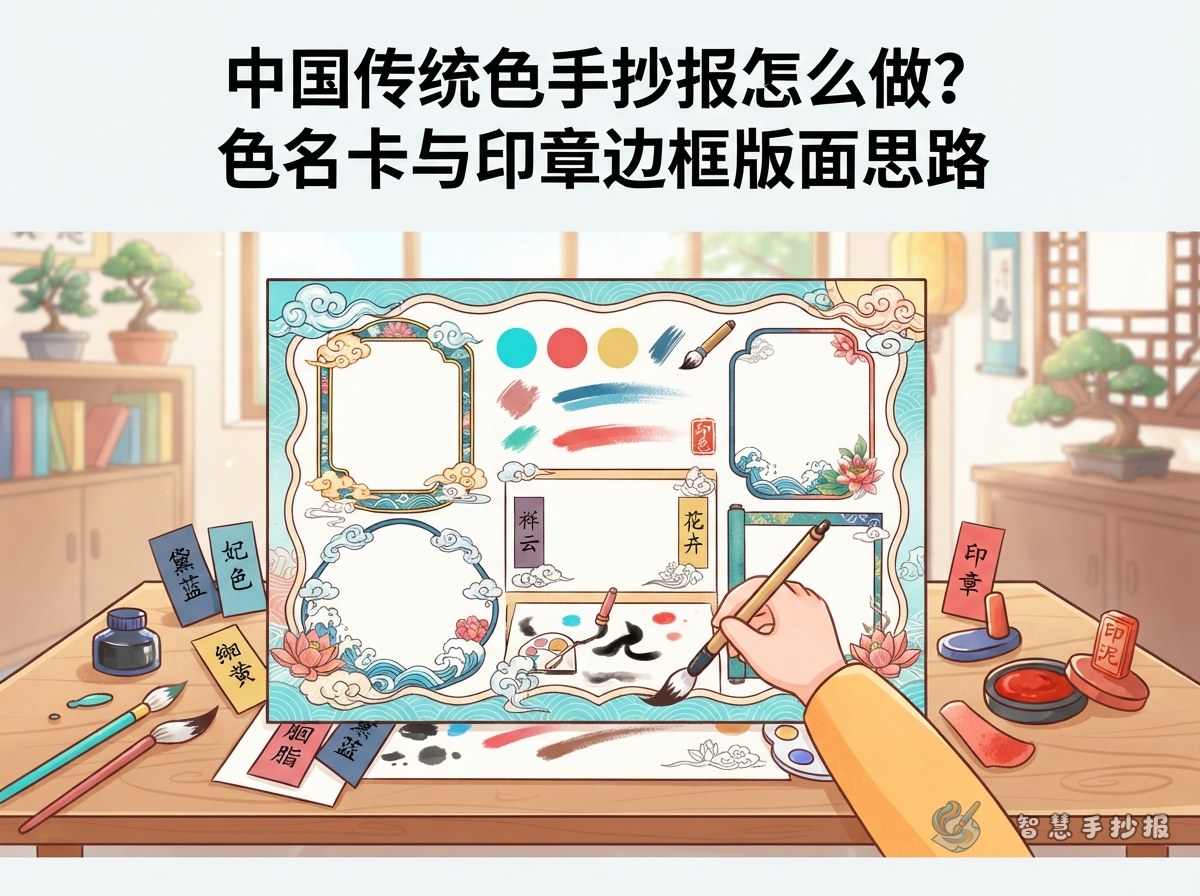
Instead of placing many colors and patterns on one page, turn the project into a small “traditional color archive.” Choose four colors—vermilion, mineral blue, gamboge yellow, and dai gray-blue. Give each color a small information card with its name, an image it suggests, and a short personal impression. This makes the page feel like a collection of cultural color cards.
A main heading could be “One Color, One Story”, “A Small Archive of Traditional Chinese Colors,” or “Colors Loved in Ancient China.” Add a small seal, brush, or paint palette beside the heading to make the theme clear.
What to write on the four color cards
The color cards are the focus of the page. Keep each one short, with a large name and a simple explanation that children can copy easily.
- Vermilion: It can suggest seals, festive decorations, and a warm red tone. Write: “Vermilion is bright and lively, reminding us of good wishes and reunion.”
- Mineral blue: It can suggest blue-green landscapes and a clear sky. Write: “Mineral blue is calm and elegant, like a distant mountain in a landscape painting.”
- Gamboge yellow: It can suggest ripe fruit, autumn sunshine, and a cheerful warm tone. Write: “Gamboge yellow brings a bright, sunny feeling to the page.”
- Dai gray-blue: It can suggest distant hills, ink tones, and a quiet classical mood. Write: “Dai gray-blue is deep without feeling heavy, making it suitable for a peaceful and reserved beauty.”
If there is enough space, add moon white or bamboo green. It is best to keep the whole page to four to six colors so the design remains focused.
Use seal-inspired borders instead of complicated patterns
To give the page a distinct look, combine seal shapes with simple title labels. Draw each color card as a square or rectangle, and make the corners feel like a carved seal. A few lines, dots, or a simple geometric motif are enough; there is no need to copy a complicated historical pattern.
Three easy decorations
- Draw a red square seal beside the main heading and write “Color,” “Classic,” or “Grace” inside it.
- Add a narrow title label above each card and connect it to the card with a fine line.
- Use small seals, brushes, or paint dishes to decorate empty corners.
Use dark brown, ink black, or dai gray-blue for the borders. Reserve vermilion for the seals and key points. This creates contrast without making the whole page too bright.
A clear layout route for the page
- Reserve about one-fifth of the top area for the main heading, followed by the small line “Discovering traditional taste through color names.”
- Place four similar-sized color cards in two rows in the center, leaving comfortable gaps between them.
- Put a “Color Notes” section on the left, explaining that traditional color names often draw inspiration from nature, plants, minerals, and daily life.
- Put a “My Color Combinations” section on the right. Show small swatches such as vermilion with moon white or mineral blue with gamboge yellow, and add one sentence about each combination.
- Leave a small “My Favorite Chinese Color” section at the bottom for the color you like best and the reason you chose it.
Text you can copy onto the handwritten newspaper
Color Note: Traditional Chinese color names often come from natural scenery, plants, minerals, and everyday experience. A color name does more than describe a tone; it can also suggest a season, a scene, or a feeling. Learning these names is another way to experience traditional culture.
Closing line: Vermilion is warm and lively, mineral blue is clear and elegant, gamboge yellow is bright, and dai gray-blue is quiet and restrained. Put them together on one page, and you can create your own story of Eastern color.
Helpful tips for coloring and finishing
Use a pencil to plan the title, cards, and sections first. Then outline, write the text, and add color at the end. Give each card one main color, and balance the rest of the page with cream, light gray, or pale brown. Use black or dark brown for the writing, with a small amount of vermilion to emphasize key words.
After finishing the sketch, you can continue organizing the layout in the智慧手抄报 WeChat mini program, choose suitable section styles, and adjust the design to fit your paper size.