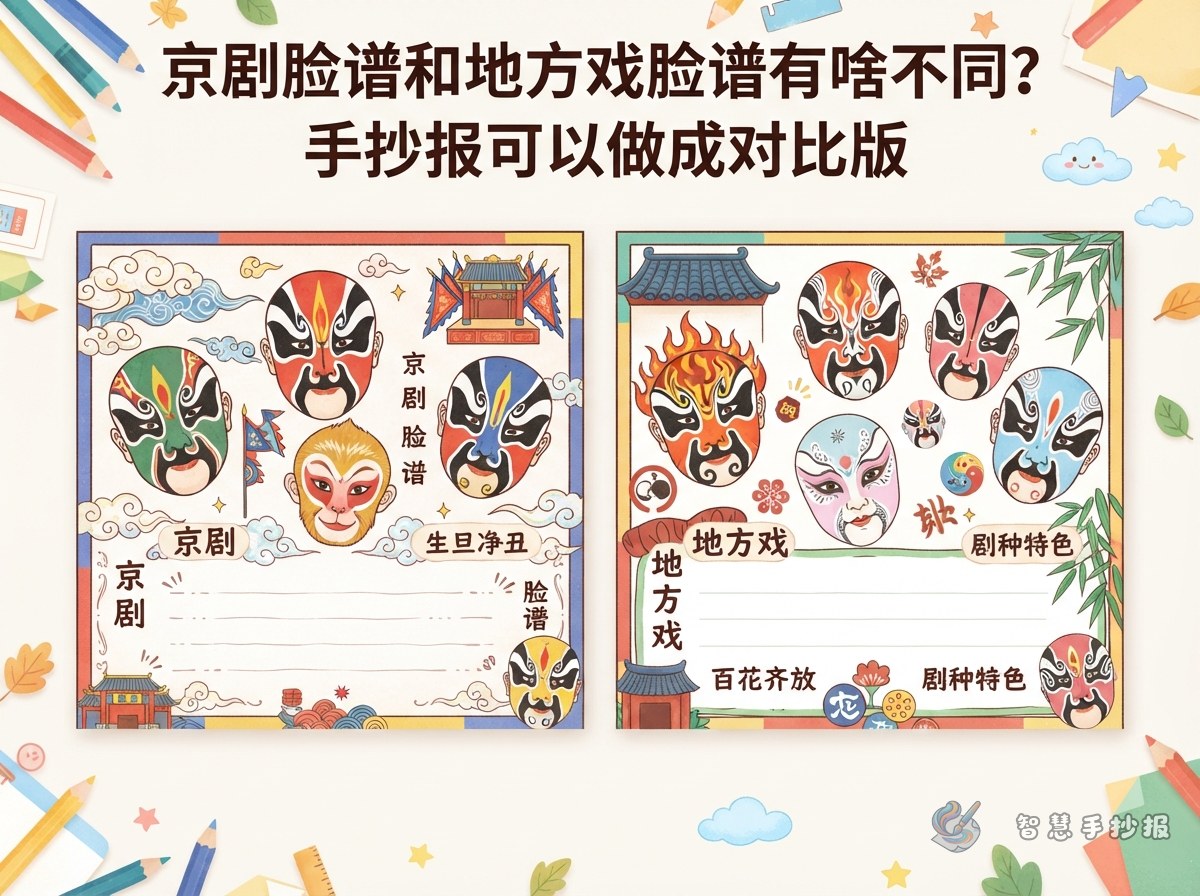
Why Two Masks on One Page Works
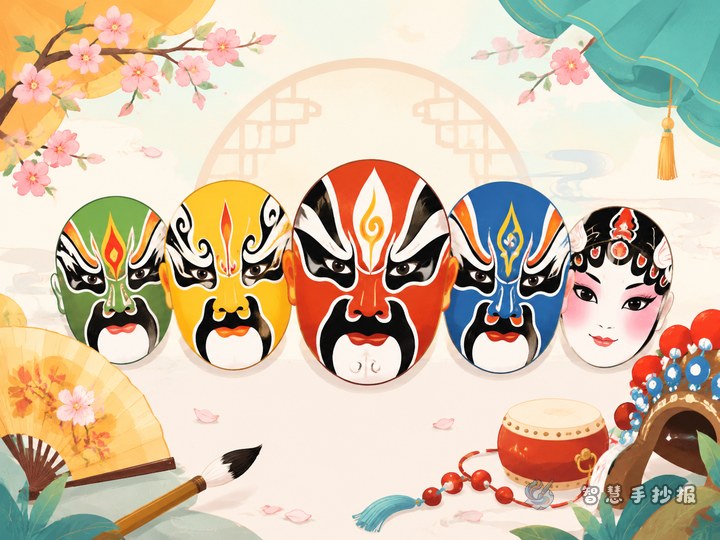
Many opera mask handwritten newspapers begin with colour meanings, and it is easy to end up with the same page as everyone else. Try a comparison instead: put a Peking opera mask on one side and a local opera mask on the other. The page divides itself into two halves, both sides have something to say, and the short comparison sentences fit neatly into boxes.
Four Points Worth Comparing
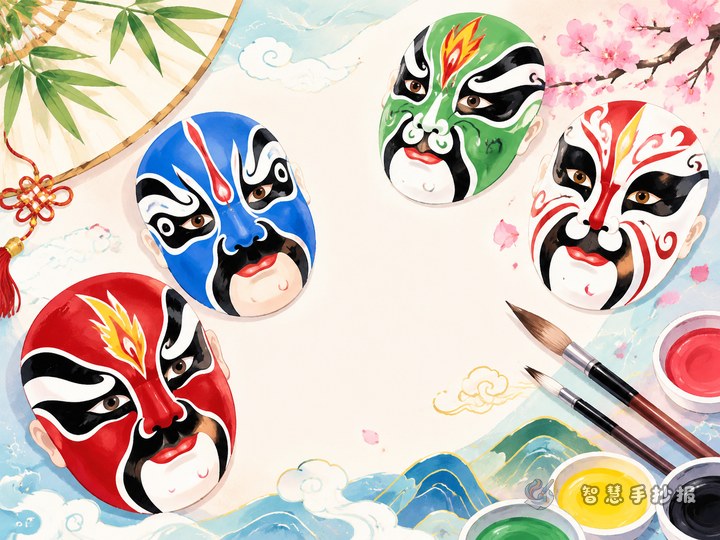
- Colour: Peking opera masks often use one clear main colour to show a character’s temper, while local opera masks tend to mix colours with decorations.
- Lines: Peking opera masks are usually symmetrical and tidy, with clean outlines; some local opera masks look bolder and more ornamental.
- Pattern systems: Peking opera has fairly fixed ways of painting different roles, while each local opera style keeps its own habits and looks.
- Characters: the same character may wear a different face in a different local opera. This point is the easiest to write about and the most interesting for readers.
You do not need to list every local opera. One or two names you can spell correctly are enough.
Layouts That Keep the Page Readable
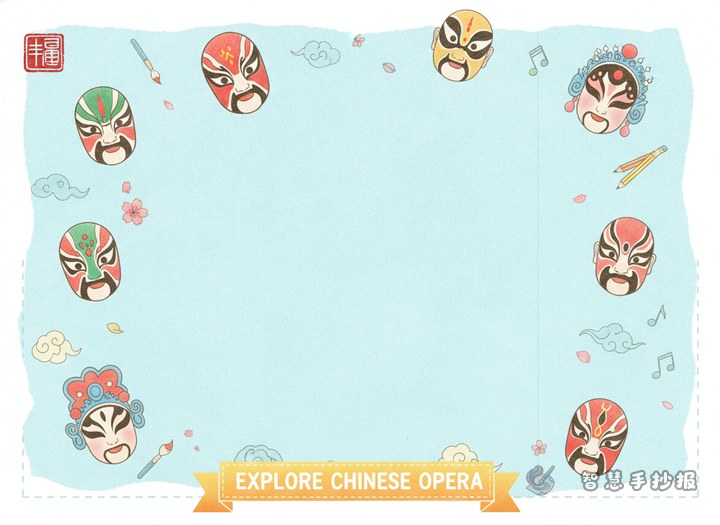
- Left and right columns: Peking opera on the left, local opera on the right, with a vertical line, a fan rib, or a colour strip in the middle.
- Top and bottom: a landscape page can hold one mask above and the comparison sentences below, with the title running across the top.
- Small grid cards: draw three or four boxes, one for colour, one for patterns, one for characters, and add a short sentence under each.
Whatever you choose, mark the boxes lightly before you start drawing, so you do not run out of space for text.
Short Sentences You Can Copy
- Definition: a Peking opera mask is a make-up style that helps the audience recognise a role on stage.
- Comparison: for the same character, Peking opera keeps one main colour, while local opera adds more patterns.
- Observation: I noticed that the busier the pattern on a mask, the stronger the character seems.
- Tip: if you are not sure about a local opera name, just write “a local opera mask” and focus on the differences.
Do not stop at “they are different”. One sentence of your own observation makes the whole page more interesting.
Drawing Order and a Finishing Touch
- Sketch two ovals of the same size on scrap paper as the bases of the two masks, then copy them onto the final sheet.
- Write the title, such as “Mask Match-Up”, and draw the boxes lightly with a ruler.
- Fill the light colours first, add the darker lines next, and finish with the eyes and the small pattern on the forehead.
- Write the comparison points first, then add your own observation and a short conclusion.
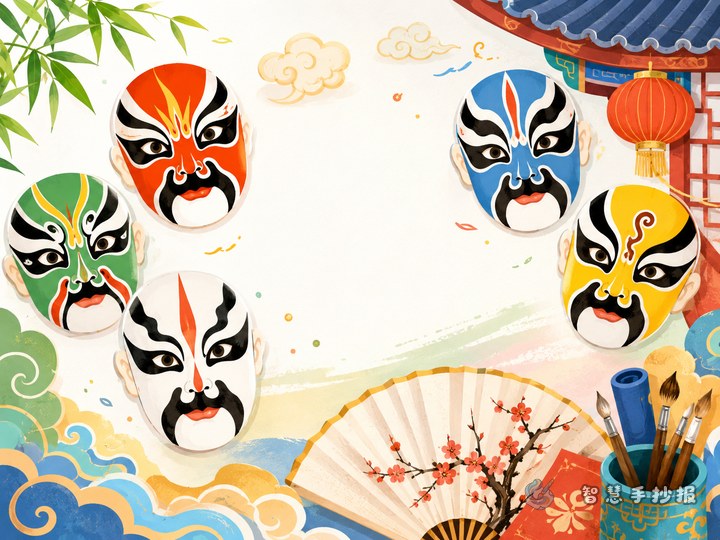
- Decorate the corners with a brush, a folding fan, or drumsticks to balance the page.
If you would rather not spend time testing layouts, open the Smart Handwritten Newspaper mini program in WeChat, choose a two-column comparison template, and drop the mask outlines and text boxes into place.