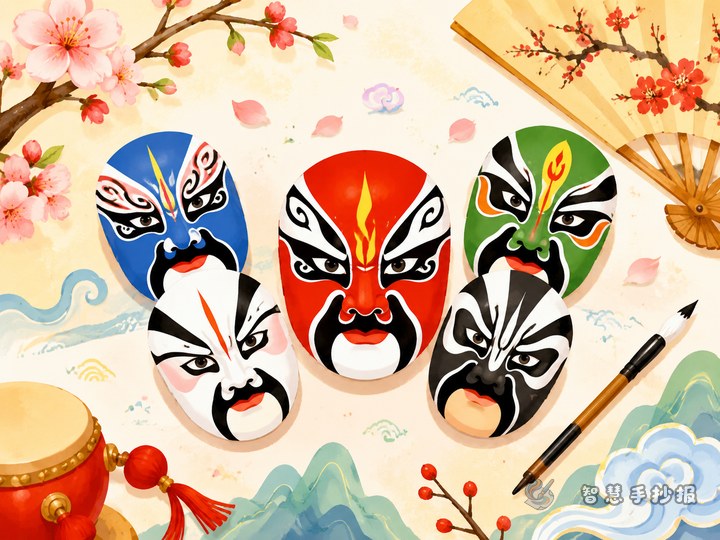
Build the Poster Around One Clear Question
Place “Is Chinese opera facial makeup the same as a mask?” near the top of the poster. The short answer is no. Opera facial makeup is usually painted directly on an actor’s face according to stage conventions, while a mask is a separate object worn over the face.
Create a Three-Part Comparison
Facial Makeup
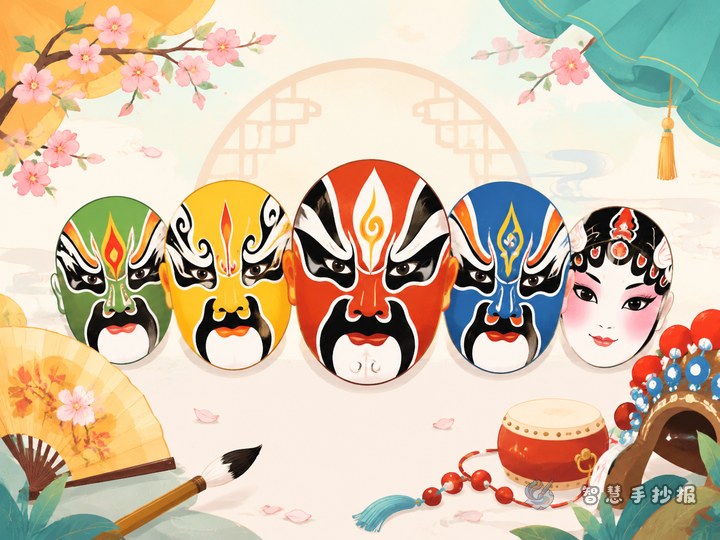
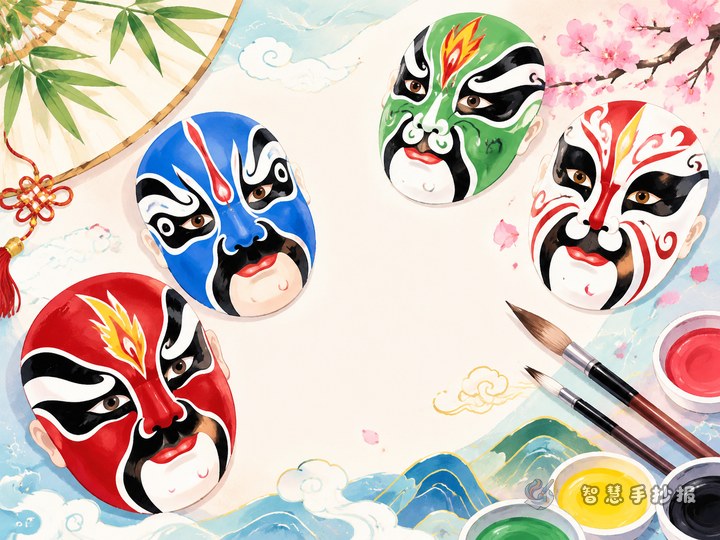
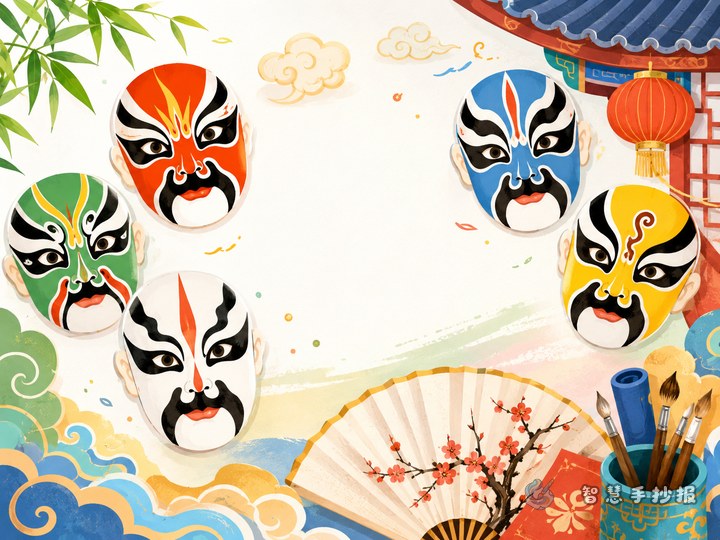
Traditional opera facial makeup uses colors, lines, and patterns to shape a stage character. It is especially associated with strongly characterized roles and helps the audience recognize personality traits, status, and dramatic identity.
Masks
A mask has a fixed form and can be put on or removed. Painted facial makeup moves with the actor’s expressions. Students can draw one example of each and label them “painted on the face” and “made separately and worn.”
Face Changing
Sichuan opera face changing is a stage performance technique in which the performer’s facial appearance changes rapidly. Introduce its visual appeal and cultural value without guessing at or explaining protected performance methods.
Short Facts to Copy onto the Page
- Opera facial makeup: A conventional painted design that helps create a dramatic character.
- Mask: A separately made object worn over the performer’s face.
- Shared purpose: Both make stage characters more distinctive and memorable.
- Viewing tip: A character should not be judged by one color alone; patterns, role type, and story context also matter.
Use a Split-Page Layout
Put the title across the top, divide the center into two columns, and reserve a narrow section at the bottom for face-changing facts. The left column can explain facial makeup, while the right introduces masks. Use simplified opera-curtain shapes, cloud motifs, or balanced facial lines as borders. Red, black, and white can form the main palette, with a small amount of yellow for emphasis.
- Sketch the title, comparison columns, and fact box in pencil.
- Reserve space for one small drawing and one short paragraph in each section.
- Outline before coloring, keeping the facial patterns visually balanced.
- Check the wording so that not every type of opera makeup is incorrectly called facial makeup.
Finish with Clear Visual Priorities
Give the title a bold outline, keep body text neat, and use short labels and bullet points for quick reading. To refine the columns, colors, and spacing for a particular paper size, continue the design in the Zhihui Shouchaobao WeChat Mini Program.