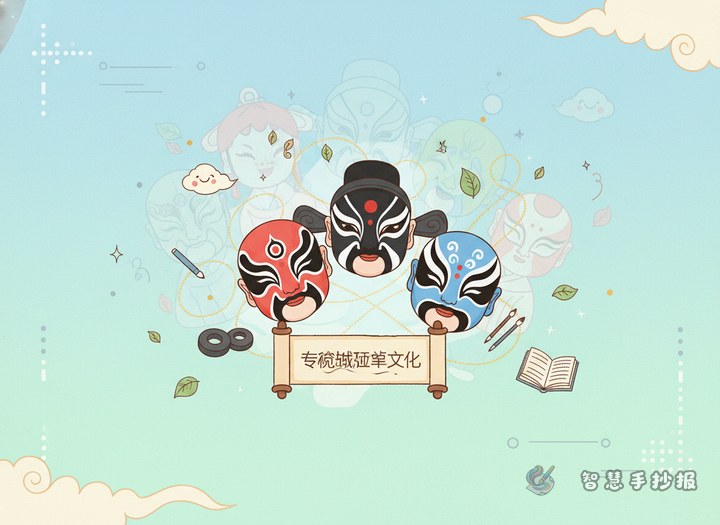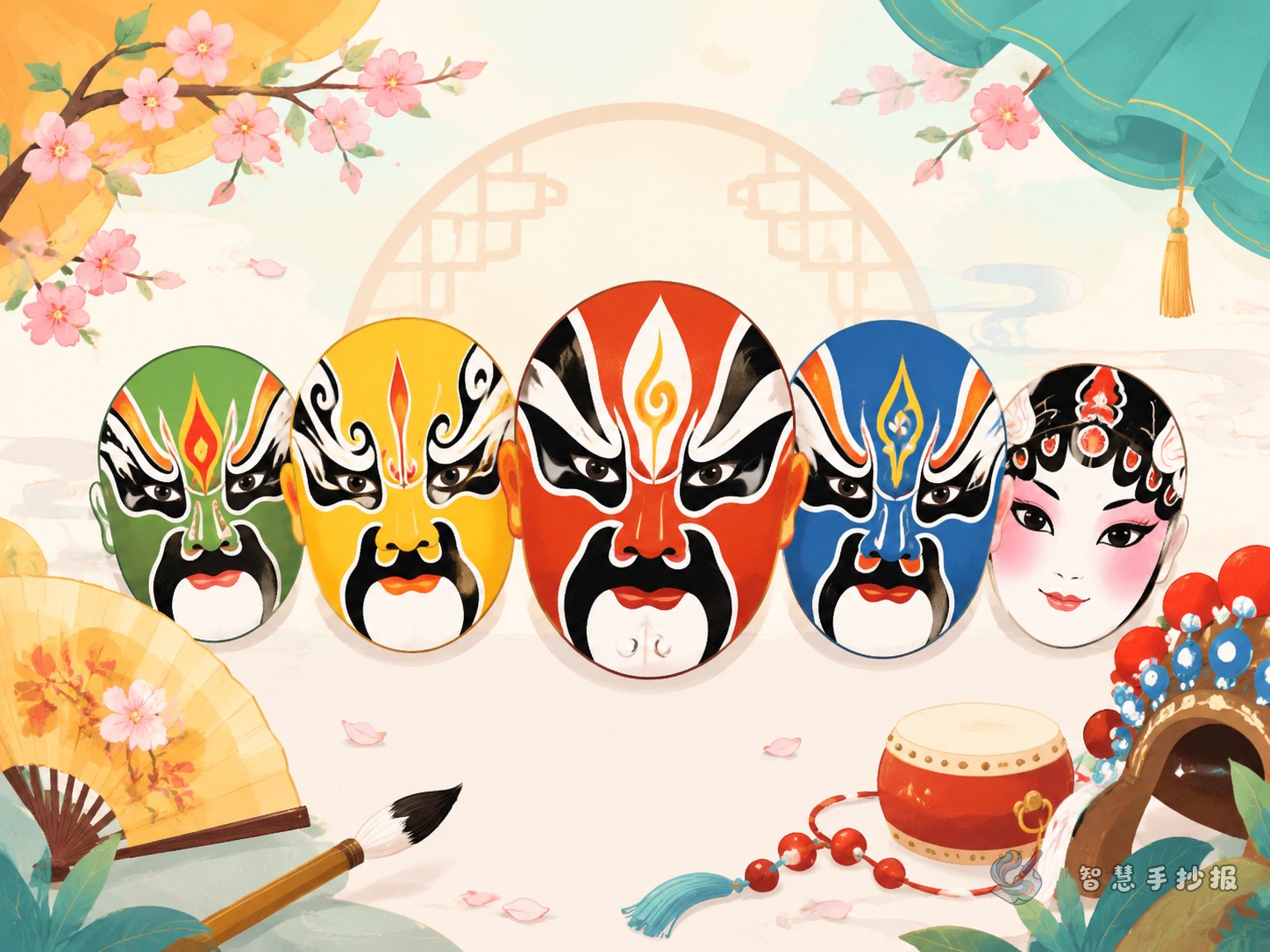
Use role categories as the main idea of the page
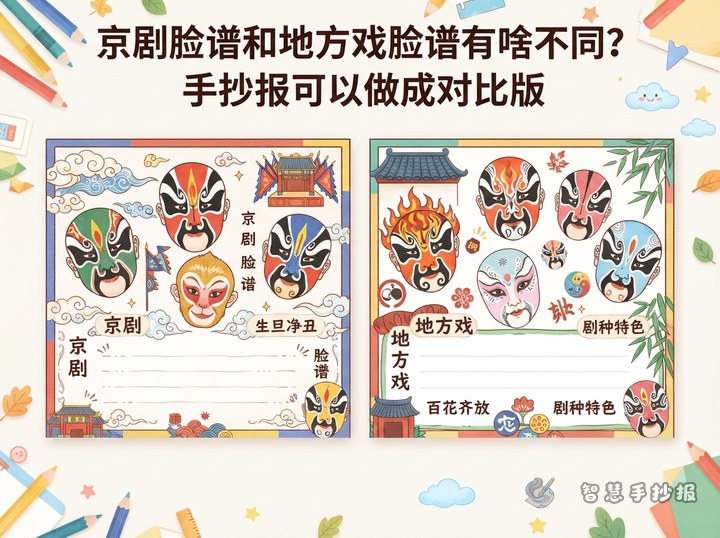
If you want a traditional Chinese opera mask handwritten newspaper that is more interesting than a simple color chart, a role-based structure is a great choice. Chinese opera characters are often grouped into sheng, dan, jing, and chou, and each group has its own stage function, visual style, and performance feeling.
This approach gives the page a natural order. Students can introduce the roles first, then explain how facial makeup connects to each one. It is easier to read and also easier to design.
How to turn four roles into four clear sections
Sheng: calm and upright male roles
Sheng usually refers to male characters. This section can focus on personality, posture, costume feeling, and stage presence instead of forcing a complicated mask drawing.
- Useful words: steady, dignified, heroic, refined
- Visual ideas: robes, hats, sleeves, standing silhouette
- Section title idea: Getting to know sheng
Dan: graceful and expressive female roles
Dan usually represents female characters. This part of the page can highlight expression, costume, headpieces, and graceful movement. Softer borders and lighter colors work well here.
- Useful words: elegant, gentle, lively, delicate
- Visual ideas: hair ornaments, floral lines, flowing sleeves
- Section title idea: The charm of dan roles
Jing: the best section for bold mask culture
Jing is often the most striking part of an opera mask project because the makeup is bold, symmetrical, and dramatic. This is the ideal place to explain how mask patterns help the audience recognize a character quickly.
- Useful words: powerful, bold, serious, eye-catching
- Visual ideas: heavy brows, forehead patterns, strong lines
- Section title idea: The unforgettable face of jing
Chou: lively and humorous stage figures
Chou roles are often clever, playful, and energetic. The small white patch around the nose area makes them visually different, so this section can make the whole handwritten newspaper feel more vivid and fun.
- Useful words: witty, humorous, quick, lively
- Visual ideas: small comic expressions, simple white patch
- Section title idea: Why chou is so memorable
Short lines students can write directly
The text on a handwritten newspaper does not need to be long. Short and clear lines are often better.
- Sheng: Often shows male characters with a steady and upright image.
- Dan: Often shows female characters with beauty in expression and costume.
- Jing: Features bold facial makeup and a strong stage presence.
- Chou: Often brings humor and lively movement to the performance.
You can also add a simple conclusion: Opera masks are not only beautiful, but also help the audience understand the character faster.
A layout idea that feels like a stage
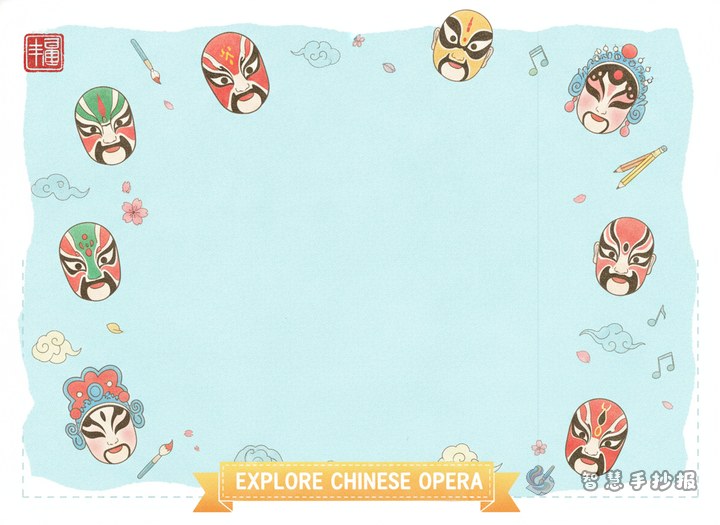
This topic works especially well with a center-focused design. Place a bold title or mask drawing in the middle, then arrange four surrounding sections for sheng, dan, jing, and chou. This gives the page a stronger visual center than a simple row-by-row layout.
- Center: the main title in decorative lettering
- Top left: sheng with calm colors
- Top right: dan with softer tones
- Bottom left: jing with strong contrast
- Bottom right: chou with playful details
If you still need help arranging columns, titles, and colors, you can continue building your page in the Zhihui Shouchaobao WeChat mini program for a smoother制作 process.