Choose a clear and student-friendly angle first
If you want an opera mask poster that feels cultural and easy to organize, a great topic is “What do the colors in Chinese opera face painting mean?” This angle is simple for children to understand and works well for section-based layout. A title such as “The Secrets Behind Opera Mask Colors” or “Why Are Opera Masks Red, Black, and White?” sounds natural and search-friendly.
At the beginning, you can briefly explain that facial makeup in traditional Chinese opera is a special stage art form. Colors, patterns, and lines are used to show a character’s personality, identity, and mood. Keep this part short and easy to read.
Four kinds of content that fit this poster well
1. Color meanings
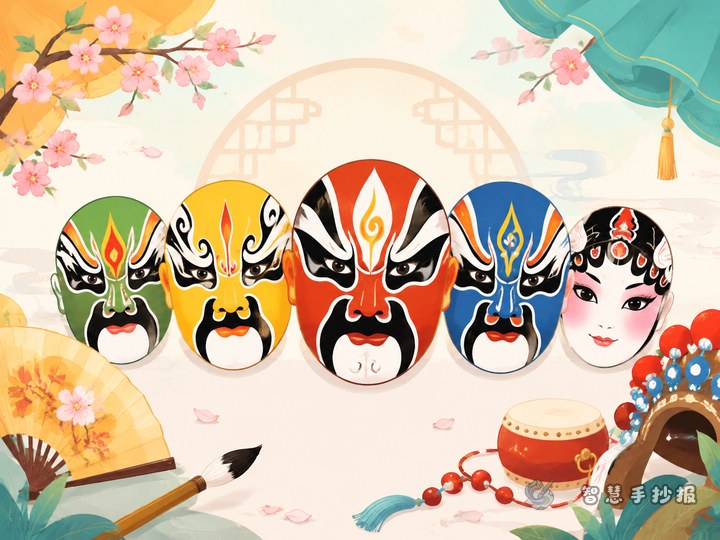
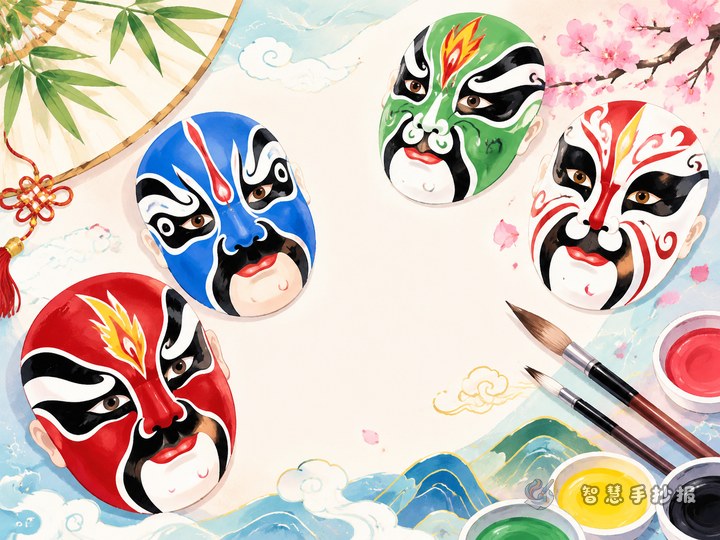
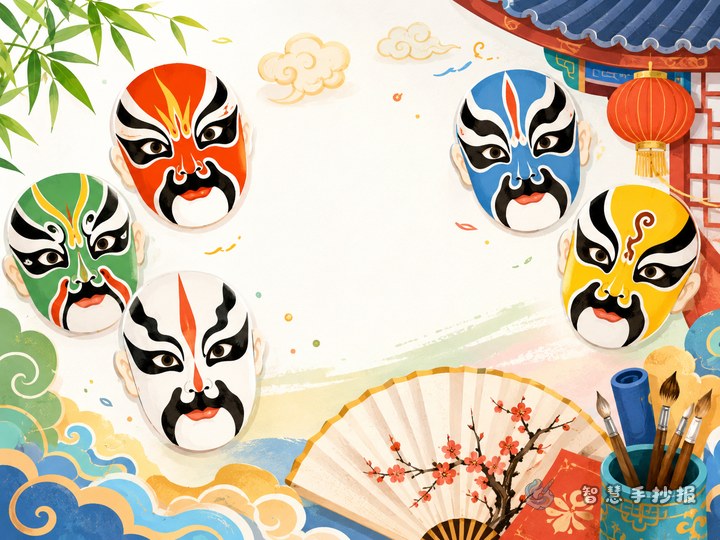
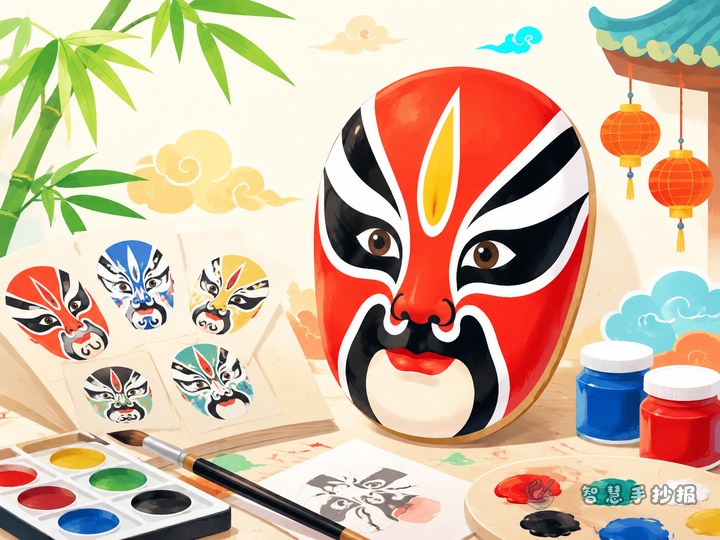
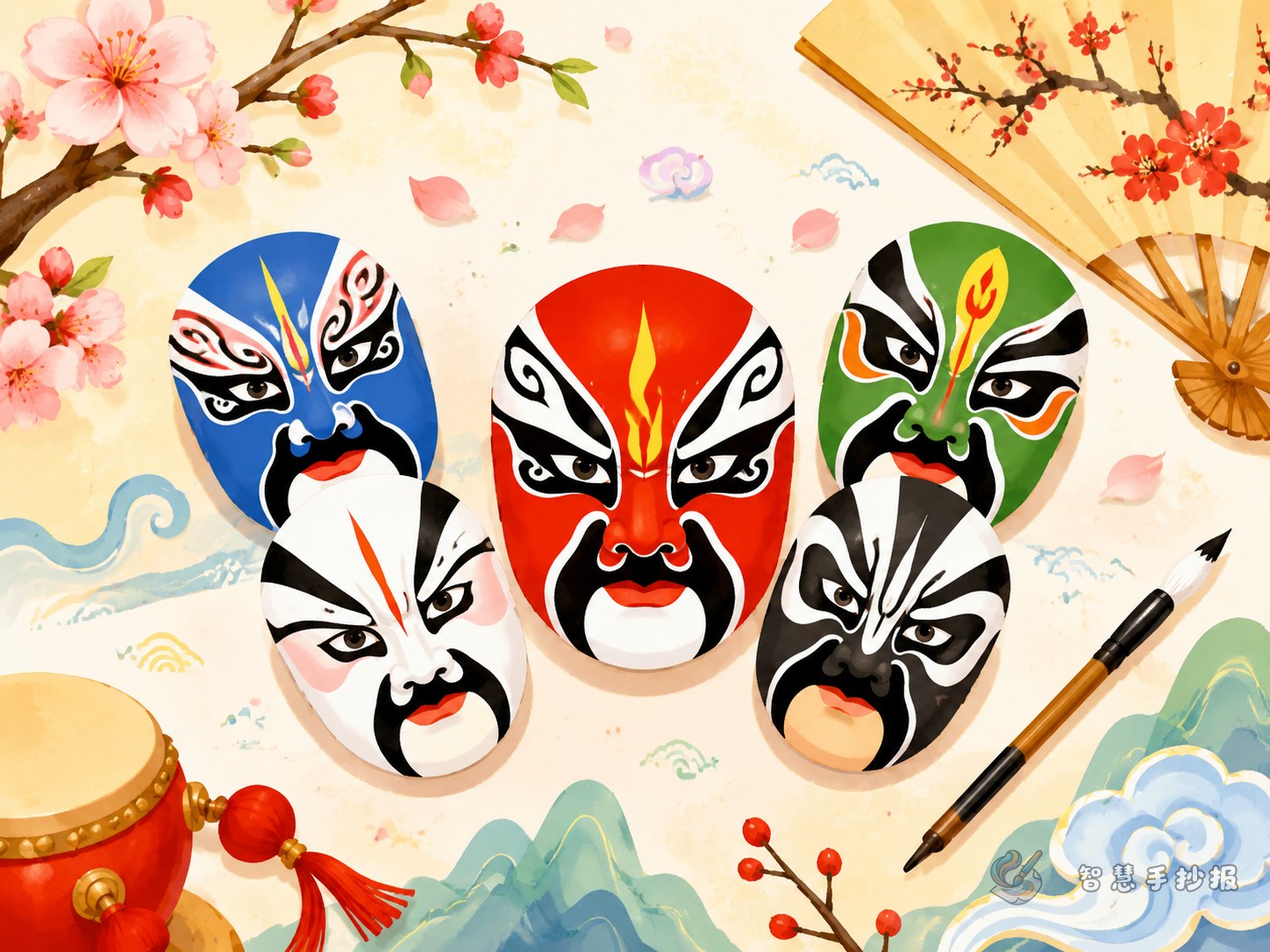
- Red: often suggests loyalty, courage, and upright character.
- Black: often gives the feeling of fairness, seriousness, and strength.
- White: often shows a clever, complex, or calm personality.
- Blue or green: often represents boldness, toughness, or a strong personal style.
2. Pattern observation
You can add a short note explaining that colors are not the only important part. The lines on the forehead, around the eyes, and across the nose also help create a clear image on stage. Some designs look balanced and dignified, while others look bold and powerful.
3. A short culture note
Write one or two sentences to explain that opera masks are not only beautiful decorations. They also carry traditional Chinese aesthetics and theatrical culture.
4. Personal reflection
At the end, students can write that learning about opera masks helps them discover the beauty of traditional Chinese culture and appreciate stage art in a new way.
How to divide the layout neatly
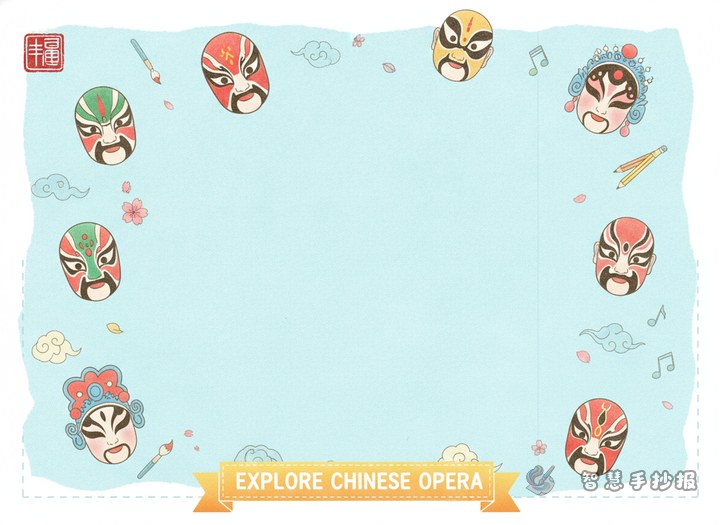
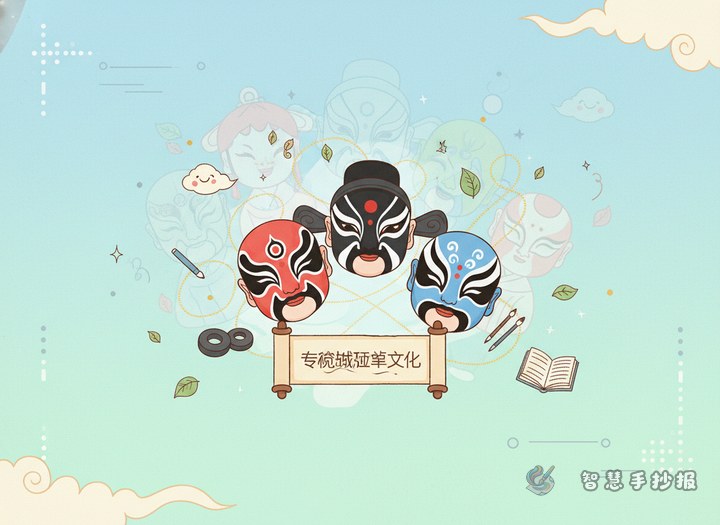
This topic works very well with a central title plus surrounding information boxes layout. Put the main title in the middle, draw a simple opera mask nearby, and arrange several small sections around it.
- Section 1: What is opera face painting? Put this in the upper left with two or three short sentences.
- Section 2: What do the colors mean? Put this in the upper right with short bullet points.
- Section 3: My favorite opera mask Put this in the lower left to add a personal touch.
- Section 4: A traditional culture reminder Put this in the lower right with simple ideas about appreciating and passing on culture.
If the paper is larger, you can also use a left-right structure, with facts on one side and drawings and decorations on the other. This keeps the page balanced and readable.
Ready-to-use text for the poster
Opening sample: Chinese opera face painting is a unique art form in traditional opera. With bright colors and bold patterns, it helps create memorable stage characters and allows the audience to understand them more easily.
Middle sample: Different colors in opera masks often carry different meanings. Red often suggests loyalty and bravery, black can show firmness and honesty, and white may express a more complex character. These designs are not only eye-catching but also meaningful.
Ending sample: By making a hand-copied newspaper about traditional opera mask culture, we can get closer to excellent traditional Chinese culture and improve our skills in collecting information, organizing ideas, and designing a page.
Simple design ideas to create a stronger opera feeling
- Use borders with clouds, stage patterns, fans, drums, or flowing costume elements.
- Choose red, black, gold, and blue as your main colors to match the opera theme.
- Make the title bold and lively, but keep it easy to read.
- Keep each text block short so the page does not look crowded.
- You do not need a very detailed mask drawing. Symmetry and strong color contrast are enough to make it attractive.
If you want to keep improving the layout, title, and text more quickly, you can continue designing in the Zhihui Shouchaobao WeChat mini program and adjust it to your grade level and homework needs.