Start with the main question: why is it called Zijincheng?
A good opening for this handwritten newspaper is a short explanation of the name. Zijin is linked to ancient Chinese ideas about the Purple Star area in the sky, which symbolized supreme dignity. Jin means restricted, because this was the imperial palace area in ancient times. Cheng means city, showing that it was not just one palace building but a huge palace complex.
This part works well as a lead paragraph directly under the title.
Architectural highlights worth including
If you want to show the beauty of traditional Chinese architecture, focus on both appearance and layout.
- Red walls and yellow roofs: bright and majestic, easy to recognize.
- Central-axis planning: the main buildings are arranged in order, showing balance and ceremony.
- Grand halls on raised platforms: buildings like the Hall of Supreme Harmony look powerful and formal.
- Upturned eaves and bracket sets: these details reflect ancient craftsmanship.
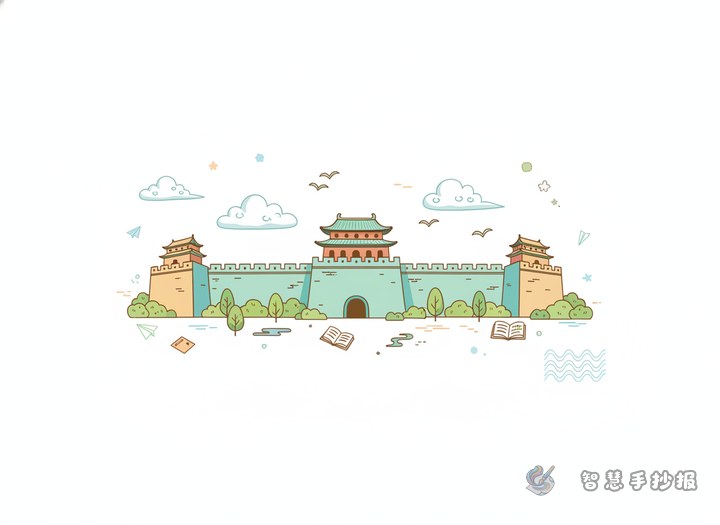
- Corner towers and palace gates: they add both beauty and structure to the palace city.
You can turn these points into a small knowledge section with short lines and simple drawings.
Ready-to-use text for students
Material 1: Topic introduction
The Forbidden City, once called Zijincheng, is one of the best examples of traditional Chinese palace architecture. Its neat layout, grand buildings, and red-and-yellow colors show the dignity of ancient Chinese design.
Material 2: Meaning of the name
The name Zijincheng reflects ancient ideas about the universe and imperial order. “Zi” suggests honor, “Jin” shows it was a restricted royal area, and “Cheng” tells us it was a large palace city.
Material 3: Personal reflection
From the gates and halls to the rooflines, I can feel the beauty of symmetry in Chinese architecture and the wisdom of ancient builders.
Try a palace-style layout instead of ordinary blocks
This topic is perfect for an orderly page design. You can make the whole handwritten newspaper feel like a palace plan.
- Place the main title in the center: Why Is the Forbidden City Called Zijincheng?
- Put the meaning of the name and brief background on the left.
- Put architecture features and famous sights on the right.
- Use the bottom area for a personal reflection or a small culture note.
For decoration, add palace lanterns, cloud patterns, roofline shapes, or ancient gate details. Keep it neat rather than overcrowded.
Best colors and drawing ideas for this theme
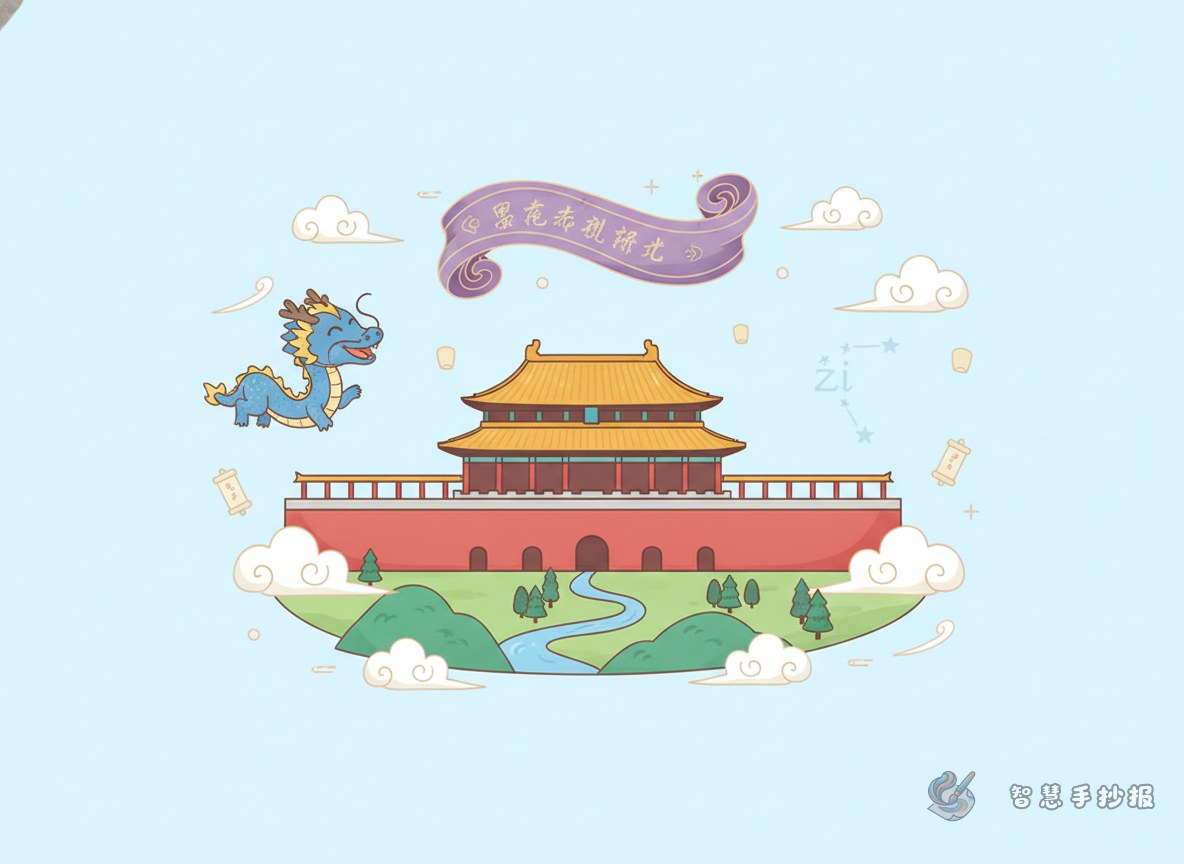
Recommended colors are Chinese red, yellow, gold, and gray. The title can be bold and formal, and small drawings can include the Hall of Supreme Harmony, corner towers, palace lanterns, stone lions, or roof ornaments.
If you do not want the page to look too full, draw just one palace gate with a few cloud patterns and use straight borders to organize the content.
A simple ending to complete the page
You can end by returning to the theme: the Forbidden City is not only a group of old buildings, but also an important symbol of traditional Chinese architectural culture. By learning why it is called Zijincheng and appreciating its design, we can better understand the beauty of Chinese heritage.
If you want to keep improving your title style, column layout, or colors, you can continue designing your page in the Zhihui Shouchaobao WeChat mini program.