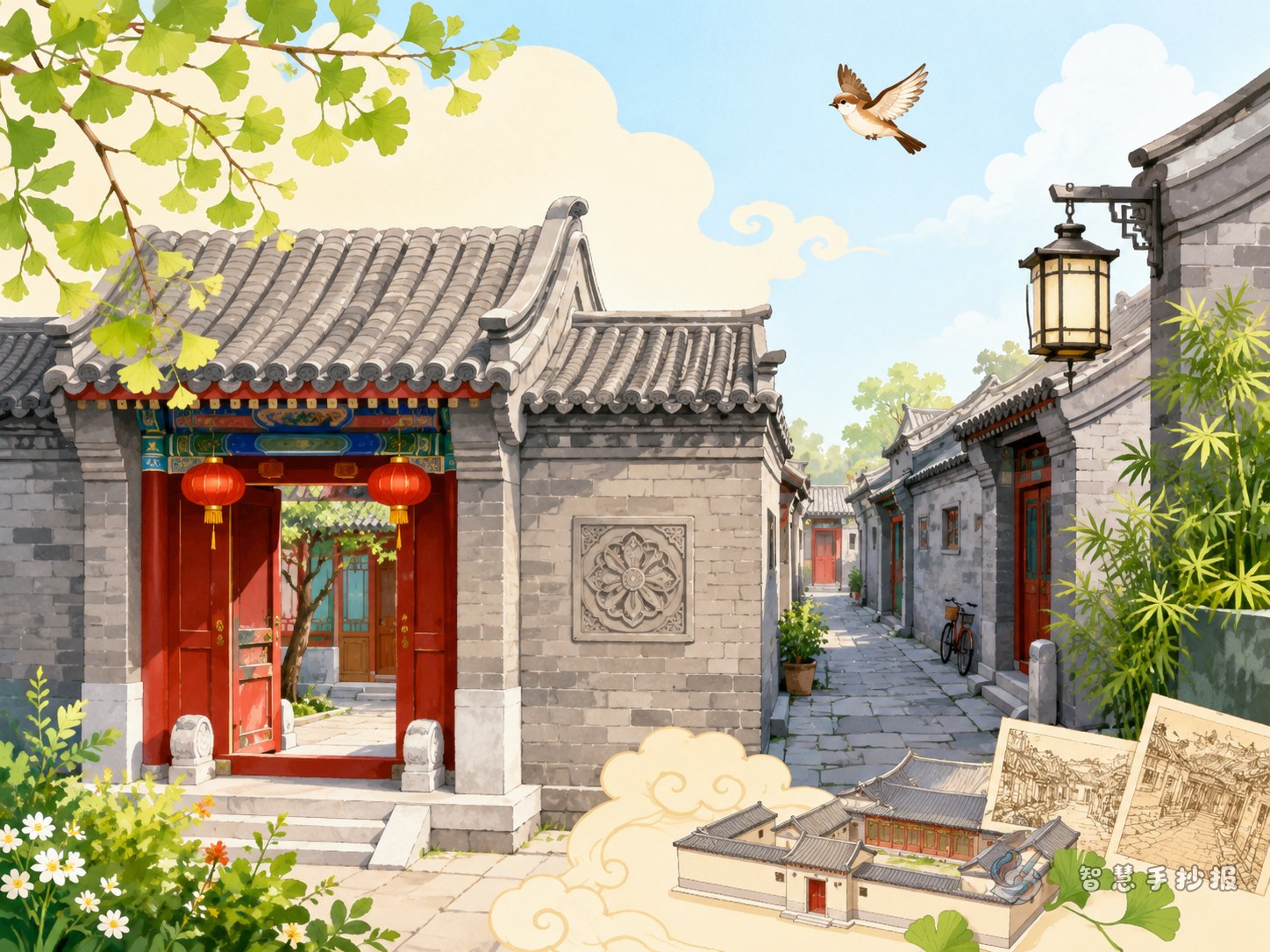
Why This Topic Works Well for a Handwritten Newspaper
A Beijing hutong and siheyuan themed newspaper is a great choice because it connects architecture with daily life. Instead of turning the page into a long history article, students can show how old lanes, courtyards, doors, walls, and neighborhood customs reflect traditional city culture.
What to Include on the Page
- What is a hutong: Explain that hutongs are traditional alleyways in old Beijing and part of the city’s historical layout.
- What is a siheyuan: Introduce the classic courtyard house with rooms arranged around a central yard.
- Architectural details: Mention gates, rooflines, brick walls, shadow walls, and decorative windows.
- Life in the old city: Add short lines about neighbors, markets, seasonal customs, and everyday scenes.
- Protection idea: Write why traditional streets and homes should be respected and preserved.
Suggested Layout Plan
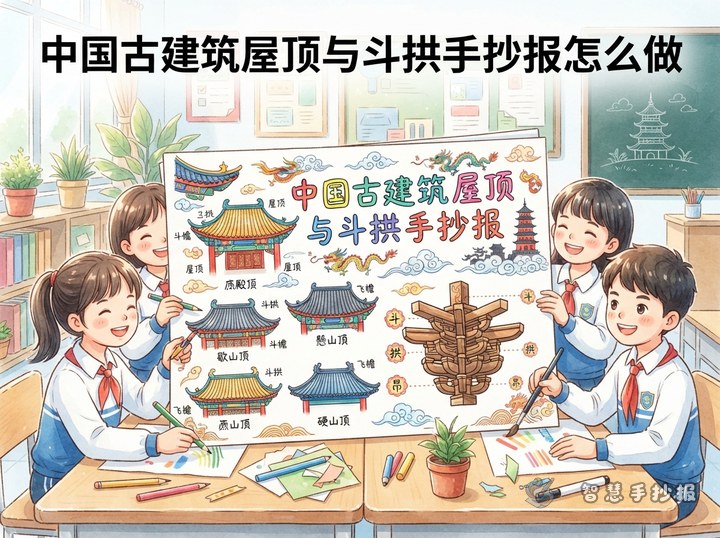
Place the main title at the top center, such as “Beijing Hutongs and Courtyard Culture.” One side can focus on architecture, and the other side can focus on old city life. A middle section can use a short paragraph or a list to explain the structure of a siheyuan. Leave enough blank space so the page does not feel crowded.
Decorative Elements That Match the Theme
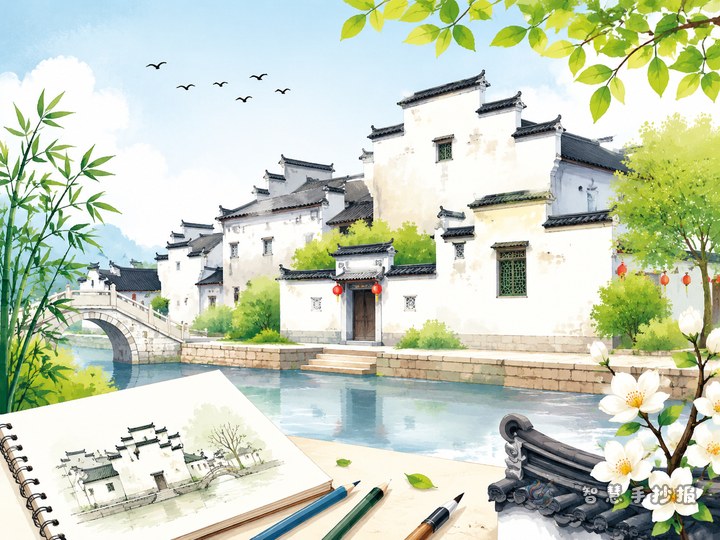
Use gray brick tones, red doors, lanterns, roof edges, and simple window patterns for borders and corners. Small drawings of alley entrances, old walls, stone drums, or potted plants can make the page feel warm and traditional without being too complicated.
Writing Tips for Students
- Keep each section short and easy to read.
- Use clear subheadings instead of long blocks of text.
- Add one or two personal thoughts, such as what old neighborhoods can teach us.
- Make the title stand out with a bold style.
- Check spacing so text and decorations stay balanced.
A Simple Closing Section
You can end with a short message like this: traditional architecture is not only about old buildings, but also about memory, neighborhood life, and cultural inheritance. If you want to keep improving the layout, title lettering, and matching decorations, you can continue your design in the Zhihui Shouchaobao WeChat Mini Program.